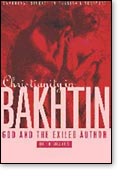
Christianity in Bakhtin: God and the Exiled Authorby Ruth Coates Cambridge Univ. Press, 1998 220 pp.; $59.95
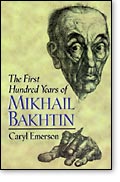
The First Hundred Years of Mikhail Bakhtinby Caryl Emerson Princeton Univ. Press, 1997 296 pp.; $16.95, paper
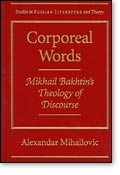
Corporeal Words: Mikhail Bakhtin’s Theology of Discourseby Alexandar Mihailovic Northwestern Univ. Press, 1997 336 pp.; $59.95

The many and varied writings of the great Russian thinker Mikhail Bakhtin (1895-1975) have become, in the quarter-century since his death, a kind of scholarly battleground, as proponents of various intellectual causes have tried to claim this powerful mind as one of their own. One can consult anthologies of modern literary theory and find him classified with Marxists, with New Historicists, even with deconstructionists. Often he is considered a key precursor for all of these groups, even though they are wholly inconsistent with one another. Thus it was not just a frivolous pop-culture joke when the journal Lingua Franca referred to him as an “international man of mystery.”
When, some years ago, it became clear that Bakhtin was a lifelong Russian Orthodox believer, the mystery either deepened or was resolved, depending on your point of view. But in any case, it has become necessary for Bakhtin scholars to come to terms with this essential element of Bakhtin’s being, and three books published over the last several years contribute mightily to that task.
The book by Princeton University’s Caryl Emerson—long recognized as one of the world’s leading Bakhtin scholars—does so indirectly, since her goal is to tell the history of reception of Bakhtin’s work. We see a wide range of ideological forces at work, right from the beginning of Bakhtin’s career, making it difficult if not impossible to answer the question with which Emerson begins: “Who was Mikhail Bakhtin?” Emerson’s own picture of Bakhtin gradually emerges: he is a man who “turns toward the world with … kindness and generosity of spirit”; he realizes (to paraphrase a fragmentary note of his own) that we do not know what world we live in, and he wants to show us.
Ruth Coates, of the University of London, is a young Slavist who clearly demonstrates the resonance of Bakhtin’s work with broadly Christian concerns. For Coates, several basic themes inherent in Christianity—God and transcendence, fall and incarnation, love—appear throughout Bakhtin’s work, even when (in Stalin’s Soviet Union) he could not write directly about Christianity with out risking death. Coates shows how the explicitly Christian themes of Bakhtin’s early work undergo “a process of radical revision” but are never abandoned, and in fact are enriched and deepened in the later work.
Perhaps the boldest of the three books is that of Alexandar Mihailovic, who teaches at Hofstra University. Mihailovic has painstakingly examined Bakhtin’s language, especially in the early philosophical work—before he was convicted of religious agitation and sent into internal exile in Kazakhstan in 1929—and has discovered it to be saturated with the language of Christianity. In particular, Mihailovic finds, Bakhtin’s account of what he called “answerability”—roughly, the unavoidable ethical accountability which is at the heart of human existence—repeatedly echoes the language the Council of Chalcedon used in defining the two natures, divine and human, of Jesus Christ. This echoing only makes sense in the context of Russian Orthodoxy, which understands the goal of each Christian as “deification,” that is, be coming wholly Christlike.
Collectively these three books indicate, and help to consolidate, a profound transformation in Bakhtin studies. From now on, every serious scholar of Bakhtin’s work will have to reckon with the (implicitly or explicitly) Christian character of his oeuvre. Sadly, though, these books could have the unintended effect of reducing Bakhtin’s influence and lessening his reputation, for it is not clear that many scholars today can bear to take seriously someone whose thinking is so thoroughly theological. But even that result might not be so bad if Christian scholars begin to read and appropriate this potent and truly unique body of work, which could serve to invigorate Christian thinking about the humanities and the social sciences.
Alan Jacobs is professor of English at Wheaton College.
NOTE: For your convenience, the following products, which were mentioned above, are available for purchase: • Christianity in Bakhtin: God and the Exiled Author, by Ruth Coates • The First Hundred Years of Mikhail Bakhtin, by Caryl Emerson • Corporeal Words: Mikhail Bakhtin’s Theology of Discourse, by Alexandar Mihailovic
Copyright © 2001 by the author or Christianity Today/Books & Culture Magazine.Click here for reprint information on Books & Culture.