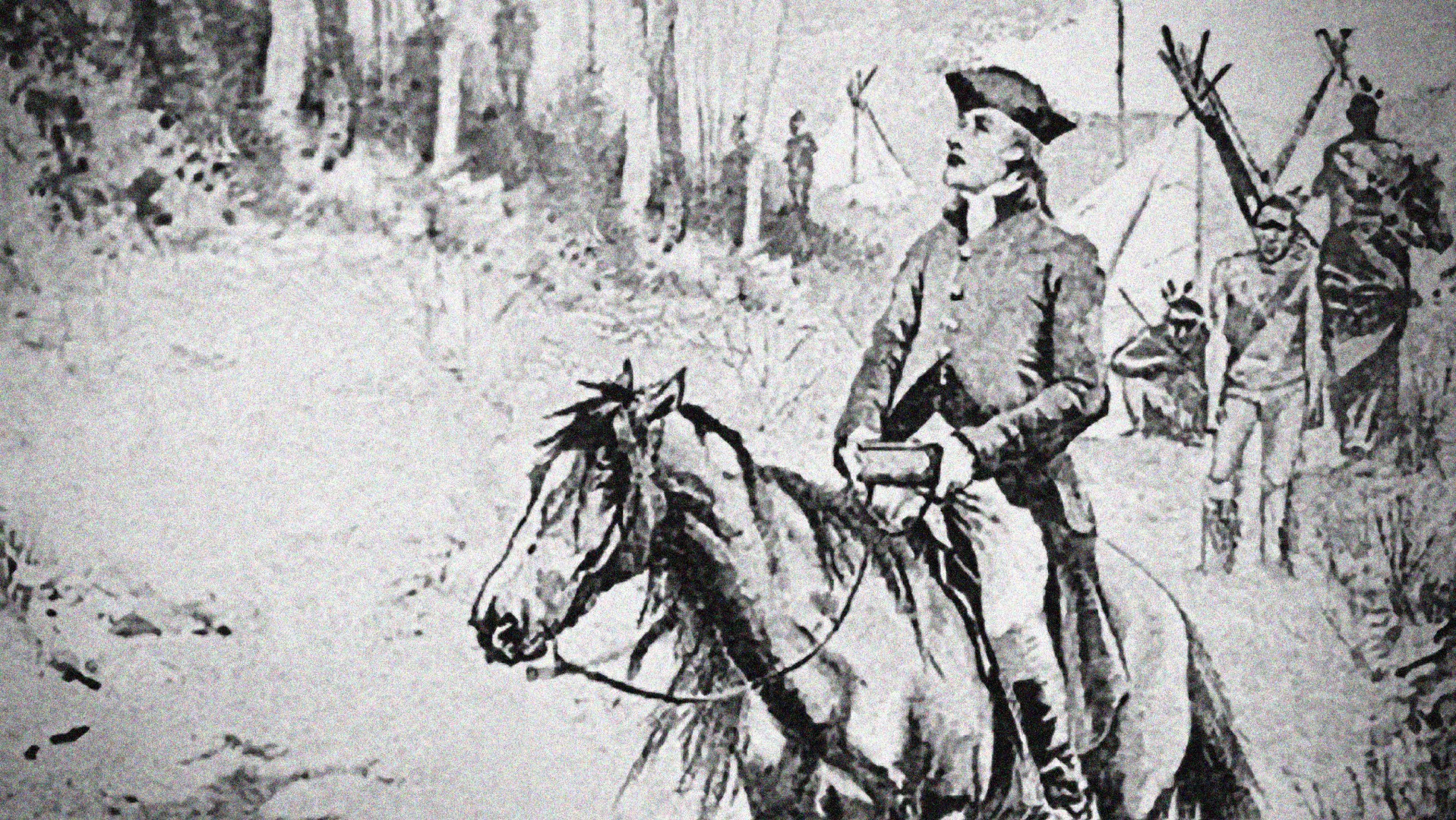

Expelled from Yale for saying that one tutor "had no more grace than a chair" and refusing to apologize, David Brainerd (1718-1747) did not embark upon his brief career as a missionary to the Native Americans with the shining prospect of being an icon for Protestant missions. Yet his diary, edited and published posthumously by Jonathan Edwards, became a spiritual classic, inspiring such missionary heroes as William Carey, David Livingstone, and Jim Elliot.
David Brainerd's status as a model missionary is ironic, since in many respects he was a failure. Plagued by ill health, self-doubt, and extreme depression, yet driven by a profound determination to obey God's calling, he made relatively few converts in the five years of ministry before his death of tuberculosis at age 29. In 1743 he wrote, "Appeared to myself exceeding ignorant, weak, helpless, unworthy, and altogether unequal to my work. It seemed to me I should never do any service or have any success among the Indians."
But in the summer of 1745 a new mission to the Crossweeksung Indians in central New Jersey began to show some signs of taking root, and in August of that year Brainerd was astonished and overjoyed to see, at last, unexpected fruits from his seemingly barren ministry.
Aug. 16. Spent a considerable time in conversing privately with sundry of the Indians. Found one that had got relief and comfort, after pressing concern, and could not but hope, when I came to discourse particularly with her, that her comfort was of the right kind.—In the afternoon, I preached to them from John vi.26-34. Toward the close of my discourse, divine truths were attended with considerable power upon the audience, and more especially after public service was over, when I particularly addressed sundry distressed persons.
There was a great concern for their souls spread pretty generally among them; but especially there were two persons newly awakened to a sense of their sin and misery, one of whom was lately come, and the other had all along been very attentive, and desirous of being awakened, but could never before have any lively view of her perishing state. But now her concern and spiritual distress was such, that, I thought, I had never seen any more pressing. Sundry old men were also in distress for their souls; so that they could not refrain from weeping and crying out aloud, and their bitter groans were the most convincing, as well as affecting, evidence of the reality and depth of their inward anguish.—God is powerfully at work among them!
True and genuine convictions of sin are daily promoted in many instances, and some are newly awakened from time to time; although some few, who felt a commotion in their passions in days past, seem now to discover that their hearts were never duly affected. I never saw the work of God appear so independent of means as at this time.
I discoursed to the people, and spoke what, I suppose, had a proper tendency to promote convictions; but . . . I could scarce believe he used me as an instrument, or what I spake as means of carrying on his work; for it seemed, as I thought, to have no connexion with, nor dependence upon, means in any respect. … I seemed to do nothing, and indeed to have nothing to do, but to "stand still and see the salvation of God;" and found myself obliged and delighted to say, "Not unto us," not unto instruments and means, "but to thy name be glory."
Copyright © 2004 by the author or Christianity Today/Christian History & Biography magazine. Click here for reprint information on Christian History & Biography.