 Editor’s Note: This is the second Her.meneutics post responding to Melanie Thernstrom’s New York Times Magazine article on twiblings. Ellen Painter Dollar covered it last week.
As millions around the world celebrated the birth of Jesus, Elton John and his partner, David Furnish, issued a press release announcing the birth of their baby boy, born on Christmas Day. Zachary Jackson Levon Furnish-John, a healthy baby, was born through modern, assisted reproductive technologies (ART). Using an anonymous egg donor and a “gestational carrier” (a term that is getting some criticism), Elton and David fulfilled one of their greatest wishes: to be parents. They have now joined the ranks of the growing list of celebrities having babies via ART.
This got me thinking about another list I read a few years ago: the “Ten Best Chores to Outsource.” Expecting to see housecleaning, gardening and landscaping, pool cleaning, laundry, I was shocked and saddened by the number one “best chore to outsource”: pregnancy. From the Time piece:
Outsourcing brings to mind big factories and call centers. But entrepreneurs around the globe now offer services—from tutoring to sculpting a bust of your grandpa—to regular folks for a fraction of the cost in the West. Thought the world was flat before? Well, now you can hire someone in India to carry your child.
Entrepreneurs like Rudy Rupak, CEO of medical tourism agency Planet Hospital, are just another example of those who are hopping on the ART modern-family bandwagon. Rupak’s brokering business even offers what his company calls the “India Bundle,” an “affordable” package deal that gives would-be parents an egg donor, four surrogates for four embryo transfers, room and board for the surrogate during the pregnancy, and transportation services when the parents arrive in India to pick up the baby. Costs escalate from there depending on services rendered. Gay couples wanting to do egg-sharing so that each can offer sperm to fertilize the eggs (so that each has a biological child) drives up the price. All the various preimplantation genetic diagnostic tests also drive costs upward. In sum, this setup is a consumer model of baby-making.
Twins cost more, of course, which brings me to the latest craziness: twiblings. Parents Michael and Melanie Thernstrom recently chronicled their entire infertility story, which is not atypical, in The New York Times Magazine. After what Melanie describes as many failed relationships, she finally met Mr. Right, but maternal age hindered her ability to get pregnant, so they were off to the fertility doctor for five failed in vitro fertilization (IVF) cycles. Always wanting twins (perhaps forgetting about risks to maternal and infant health with multiple births), they decided to hire not one but two surrogates, enlisted the help of an egg donor, and “gave birth” to a boy and a girl five days apart. Since the babies were from the same egg donor and they used Michael’s sperm, the children are siblings. Since they were created in the lab at the same time, they are fraternal twins. But given that they were carried in separate surrogate wombs, they have been dubbed twiblings.
Pregnancy has been reduced to a “bits and pieces” brokered industry: sperm from a handsome Scandinavian stud, eggs from a beautiful Ivy League graduate, a womb-for-rent from a poor woman in India trying to provide food and education for her children, and brokers in the middle setting up the legal transactions to build a better baby the 21st-century way.
Meanwhile, cases like those of an Australian couple who aborted their twin boys because they wanted a girl, and Olivia Pratten’s battle for the right to have access to her biological father’s identity (she was born in Canada some 20-plus years ago via anonymous egg donation), make their way through the courts. Just this morning, Nicole Kidman and husband Keith Urban announced the birth of their second child together, brought to term by a carefully selected “gestational carrier.” These are uncharted global waters we are swimming in, and sadly, the international laws are at best ad hoc and at worst woefully unregulated. What is more disheartening to me is the lack of a faithful witness from Western Christians (with the exception of Catholic teaching) in response to infertility. From the twiblings piece, a director of a Los Angeles agency for those in search of a surrogate stated that many of their gestational carriers were “mainly white, working-class women, often evangelical Christians—the kind of girls you went to high school with.”
The basics are well established within Christian orthodoxy: Children are a blessing and a gift, not a right. They should be begotten, not made. ART is the manufacturing of children, often by design and often using third parties, and a violation of the doctrine of the two flesh becoming one. In the Garden, husband and wife were a complete family. This was declared very good, even without children being part of the story at that point. While infertility is a sad and difficult occurrence for those who want children, it has been made even more difficult because of a lack of clear Protestant thinking on the matter. Infertility is not a death sentence. Children are not products to be made. Our reproductive bodies are not to be blithely parceled and sold to someone else. And pregnancy is not a chore to be outsourced.
It’s time for some more serious corrective thinking lest the reproductive madness get even more out of control, and we be morally complicit in furthering the exploitation of some lives for the making of another.
Jennifer Lahl is the founder and president of the Center for Bioethics and Culture Network, and writer-director of the documentary Eggsploitation.
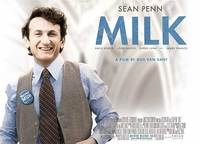
In case you missed it, Annie went on record last night predicting that Milk will sweep the Oscars– or at least, that it will take Picture, Director, and Actor. Were I a betting man, I’d still put my money on Slumdog, but I think Milk is the only nominated film that really has a chance of taking it down, largely because the other three films are, um, really boring. But more to the point, I’m almost ready to say that I’m rooting for Milk; while I think that both it and Slumdog are significant achievements in filmmaking, and either one would be a deserving winner, it’s the former that seems to be staying with me a bit more than the latter, at least on an intellectual level.
And yet, there’s another part of me that dreads what seems bound to happen if Milk wins: All of the film’s detractors– be they folks who object to its politics, folks who think it’s simply not that great of a film, or folks who were really gung-ho about Slumdog– will, very probably, accuse the Academy of picking the movie not for its cinematic merits, but simply for its “cause.” Indeed, that’s a charge that has already been leveled by more than a few critics, who think the film is too conventional to warrant the heaps of praise it has received.
I’m certainly not privy to the Academy’s intentions, so if indeed Milk does win, I really won’t be able to say exactly why. I will say, however, that this movie– perhaps more than any other I’ve seen, at least recently– highlights the difference between a political film and a propagandistic one. Certainly, the movie has a political agenda, and, to that end, it’s a bold and fearless piece of filmmaking, one that never shies away from its cause, one that seems determined to stir up trouble and get right up in the face of those who might not share the same ideology. That said, I would also say that the film is inviting a serious conversation. It makes a persuasive argument (and I use that term descriptively, not necessarily evaluatively) for its side, but since when is that such a bad thing? Most Christian films make persuasive arguments of their own, it seems, and Milk never strikes me as demonizing those on the opposing side, nor does it seem uninterested in truly engaging principles and ideas.
In short, it tackles divisive issues with fervor, conviction, humor, compassion, and heart– and it invites (possibly heated) discussion. And I’m certainly not one to condemn a movie for having such grand aspirations, when so many films have such small aspirations. If Milk wins tomorrow, it may very well be because the Academy likes its politics– but that doesn’t mean it isn’t a dynamite movie, as well.