 In February I reviewed Peggy Orenstein’s new book, Cinderella Ate My Daughter: Dispatches from the Front Lines of the New Girlie-Girl Culture. The book takes a hard look at the culture that imposes itself on our nation’s daughters, and challenges the notion that it is altogether harmless. I thoroughly enjoyed the book and I highly recommend it. In a media atmosphere where the facts are often harnessed to fuel fear, Orenstein manages to inform her readers with sobering research without crossing into full-on paranoia.
In a more recent New York Times article, “The Good Girl, Miranda Cosgrove,” Orenstein continues her exploration of the themes in her book. The article features teen star Miranda Cosgrove, who shot to fame in her role on the hit Nickelodeon show iCarly. Cosgrove, who turns 18 in May, stands at the edge of a precipice with her adulthood stretching out before her. And like the teen stars that have preceded her, many are watching to see how she will emerge in the next season of life. Gracefully, clumsily, or catastrophically?
Orenstein is troubled by the media pressure cooker in which young women like Cosgrove exist. But even more concerning is the manner in which these young ladies’ virtue is marketed like a product. For the NYT, Orenstein wrote,
For as many seasons as the illusion can be maintained, [teens stars] remain, at least onscreen, uncomplicated, untroubled good girls, on the verge of, but never actually awakening to, their sexuality. There is a lot of money to be made—and a lot of parental anxiety to be tapped—by walking that line.
At this point in her career, Cosgrove shines as an unsullied embodiment of all the qualities a parent desires in a role model. No objections here. But things get complicated when Christians consider how to respond to an industry that uses morality as a marketing device. Should we praise these young women as role models, or hold them at arm’s length?
Cosgrove’s pristine image is inextricably tied to her career, a dynamic that presents us with two key problems. Orenstein summarizes the first one in her book. Of the partnership between morality and profit she writes, “I suspect that you cannot commodify a girl’s virginity without, eventually, commodifying what comes after” (129). In other words, the entertainment industry isn’t promoting chastity; it’s selling what sells. Up until a certain age, innocence is a powerful marketing image, but when purity no longer garners attention, these young starlets turn to what sells. And what usually sells is sex.
Orenstein thoroughly critiques the entertainment industry and its exploitation of innocence, so I won’t cover old ground here. But there is an additional problem that Orenstein does not broach, and it is here that Christian ethics provides a unique and powerful voice. The second problem we encounter in the combination of purity and profit is divorcing ethics from its necessary context.
In the entertainment industry and even in our churches, good behavior is often applauded regardless of motivation. Purity and abstinence are treated as stand-alone virtues, with or without a transformed heart. That is not to imply that a parent is wrong to praise her child when she makes a good decision. But such affirmation must occur within the larger context of Christian salvation. Without that language as a foundation for ethics, we stray dangerously close to works righteousness.
The relationship between virtue and free grace is what makes Christian ethics Christian. This point could not be made clearer by Orenstein’s reaction to young women like Cosgrove. Orenstein condemns the industry that manipulates young women into unhealthy expressions of their sexuality, but she does not oppose the expressions themselves. In her book, for example, Orenstein worries not that her daughter will have premarital sex, but that she will have it for the wrong reasons. In fact, Orenstein hopes that her daughter will have a vibrant, healthy sex life long before marriage.
Here, Orenstein attempts to construct a context for her sexual ethics—namely one of safety and mutuality. For Christians, our understanding of sex and chastity certainly includes those elements, but we also acknowledge there must be more. A Christian conception of sex must be rooted in the One who created sex, love, and marriage. Within this context sex is to reflect the self-giving, sacrificial, and eternal love of Christ, which means it can occur only within the bonds of marriage. And most important of all, Christians mirror the character of God through our sexuality as a response to God’s love, not as an obligation. We do not need to earn that which we already have.
There is nothing wrong with affirming and admiring the goodness of people outside the church as a sign of common grace. I heartily commend Cosgrove for her dedication to being a good role model. But here a caution is also in order. The entertainment industry simultaneously capitalizes on the innocence of young women while shaping our language about sex and chastity, and that language is antithetical to the gospel of Christ.
Though Orenstein’s beliefs may not be entirely compatible with the Christian faith, she challenges us to question how we talk about sex and chastity. Christians may discourage premarital sex and uphold fidelity in the name of Christ, but that doesn’t mean our language about virtue is, essentially, Christian.
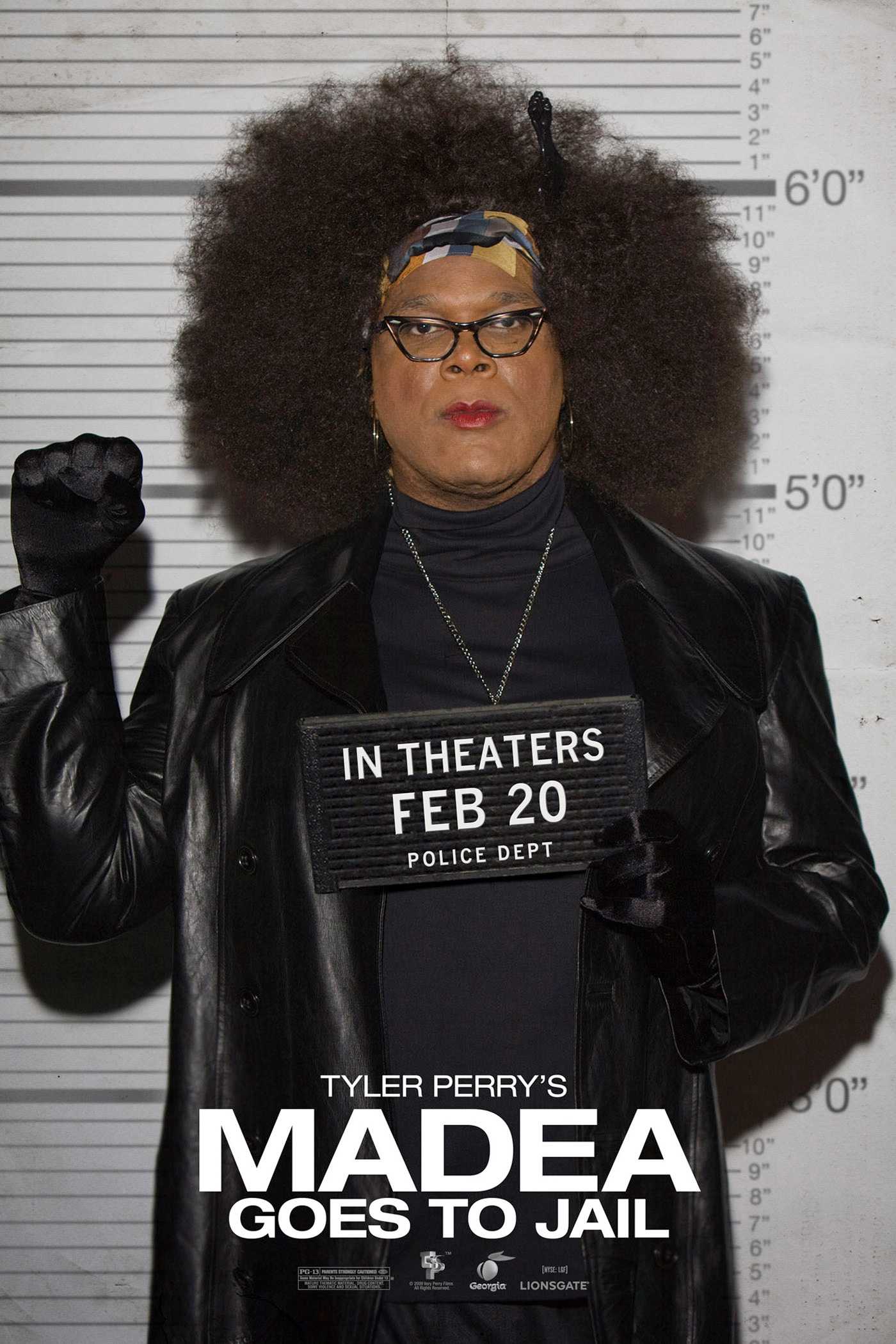
The latest issue of Entertainment Weekly includes a thought-provoking article about the films of African-American writer/director/actor Tyler Perry, one of the hottest names at the box office in recent years. His current film, Tyler Perry’s Madea Goes to Jail, opened at No. 1 and has earned more than $83 million. His seven films overall have grossed over $360 million.
Popular, yes. But are they politically incorrect? Or even offensive?
“Tyler Perry’s films are rooted in some of the worst stereotypes that have ever existed,” Todd Boyd, professor of critical studies at USC School of Cinematic Arts, told EW.
Donald Bogle, author of Toms, Coons, Mulatoes, Mammies & Bucks: An Interpretive History of Blacks in American Films, tends to agree: “If a white director put out this product, the black audience would be appalled.”
Perry’s critics argue that his movies include “regressive, down-market stereotypes,” as EW put it: “In many of his films there’s a junkie prostitute, a malaprop-dropping uncle, and Madea, a tough-talking grandma the size of a linebacker (‘Jemima the Hutt,’ one character calls her).” Bogle says that Madea has “connections to the old mammy type. She’s mammy-like.”
Perry comes to his own defense, telling EW, “These stories have come out of my own pain and everything I’ve been through. These characters are simply tools to make people laugh. And I know for a fact that they have helped, inspired, and encouraged millions of people.”
Indeed, Perry, a Christian, infuses his movies with stories of hope, forgiveness, and redemption – partly mirroring his own personal journey out of a painful past, which he shared with CT Movies in this interview.
What do you think of Perry’s films (if you’ve seen any)? Do they perpetuate stereotypes, or not? Are they uplifting and inspiring? Chime in on the discussion thread below.