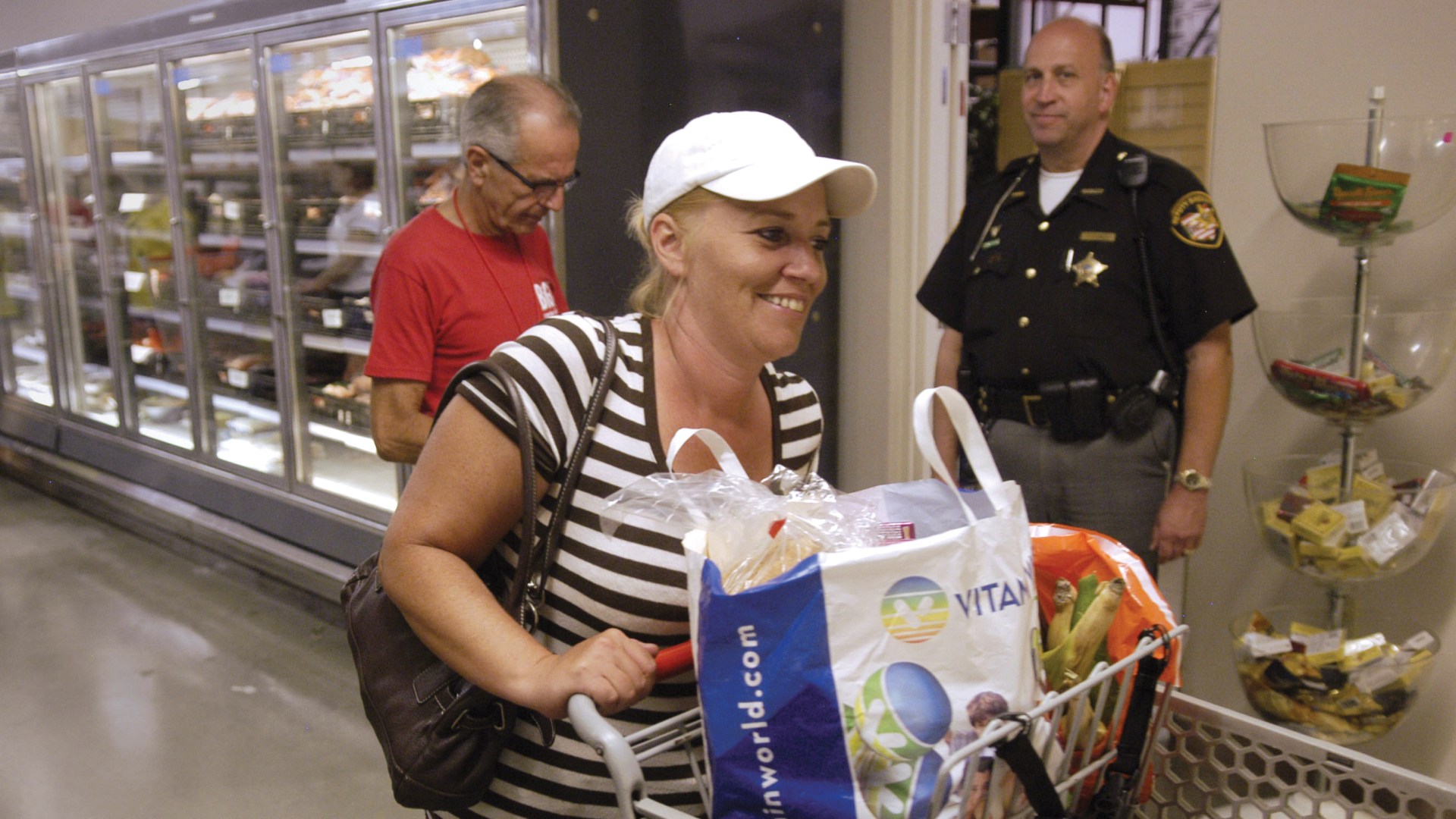

It didn't seem right—just letting people take as much free food as they wanted.
Volunteers struggled with the concept when an eastern Ohio food pantry began letting clients choose their own food instead of giving them a pre-boxed three-day supply. But it became clear people weren't going to empty the shelves.
"They looked at us like, 'Where do I begin, and how much should I take?'?" recalled Janet Gore, director of Journey's End Ministries in Newcomerstown. "The poor have a lot of pride. They take what they need."
Far from depleting its stocks, Journey's End has seen its cost per person drop as well as a six-fold increase in users since switching to client choice in 2008. Factory closings drove up the numbers, but so did giving clients dignity, Gore said. "We made it much more comfortable for them to shop."
The church-supported pantry is one of many that let people shop for what they want rather than pre-packaging what's supposed to be good for them. It's a growing philosophy that enables pantries to feed more people and waste less food, advocates say.
"The trend in recent years is very much to move to that system, where people are selecting exactly what they want," said Ross Fraser, spokesman for Feeding America, a national network serving 29,000 pantries, 20 percent of which now use client choice. "We know people will use what they take."
Besides reducing thrown-out food, the system better reflects biblical principles, said John Arnold, executive director of Feeding America West Michigan and a leading proponent of client-choice. "There's no admonishment in Scripture about being overly generous to people who need it."
The debate about how best to feed the hungry has taken on greater urgency amid a recession-wracked holiday season. Feeding America's 200 food banks (suppliers to food pantries) serve 37 million people, including 14 million children—an increase of 46 percent since 2006.
Food banks can't keep up with the need despite bringing in more food than ever, Fraser said. But client choice "optimizes the food that you have" by providing people with what they can and will use. "There's no point giving uncooked pasta to someone who's homeless and doesn't have the means to cook it."
Arnold contends that hunger could be conquered if surplus foods were more efficiently delivered. He said research shows that, in addition to client choice, best practices include purchasing from food banks, relying less on food drives, and setting up mobile pantries.
Those methods would vastly reduce the 6 billion pounds of produce wasted each year and respect people's food choices, he adds, rather than "foist on them things that are maybe more nutritionally perfect that they don't use."
Though commendable, charity programs provide only a fraction of the food provided by federal programs such as school lunch and food stamps, cautions Bread for the World president David Beckmann.
"We can't food-bank our way to the end of hunger," said Beckmann, co-recipient of the 2010 World Food Prize. "Christian people need to change the politics of hunger as well."
Copyright © 2010 Christianity Today. Click for reprint information.
Related Elsewhere:
Previous Christianity Today articles about food include November's cover story, "A Feast Fit for the King."
Also:
Pennsylvania: The Bake Sale is Back in Business | After a health inspector gets zealous, state passes law letting nonprofits sell homemade food. (June 10, 2010)
'Femivores' and Food Ethics | The trend toward locally grown, naturally raised food is giving some women more fulfilling lives than the workplace ever did. (March 16, 2010)
Hunger Isn't History | The world produces more food than ever. So why do nearly a billion people still not have enough to eat? (November 7, 2008)
Food Fights | State governments increasingly regulate church potlucks. (March 15, 2005)