Church Life

Poet Amena Brown Speaks the Truth in Rhythm and Rhymes

Faith stirs the spoken word poetry.

Stan Kaady

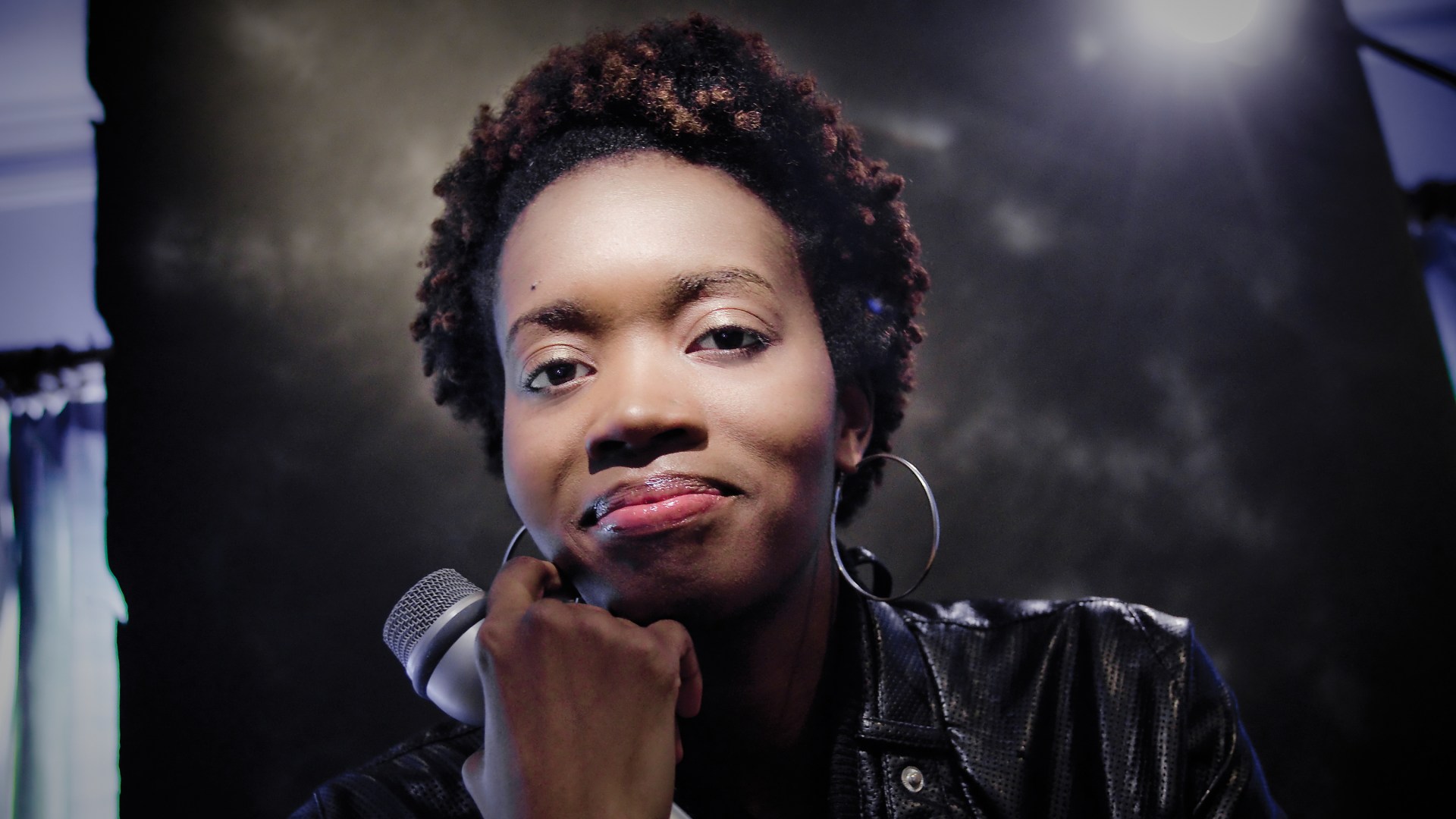
As a teen, Amena Brown listened to hip-hop and dreamed of being the next Lauryn Hill; she even had a stage name, "Teknique." But she never could quite make her rhymes mesh with the beat and the bars of the music, so she turned to spoken word poetry instead. Maybe she couldn't emcee, but when she took the stage for a poetry slam, Amena Brown was the bomb.

Today, her inspiring presentations are highly sought by churches and conferences (Catalyst, RightNow, Thirsty, and the National Youth Workers Convention, to name a few). In faith-based settings, Brown recites one- to four-minute poems with titles such as "Resurrection," "He Is Here," "Masterpiece," and "In the Beginning." In the secular setting of an open-mic poetry slam—often in Atlanta, where she lives—she'll perform rhymes like "First Crush," "Stupid Girl," and "A Few Good Men." All are delivered with passion, precision, and lively wordplay.

Brown believes the church is catching on to spoken word poetry. "More people are seeing how the spoken word form can articulate a message or make a point in a different way from a speaker or a song. And there are more poets performing God-ward content."

Question & Answer

You majored in English at Spelman College, right?

Yes. At first I thought about becoming a preacher. But I got into poetry, and wanted to get my MFA in poetry. I was denied at all three schools I applied to. At first I was angry at God, but then I started doing more with spoken word. It wasn't my plan, but it definitely was God's.

Why spoken word poems?

For a long time, I didn't want to perform my own poems. I would enter speech competitions, memorizing things by Maya Angelou or James Weldon Johnson, but I never won. My mom thought I should perform my own poems, but I didn't want to. She took one of my pieces and entered it into an NAACP poetry competition without telling me. I ended up winning, and had to go there and read it in front of them—and it was the most exhilarating experience. I was about 16 or 17, and it dawned on me that this is a gift from God that people want to hear. I've been performing my own work ever since she pulled that prank on me!

What makes spoken word poetry so effective?

It's on the line between what we love about hearing a person speak and what we love about music. It incorporates rhyme and rhythm, but also the passion of whoever is doing the work—a dramatic interpretation of the written word. I've seen it transcend culture and generation, and anybody can engage with it.

What's next for you?

I'm working on a poet and DJ presentation of some of the more worshipful pieces I've done. And I'm working on a CD, putting those same pieces to [background] music. I see myself doing this work for a while. My calling is writing and talking, and I feel that if I am doing that in a way that honors God for the rest of my life, then great.

More: AmenaBrown.com

Hometown: San Antonio

Church: Buckhead Church, Atlanta

Reading now: Jay-Z's Decoded

Listening to now: Red Hot Chili Peppers, "Under the Bridge"; Bobby Caldwell, "Open Your Eyes"

Favorite movie: The Godfather

Favorite Bible verse: Philippians 2:14

Favorite website: urb.com

Best meal you cook: Chicken marsala

Hobbies: Going to live music shows, movies, soul and hip-hop music

Copyright © 2011 Christianity Today. Click for reprint information.

Related Elsewhere:

See more at AmenaBrown.com.

Previous "Who's Next" sections featured David Cunningham, Timothy Dalrymple, John Sowers, Alissa Wilkinson, Jamie Tworkowski, Bryan Jennings, L. L. Barkat, Robert Gelinas, Nicole Baker Fulgham, Gideon Strauss, W. David O. Taylor, Crystal Renaud, Eve Nunez, Adam Taylor, Matthew Lee Anderson, Margaret Feinberg, and Jonathan Merritt.

Also in this issue

The CT archives are a rich treasure of biblical wisdom and insight from our past. Some things we would say differently today, and some stances we've changed. But overall, we're amazed at how relevant so much of this content is. We trust that you'll find it a helpful resource.

Cover Story

Proselytizing in a Multi-Faith World

Ed Stetzer

God of the Schizophrenic

David Weiss

Evangelism as Sacrament

Owen Strachan

A Beautiful Anger

Linda Falter

Why We Love Amish Romances

Eric Miller

Books to Note

Excerpt

Counterfeit Gospels

Trevin Wax

Review

The Gods of the Checkout Aisle

Todd C. Ream

Wilson's Bookmarks

John Wilson

Carolyn Arends Contemplates Her Own Death, and Yours

Do Muslims and Christians Worship the Same God?

News

Sweat Lodge Prayers

Trevor Persaud

My Top 5 Books On Poverty

Brian Fikkert

Editorial

An Everyday Scandal

A Christianity Today Editorial

News

Rehab Revival: Evangelism Among Addicts Seeing Success

Bill Yoder in Moscow

An Improbable Alliance

News

Tough Calling in Africa

Ruth Moon in Niger

News

Pushing Back the Desert: Niger's Christians Get Creative for Daily Bread

Ruth Moon in Niger

Readers Write

News

Exit Visa: Iraqi Christians Look for Safe Haven

Ruth Moon

News

Thanksgiving Question Nearly Deports Tortured Christian

What's a Congregation Worth?

What Christian Novel Should Be Made Film?

Roy Anker, Steven D. Greydanus, and Barbara Nicolosi

News

Quotation Marks

Two Peoples Separated by a Common Revelation

Multi-Faith Matters

News

Go Figure

News

Borders' Bankruptcy Affects Christian Orgs, Pregnancy Center Signs Violate Free Speech & More News

News

Should Congress Change Pastors' Housing Allowances?

Compiled by Ruth Moon

Review

Rob Bell's Bridge Too Far

View issue

Our Latest

Turn Toward Each Other and Away from the Screen

Perhaps technology has changed everything. But God is still here, still wiring humans for connection and presence.

The Call to Art, Africa, and Politics

In 1964, CT urged Christians to “be what they really are—new men and women in Christ.”

The Bulletin

Pete Hegseth’s Future, Farmers on Tariffs, and Religious Decline Stalls

Mike Cosper, Clarissa Moll

Hegseth scrutinized for drug boat strikes, farmers react to Trump’s tariffs, and a Pew report says religious decline has slowed.

The Debate over Government Overreach Started in 1776

Three books to read this month on politics and public life.

Devil and the Deep Blue Sea

BONUS: Amanda Knox on the Satanic Panic and Wrongful Convictions

How elements of the satanic panic and conspiratorial thinking shaped a wrongful conviction.

The Chinese Christian Behind 2,000 Hymns

X. Yang

Lü Xiaomin never received formal music training. But her worship songs have made her a household name in China’s churches.

Death by a Thousand Error Messages

Classroom tech was supposed to solve besetting education problems. The reality is frustrating for students and costly for taxpayers.

The Surprising Joys of a Gift-Free Christmas

Ahrum Yoo

Amid peak consumerism season, I prayed for ways to teach my children about selfless giving.

Apple PodcastsDown ArrowDown ArrowDown Arrowarrow_left_altLeft ArrowLeft ArrowRight ArrowRight ArrowRight Arrowarrow_up_altUp ArrowUp ArrowAvailable at Amazoncaret-downCloseCloseEmailEmailExpandExpandExternalExternalFacebookfacebook-squareGiftGiftGooglegoogleGoogle KeephamburgerInstagraminstagram-squareLinkLinklinkedin-squareListenListenListenChristianity TodayCT Creative Studio Logologo_orgMegaphoneMenuMenupausePinterestPlayPlayPocketPodcastRSSRSSSaveSaveSaveSearchSearchsearchSpotifyStitcherTelegramTable of ContentsTable of Contentstwitter-squareWhatsAppXYouTubeYouTube