In the immediate aftermath of Osama Bin Laden’s assassination, religiousleadersdebated whether the the military action was just and what the rightresponse to such an event should be. For political activists, another question emerged: What does Bin Laden’s death mean for U.S. foreign policy? Most agreed that it is “a turning point,” but there is less agreement over where exactly the U.S. should turn toward at this point.
 This week, in the final installment of our Meditation Monday devotions for 2023, Heather explains why Christmas is an appropriate time to be finishing this series.
“Biblically speaking, there are 400 years of silence between the book of Malachi, which closes out the prophetic ministry of the Old Testament, and the words the angel spoke to Zachariah, who would be the father of John the Baptist, the cousin of Jesus. Christmas is a reminder of the fulfillment of all the promises that happened despite that 400 years of silence.”
Though we now have the benefit of seeing God’s faithfulness on the other side of those 400 years of silence, it is challenging–often exasperatingly so–to have to wait on the fulfillment of God’s promises in real time. How do we maintain our faith in the midst of deafening silence? How do we keep following God when it’s not clear where he’s leading us?
Heather continues: “In the first chapter of John’s Gospel, when the disciples are approached by Jesus, they say to him, ‘Rabbi, where are we going?’ Come, he replies, and you will see. I think of this often. Even the disciples who walked with Jesus in the flesh often didn't know where they were going. Apparently, that is what it means to follow Jesus.”
Listen to Heather’s thought-provoking message right now. And if it encourages you, please share it with others.
Host Bio
Heather Thompson Day is an associate professor of communication at Andrews University in Berrien Springs, Michigan. She is the author of eight books, including I’ll See You Tomorrow and It’s Not Your Turn. Reach out to Heather on X, the app formerly known as Twitter at @HeatherTDay and on Instagram @heatherthompsonday. Get Heather’s weekly inspirational email delivered to your inbox every Friday night at 7 PM EST. Sign up now at: www.heatherthompsonday.com/links.
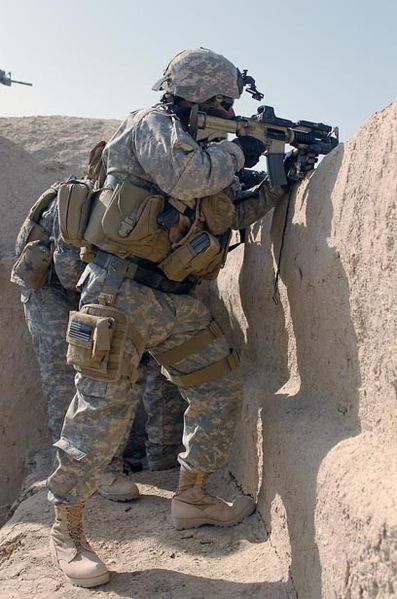
For Sojourners president Jim Wallis, the death of Osama Bin Laden should signal the end of the war in Afghanistan, a war he said “no longer has any justification.”
“The completion of the largest and most expensive manhunt in history for Osama bin Laden must be a turning point to completely rethink our response to terrorism,” Wallis said. “The threats of terrorists are still real, but it is now clear that full-scale military action is not the most effective response.”
David P. Gushee of the New Evangelical Partnership for the Common Good echoed Wallis’ view. Gushee said there is now the “opportunity … for the United States to reconsider the questionable moves we have made in the name of the war on terror. From our perspective, this includes … the expansion rather than ending of the ten-year-old war in Afghanistan.”
Richard Land, president of the Southern Baptist Ethics & Religious Liberty Commission, said Bin Laden’s assassination was indeed a “turning point,” but one in the war on terrorism that he said included both Afghanistan and Iraq. He compared it to the battle of the Midway in World War II that began to put the Japanese on the defensive.
“We defeated [al-Qaeda] in Iraq. And we’re doing the same thing in Afghanistan now. This is not the end of al-Qaeda, not the end of the Taliban,” Land said.
Breakpoint’s Chuck Colson also saw this as “a major turning point in the war against terrorism.” But he said, “the real turning point could be in how we conduct this war hereafter.”
Colson reiterated his belief that the troop levels in Afghanistan is no longer a “just war” because the goal is now about nation-building. He said reduced troop levels would save both dollars and lives.
“The success of the operation against bin Laden proves that targeted, behind-the-scenes operations based on solid intelligence give us the best chance to eliminate the terrorists. It’s like using a rifle instead of a shotgun,” Colson said.
Heidi Unruh of Evangelicals for Social Action said that despite Bin Laden’s death, the war in Afghanistan remains complex. The assassination raises the question of whether the U.S. should walk away from the region or increase its efforts.
“Our first question as Christians remains: How do we make use of our national resources—including the precious lives of our soldiers—in a way that more closely reflects the values and aims of the kingdom of God?” Unruh said. “I believe this means, in part, preparing for the 100,000 troops in Afghanistan to come home, without wavering in our commitment and responsibility to help empower the Afghan people to rebuild their economy, civil society, and a more just government.”
For more commentary on U.S. action in Afghanistan see The Village Green from the September 2010 issue of Christianity Today:
Stay in Afghanistan? Let Jesus Call the Shots by Will Willimon
Stay in Afghanistan? It’s the New Normal by Chris Seiple
Stay in Afghanistan? There’s No Other Choice by Jean Bethke Elshtain