The Census Bureaureported Tuesday that poverty is continuing to rise in the United States. The poverty rate—the percentage of Americans living below the poverty line—reached 15.1 percent, up from 14.3 percent in 2009. There are now more than 46 million people in poverty and nearly 50 million without health insurance coverage. Poverty is now the worst it has been since 1993.
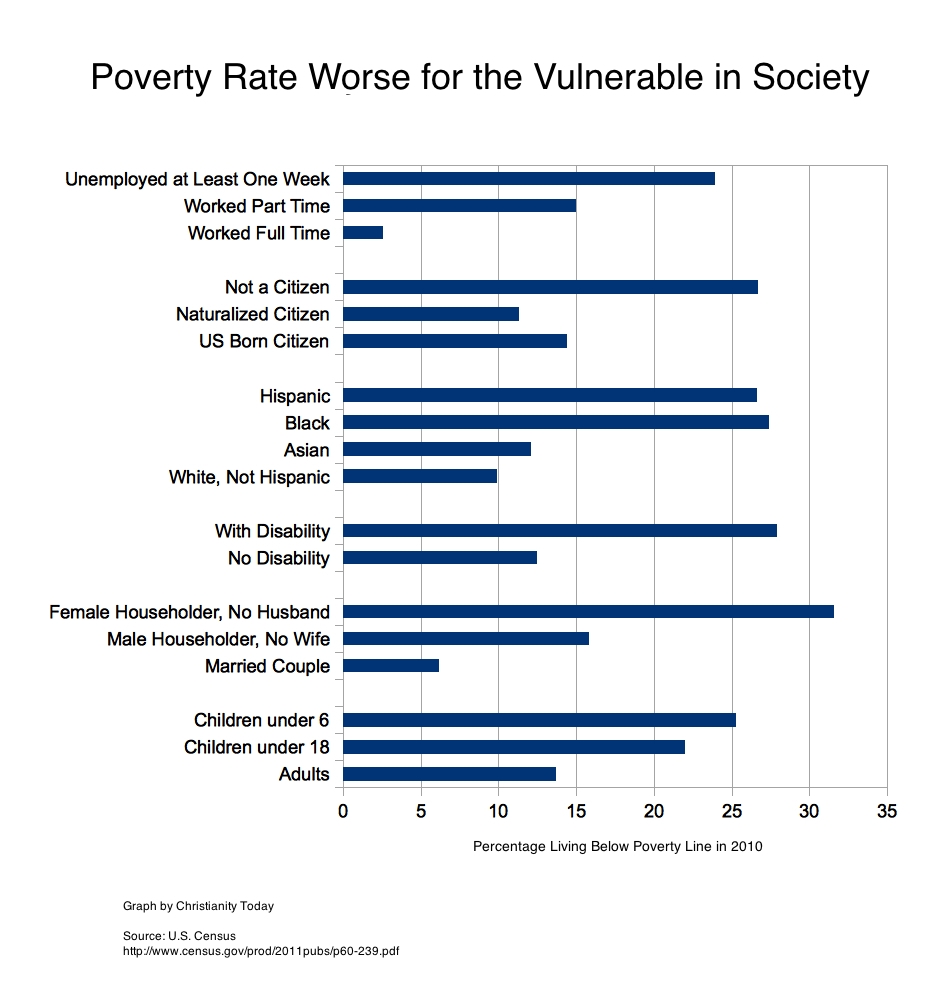
The situation is even worse for children: One in four children under six years of age now live in poverty. This is nearly twice the rate of poverty for adults, and the situation for children is made worse if they live in a single-parent household. Only 6.2 percent of families led by married parents are below the poverty line. If a wife is absent, the chances of living in poverty jump to 15.8 percent. Without a husband, a family does even worse. Nearly one in three families headed by single mothers lives below the poverty line.
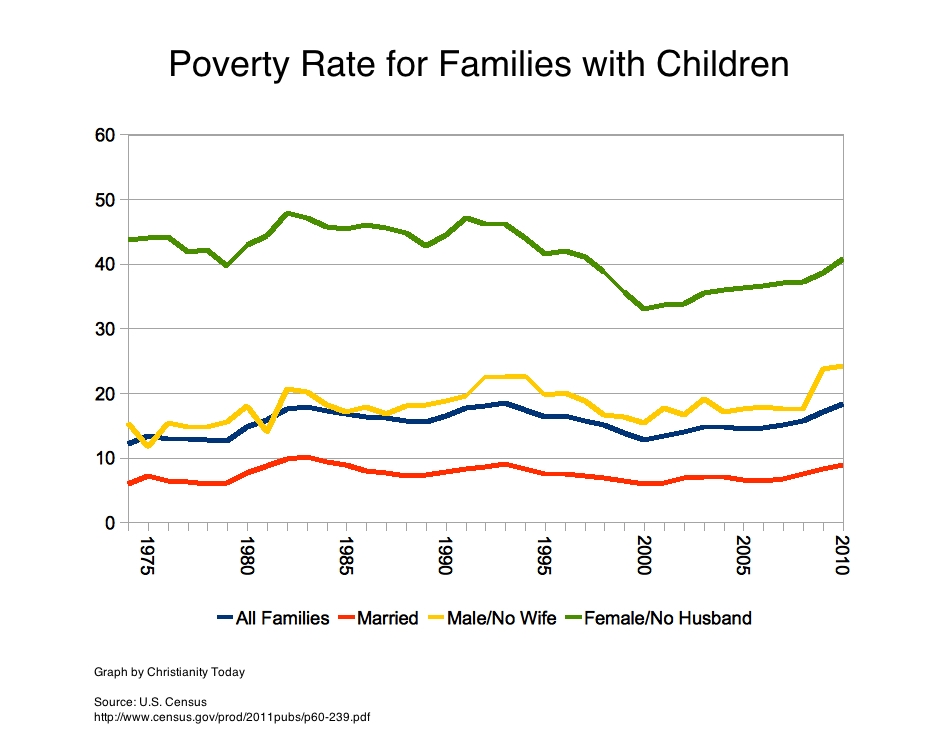 Illustration by Amy Jones
Poverty continues to be worse for other vulnerable people in society. There are stark contrasts between key demographic groups in America. Compared to where they were in 2009, those with disabilities were hit hardest by the economy. They have a poverty rate twice that of those who are not disabled. African-Americans and Latinos also continue to have a poverty rate twice that of Whites (not Hispanic) or Asian-Americans. Citizens are more economically secure than those living in the U.S. who are not citizens.
This week on The Bulletin, hosts Mike Cosper, Nicole Martin, and editor in chief Russell Moore sit down with special guest Charles Camosy, professor of medical humanities at the Creighton University School of Medicine, to talk about the pope’s latest condemnation of surrogacy and what it means to hold a pro-life ethic over and against consumerist culture. The episode continues with honest words about why we evangelicals need to sometimes critique our own and how politics muddies the gospel when it enters the pulpit. Listen for compelling, thought-provoking discussions that will expand your faith.
“The Bulletin” is a production of Christianity Today
Executive Producer: Erik Petrik
Producers: Clarissa Moll and Matt Stevens
Associate Producer: McKenzie Hill
Editing and Mix: TJ Hester
Music: Dan Phelps
Show Design: Bryan Todd
Graphic Design: Amy Jones
Social Media: Kate Lucky
Sojourners president Jim Wallis said that the new figures raises the importance of poverty as both a religious and political issue.
“These new poverty numbers should be the number one religious issue for the 2012 presidential election,” Wallis said. “If a candidate for president claims to follow Jesus, then their concern should be for the poor. If they profess faith in God, they should faithfully observe God’s concern for the oppressed. It’s up to voters to evaluate how the candidates respond to these numbers and it’s up to the media to hold leaders accountable to their professed beliefs.”
One key to getting of poverty is employment. Obviously, a job helps people stay of out poverty, but the effect of working full-time is significant. Those working full-time have a poverty rate of only 2.6 percent. Working part-time (but for the whole year) increases the chances of being in poverty by over 500 percent. Those who are unemployed for as little as one week have an 800 percent greater likelihood of living below the poverty line. And unlike race, disability, or citizenship, employment is something that can change if the economic conditions improve.
Bread for the World president David Beckmann said that the figures should also serve as a warning to the so-called Super Committee. This bipartisan commission is considering how to reduce the federal deficit. Bread for the World is part of the ecumenical Circle of Protection, a coalition that includes the National Association of Evangelicals, Catholic Charities, and the National Council of Churches. The Circle is actively lobbying Congress and the White House for the continuation of federal anti-poverty programs.
“Low-income working families did not create the economic situation that our nation is in, but they tend to be the first hurt and the last to recover during a recession,” said Beckmann. “These new poverty figures indicate that many Americans are still suffering.”