Just one thing rivals the horror of being raped: divulging the details of that experience. Exposing yourself as a victim of rape is to be raped again; in the naked vulnerability of the telling, you not only relive those incalculably harrowing moments, but also risk “a second assault in the form of negative reactions, such as victim blaming and disbelief.”
University of Virginia student called Jackie took that risk last month in Sabrina Rubin Erdely’s Rolling Stone exposé, “A Rape on Campus: A Brutal Assault and Struggle for Justice at UVA.” Erdely recounts Jackie’s alleged gang rape by seven fraternity brothers. Like many women before her, she faced troubling responses from her friends, who convinced her not to go to the hospital, and school administrators, who minimized her claims.
Now, her story is being questioned following the reporter’s decision not to seek comment from the men accused of raping her. Through an investigation and subsequent interviews, the Washington Post cast doubt on some of the key elements of Jackie’s story—leading Rolling Stone to issue an apology acknowledging discrepancies in her account and gaps in their reporting.
When journalists fail to do due diligence in covering stories as sensitive and significant as campus assault, it is victims who pay the price. The pain of speaking out about rape gets compounded when audiences have learned that survivors’ stories aren’t reliable, corroborated, or true. The chorus of victim-blaming sings out once again.
But there’s a reason Jackie’s story—true, partially true, or not—took off like it did. College students and grads across the country know that these kinds of incidents are happening and that administrators are trying to keep it quiet.
The editor of UVA’s student newspaper wrote for Politico that fellow students took issue with certain characterizations of their campus in Rolling Stone, but they generally didn’t question the incident described; in fact, students saw it as completely possible, unsurprising, even familiar.
These things happen. The recent exposé is just one chapter in the burgeoning literature documenting cases of rape on college campuses. Long considered the “fate worse than death,” rape is the most-feared crime among young women. The fear of rape escalates their fear of all other crimes. “Most men fear getting laughed at or humiliated by a romantic prospect,” wrote security specialist Gavin de Becker, “while most women fear rape and death.”
This fear is well founded. According to the Department of Justice, nearly one in five women will be sexually assaulted during their college years. Last month, demonstrators on more than 130 campuses nationwide protested the campus sexual assault “epidemic” and the attempts of school administrators to ignore or silence victims. As of mid-October, 85 colleges and universities are currently under Title IX investigations over concerns for how they mishandle sexual violations on their campus.
But the pattern of ignoring, silencing, and blaming victims is much wider than the college campus—it is endemic to the whole of Western culture. She must have deserved it, we say. She shouldn’t have been there, wearing that, drinking that. To victims of domestic violence, we say, She should have left. She shouldn’t have provoked him. To victims of racial injustice, we say, He shouldn’t have acted that way with the police.
Psychologists believe that victim-blaming is linked to a cognitive bias known as the Just World Fallacy, which holds that the universe is a just place where unseen forces mete out justice for each person’s actions. Hindus and Buddhists call this karma. But even Christians and secularists can be drawn to this idea. We want to believe that for every action, a person will receive a morally fair reaction.
When bad things happen to good people, it encroaches upon our conception of the world as safe and just. We feel vulnerable and threatened. If bad things could happen to them, they could happen to us and those we love. It’s easier then to psychologically distance ourselves from victims, saying that what happened to them would never happen to us because we are not as foolish or unwise as they.
With this view of the world, we fail to accept the actual reality of evil. If evil is real, then the world is not safe and just and anything can happen to anyone at any time. Without karmic retribution on earth, it becomes incumbent upon us, the people of a just God in an unjust world, to seek justice. The existence of evil demands we seek to make it right, demands we advocate on behalf of victims, demands we seek justice.
As the Scripture proclaims in Micah, “He has told you, O man, what is good; and what does the LORD require of you but to do justice, and to love kindness.” We resist these demands, and rather than courageously accepting the reality of evil and advocating for justice, we psychologically distance ourselves, averting our eyes to the evil right before us.
In the midst of what has become a national conversation over sex on campus, a country eager to see substantial change in how schools respond to incidents of sexual assault and how they work to prevent it from happening in the first place, Christians must be sensitive to this issue. Rape is a serious crime, an act of unspeakable violation. There are far more victims than will ever come forward out of fear of being blamed or disbelieved. In our churches and on-campus ministries, we can model a culture of courage and candor, one in which rape victims feel safe, supported, and validated.
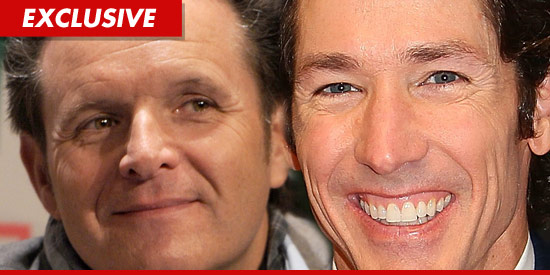
Mark Burnett, producer of the Survivor and The Voice reality TV shows, has convinced his friend Joel Osteen to sign on for his own reality TV gig, TMZ recently reported, running the image at left with their story.
A follow-up story in Entertainment Weekly said the show, titled Pack Your Bags, will bring “missionary-style giving to prime time.”
According to EW, “the popular Houston megachurch pastor will lead volunteers to a surprise destination to try and make a difference in other people’s lives. For example: To put on a homecoming party for a group of soldiers returning from oversees to their hometown, or bringing holiday cheer to an elderly care home. ‘You get on plane, you don’t know where you’re going, you don’t know what you’re going to be doing,’ Burnett says.
“Burnett says our current economic climate makes this an ideal time to launch a show like Pack Your Bags. ‘America is the most giving nation on Earth,’ says the British producer, who became an American citizen two decades ago. ‘One of the best ways to feel better is by doing something for somebody else.'”
Methinks I’ll leave the comments – snarky or otherwise – to the readers here. The floor is yours.