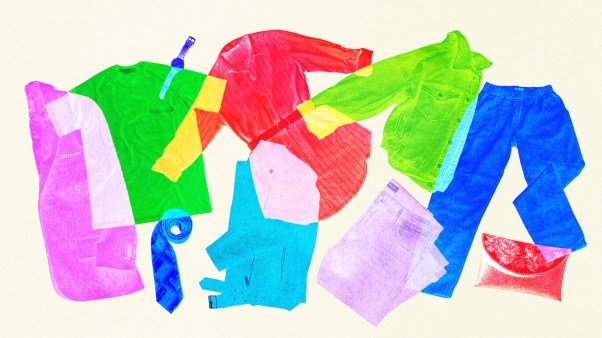
There's a simple reason why manual laborers are called "blue-collar": The color blue, it turns out, hides dirt better than the white seen in office buildings. But "blue collar" defines more than work apparel, of course. It defines industry, even a way of life. And its stereotypes are often unflattering.
But a metal products manufacturer in Colorado is working to undermine those stereotypes, right on the shop floor.
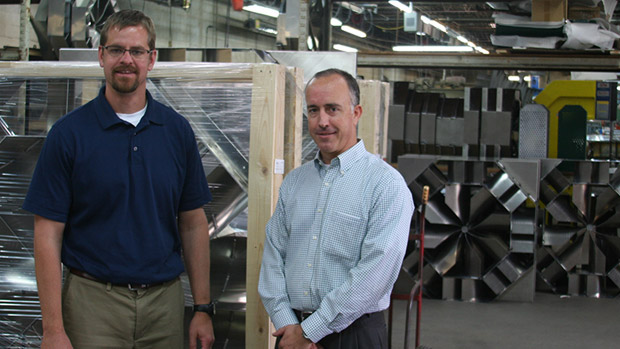
Sandwiched between rail lines and a tire depot, the Blender Products factory hides in a quiet neighborhood in Denver. The nondescript warehouse looks from the outside as nondescript as most warehouses do. But the way Steve Hill and Jim Howey lead inside the building is unusual in an industry known for top-down hierarchies of management.
"The metal fabrication business is extremely cutthroat," says Hill. "Workers are given a singular task, and maximum output is demanded. They're simply a factor of production. As a general rule, they have no access to management. There is very little crossover between guys on the floor and guys in the offices."
Hill and Howey aim to subvert the us-versus-them mentality. Many days they walk the shop floor, engaging their workers as peers. Employees on the floor are treated as importantly as the managers, undermining the adversarial culture simmering in many manufacturing businesses.
"The company has tried to abide by a simple philosophy concerning our employees," Steve said. "Pay them well, provide great benefits, and invest in lives. . . . The guys in our shop . . . know that I'm a human too. I have many of the same struggles they do. Showing humanness to people is key to disarming those stereotypes."
Extraordinary moments of God's grace abound. One longstanding Blender employee endured a season of family crisis. In that moment, he turned to those closest to him for support, prayer, and care. For him, those people were his colleagues. He openly shared his pain and his managers prayed for him and helped him find his footing. Baptized soon thereafter, the employee's tragedy has been redeemed, forever changing the trajectory of his life.
"At our company, we are committed to three things: Provision, attention, and inclusion," says Hill. "Even if it's just a few minutes, it's important for our guys to know we care about more than just their work lives."
The Blender Products values aren't just tucked away inside the employee manual, however. They're exemplified in the culture of the company. With an average staff tenure exceeding 12 years, it's clear this is a special place. Six of the nineteen employees have worked there for over 20 years.
The very work that Blender employees accomplish benefits a broader community. On the shop floor, talented metal artisans convert stacks of sheet metal—what looks like an oversized stack of paper—into massive fans that improve the efficiency of machinery by mixing airstreams. Their proprietary mixing designs decrease pollution, reduce machinery fire risks, and improve ventilation wherever they're installed. Fastened in hospitals, schools, office buildings, and factories, they silently make buildings and machines work better and safer. There are many potential customers whom Hill and Howey hope to serve with their products. They say that whatever growth God provides means more opportunities for them to serve, which aligns with their commitment to stewarding what God has entrusted to them.
The manufacturing floor itself breaks norms. Anything but chaotic, the warehouse exudes peace and order. The Blender Products team assigns a high value to cleanliness. Machining expansive swaths of sheet metal is dirty business, but each corner of the facility appears purposeful and organized.
Hill and Howey are unabashed in their Christian identity. They cite Colossians 3:17—"And whatever you do, in word or deed, do everything in the name of the Lord Jesus, giving thanks to God the Father through him"—as a foundational verse for Blender Products.But while faith infuses their work, they also have misgivings about the assumptions many Christians assume about business leaders.
Steve and Jim lament how Christian business leaders are often short-sold. When these leaders are reduced to the number of tracts they dispense or Ichthuses they display, they argue, it undermines their primary contributions to our world: valuable products, meaningful work, and life-giving camaraderie.
"Operating a business unto the Lord is about producing a quality product or service, treating people well, and stewarding the proceeds," Howey says. "That's it . . . . Being a Christian in business isn't about tricking your employees into hearing the gospel. It's not about being a donor to nonprofits. It's not about making as much money now so we can retire and serve on ministry boards."
Their greatest challenge is balancing their equal commitments to productivity and to grace.
"We want to cultivate a healthy work environment," says Howey. "But we want people to get their work done. The pendulum of grace can swing too far. This isn't a love fest. It's a business."
The demands of a fast-paced manufacturing business play into this tension. When making simple decisions like how to use timecards and when to permit flexible work hours, Hill and Howey wrestle with how to be both highly productive and highly loving, to balance employee care and manufacturing excellence.
"It's seemingly impossible to have a highly productive work environment and not treat employees as simply factors of production," Hill says. "But we believe that all things are possible with God."
Blender Products isn't just a warehouse filled with steel and rivets. It's a manufacturing family. In an industry lacking exemplars, they forge a countercultural environment teeming in dignity, ingenuity, and grace.
Chris Horst is the director of development at HOPE International. He and his family live in Denver, Colorado. Chris blogs at Smorgasblurb, and you can connect with him on Twitter @chrishorst.