

News

Opening the Adoption Files

Secrecy gives way to relationships with birth mothers.

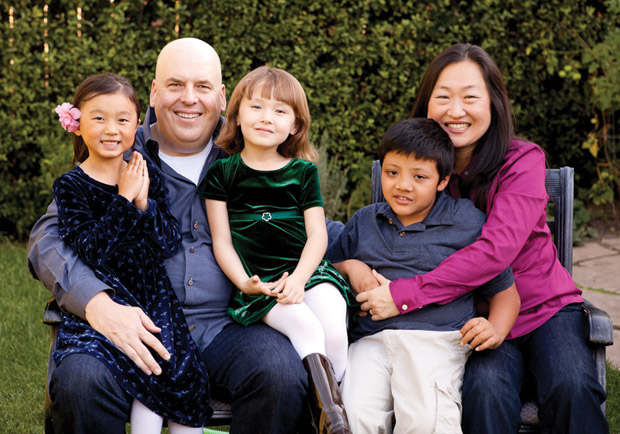
Vineyard pastor Alex Van Riesen, adopted at birth, wishes he'd known his birth parents better. So he and his wife, Susan (right), allow their adopted daughter, Hope (left), regular contact with her birth mother.

Vineyard pastor Alex Van Riesen, adopted at birth, wishes he'd known his birth parents better. So he and his wife, Susan (right), allow their adopted daughter, Hope (left), regular contact with her birth mother.

Kenneth Chan

When Hope Van Riesen turns 7 years old on November 1, she will celebrate with her adoptive parents and siblings in Palo Alto, California. That week, Hope will also see her birth mother, Miranda Wang.

With help from Bethany Christian Services, Wang arranged an agreement with Alex and Susan Van Riesen during her pregnancy that enables her to maintain a presence in Hope's life. Seeing Wang three or four times annually assures Hope that her birth mother loves her, say the Van Riesens.

A recent report by the Evan B. Donaldson Adoption Institute, which studied 4,400 recent adoptions from 100 agencies, estimates that more than half (55 percent) of U.S. infant adoptions are now open or "fully disclosed," involving ongoing, direct contact between birth parent and adoptive family. Only 5 percent remain "closed" or confidential.

"Openness in adoption is fast becoming the norm within the United States," noted the report.

Most adoptions became closed after the 1930s. Carol Demuth, a supervisor with Dallas-based Buckner International, attributes this to a desire to protect out-of-wedlock children from societal scrutiny.

But this admirable goal had unintended consequences.

"People were still returning to agencies and had questions about their birth family and why the adoption took place," she said, speaking from firsthand experience. Although grateful her single, 17-year-old mother placed her for adoption, Demuth said the forced separation left her with many questions.

Buckner migrated to open adoptions in 1995 after a decade-long transition.

"We see it as a good thing," said Bethany president Bill Blacquiere. About two-thirds of the agency's adoptions are now open, and the rest have mediated contact via photos, text messages, or Facebook posts.

However, open adoptions have their challenges. Sometimes one party violates the terms of pre-birth agreements, or both parties struggle to negotiate frequency and type of contact. Differing socio-economic standards, lifestyles, and values can cause conflict. Sometimes a birth mother seeks financial help, further straining relations.

"That's why it helps to have an agency involved," Demuth said.

Christian families tend to embrace open adoption more, said Demuth, who has worked for both faith-based and secular agencies. They are more open to viewing parenting as stewardship, showing hospitality to strangers, and trusting God to work out the challenges involved, she said. "[They] see that both [sets of] parents are part of God's plan for a child's life."

Together for Adoption executive Jason Cornwell sees the trend as good for children since it helps remove the stigma often associated with adoption. Benefits include children's awareness of their background, medical history, and reasons for their adoption—which helps prevent feelings of rejection.

"The child is only going to feel as good about their birth parents as their [adoptive] parents do," he said.

Phillip Wurster, director of Spirit of Faith Adoptions, also sees this as positive for birth mothers.

"In the past, the last thing [a mother] would see was that infant leaving her arms," he said. "She'd have no clue as to what happened to that child. That wasn't very healthful."

However, seminary professor Russell Moore—who, in the process of adopting two sons, became a leading evangelical advocate for adoption—said most people have little choice in "open or closed" questions. "In some cases, particularly international adoptions, the situation is by necessity closed because the birth parents cannot be found."


Also in this issue

The CT archives are a rich treasure of biblical wisdom and insight from our past. Some things we would say differently today, and some stances we've changed. But overall, we're amazed at how relevant so much of this content is. We trust that you'll find it a helpful resource.

Cover Story

50 Women You Should Know

Excerpt

How We Hide Our Suffering

Tullian Tchividjian

Downton Abbey's Real Legacy

The Yes and No of Healing

Sharon L. Lewis

News

Uganda Tells 1 Million Couples: You're Not Really Married

Isaiah Mbuga in Kampala

Review

The Foreign Mission Field Two Minutes Away

Jeff Haanen

News

How Not to Care for Widows

Sarah Eekhoff Zylstra

'Once Upon a Time:' When Pagans Get Real

Joy Craun

News

Christian Colleges Try Massive Online Courses

Melissa Steffan

Review

The Love We Dare Not Ignore

Love Isn't Easy in Man Camp Ministry

Ruth Moon in Williston, North Dakota

Is It Stealing From God to Split Your Tithe Between the Church and Other Charities?

Gary Moore, Amie Streater, and Douglas LeBlanc

Justin Zoradi Believes Education Can Eradicate Poverty

Mark Moring

How to Eat, Play, Love—And Do Other Christian Acts

Interview by R.M. Stone

Ajith Fernando: On the Anvil of Suffering

Tim Stafford

News

Why Churches Worship Illegally—In Paris

Allison J. Althoff

Wilson's Bookmarks

John Wilson

The Bonds of Freedom

Roger Olson

Review

Born to Sing: No Plan B

Josh Hurst

Review

Review: Finding God

Matt Reynolds

Review

Review: The Gentle Giant of Dynamite Hill

Matt Reynolds

My Top 5 Books on The Cold War

Paul Kengor

How Books Helped Save My Soul

Editorial

Abusing the Megaphone

A Christianity Today Editorial

Letters to the Editor

The Regnerus Affair

News

Is Megachurch Worship Addictive?

Compiled by Ruth Moon

News

Quotation Marks

News

Go Figure

The Spiritual Sex

A Women's Issue

News

Gleanings

Compiled by CT Staff

The Confessions of Scott Stapp

Mark Moring

View issue

Our Latest

Threatening Profound Evil Trivializes That Evil

Justin R. Hawkins

President Donald Trump and Pete Hegseth speak often of Christianity—but they seem to have no interest in its vision for just warfare.

The Iranian Church Persists

David Yeghnazar

Amid war, some Christians are evangelizing, preparing food for neighbors, and displaying other acts of generosity.

The Bulletin

Trump Threatens Iran, Artemis II Returns, and Anthropic’s AI Triggers Fear

Clarissa Moll, Russell Moore

Trump kills conservatism, astronauts head home, and Claude Mythos Preview deemed too dangerous for public consumption.

Review

Are Christians Rude Dinner Guests?

Three books on politics and public life about the common good, ISIS brides, and Ronald Reagan.

News

The Mississippi Farmer Who Helped Resettle 150 Ukrainian Families

Hannah Herrera

As the US makes it more difficult for refugees to stay, Rodney Mast and his church community are rallying around their new friends.

Analysis

Two States Test a New Pro-Life Law

Pro-lifers have just won legislative victories to restrict abortion pills in South Dakota and Mississippi. But will the laws work?

The Just Life with Benjamin Watson

Dr. Bernice King: The Truth About Nonviolence

Calling the Church to lead with clarity anchored in love.

News

Nigeria Prosecutes Suspects of 2025 Christian Massacre

Emiene Erameh

Survivors hope for justice in the trial of nine men accused of the slaughter of about 150 Christians in Benue state.

addApple PodcastsDown ArrowDown ArrowDown Arrowarrow_left_altLeft ArrowLeft ArrowRight ArrowRight ArrowRight Arrowarrow_up_altUp ArrowUp ArrowAvailable at Amazoncaret-downCloseCloseellipseEmailEmailExpandExpandExternalExternalFacebookfacebook-squarefolderGiftGiftGooglegoogleGoogle KeephamburgerInstagraminstagram-squareLinkLinklinkedin-squareListenListenListenChristianity TodayCT Creative Studio Logologo_orgMegaphoneMenuMenupausePinterestPlayPlayPocketPodcastprintremoveRSSRSSSaveSavesaveSearchSearchsearchSpotifyStitcherTelegramTable of ContentsTable of Contentstwitter-squareWhatsAppXYouTubeYouTube





