When it comes to the relationship between religion and science, the popular narrative has them at odds: the Creationists versus the Evolutionists, with the Intelligent Design crew running back and forth between the two. That’s the popular narrative, but it is increasingly untrue.
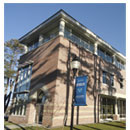
Last week, in the brand-new, state-of-the-art Ken Olsen Science Center, Gordon College in Wenham, Massachusetts hosted the inaugural Herrmann Lectures on Faith and Science. The result of a partnership between the college and the John Templeton Foundation, the series bears the name of Robert Herrmann, former executive director of the American Scientific Association and author of several books on religion and science, who taught at Gordon, Boston University, and Oral Roberts University.
This year’s featured lecturer was Walter Thorson, a physical chemist who has critiqued the Intelligent Design hypothesis. Thorson gave three talks, and each talk was followed by brief comments from two respondents. Among the respondents were Gordon College faculty members Marv Wilson, Craig Story, and Greg Cramer, along with Karl Giberson, Randy Isaac, and David Lahti.
The starting point for each of Thorson’s lectures was not the antagonism between religion and science but rather the assertion that they occupy separate spheres and help us understand the world in different ways. In his first lecture, called ” ‘Fourth Day’ Things: Naturalism and the Physical Sciences,” he distinguished between natural theology and natural science, noting that the former points to God acting in the world while the latter is about what occurs in the natural world. In his response, Gordon College Old Testament scholar Marv Wilson argued that the biblical writers were more concerned with theological questions like “who and why,” as opposed to the more scientific questions of “when and how.”
Later Wednesday night, Thorson turned his attention to Intelligent Design. He noted that very few of the most vocal proponents of ID possess PhDs in biology. Ignorance, he said, is a “modern virtue”; in our society, “truth is less important than power and influence.” Further, he said that the ignorance of scientists about religion is matched by the ignorance of those in the evangelical subculture about science.
He picked up the thread from the previous lecture about the danger of confusing the domains of religion and science, particularly with regard to the origins of life and the universe itself. Those who do this, he said, fail to see that Genesis 1 is not about science.
In his response, Karl Giberson began by noting that many young evangelicals, seeing the antagonism toward science modeled in their churches, end up leaving the faith as a result. But he emphasized that this need not be the case. Answering a question from a Gordon student, Giberson said the perception that religion and science are fundamentally at odds can largely be traced to “propaganda” by “polemicists.” Both sides, Young Earth Creationists and so-called “New Atheists” alike, are complicit in maintaining this false perception.
And yet it seems that change may be on the horizon; Giberson noted the significance of the Herrmann Lecture series, held in a new, multi-million dollar science building on an evangelical Christian college. He described it as a “raft on a vast ocean.”
Thorson’s final lecture, held the following afternoon, focused on what he called the “unresolved issues” of “Biological Complexity and Biological Function.” As the title suggests, this lecture was the most challenging of the three. Thorson concluded by again drawing the distinction between what religion and science tell us about the world. “One of the problems with evangelicals,” he said, “is that they want a solution to all problems in advance of understanding.” But what it boils down to, Thorson said, is that “God is creator of all things, and I have no view of how he meddles around with creation.”
This newly launched annual lecture series is of a kind with others occurring at evangelical Christian colleges across the country. It would seem that more and more Christian scholars are changing the tenor of the conversation. Perhaps the popular narrative that emphasizes antagonism between the science and religion will give way to this more evolved view.
Jonathan D. Fitzgerald is the author of the forthcoming Not Your Mother’s Morals: How the New Sincerity Is Changing Pop Culture for the Better and the editor of Patrolmag.com.
Copyright © 2012 Books & Culture. Click for reprint information.