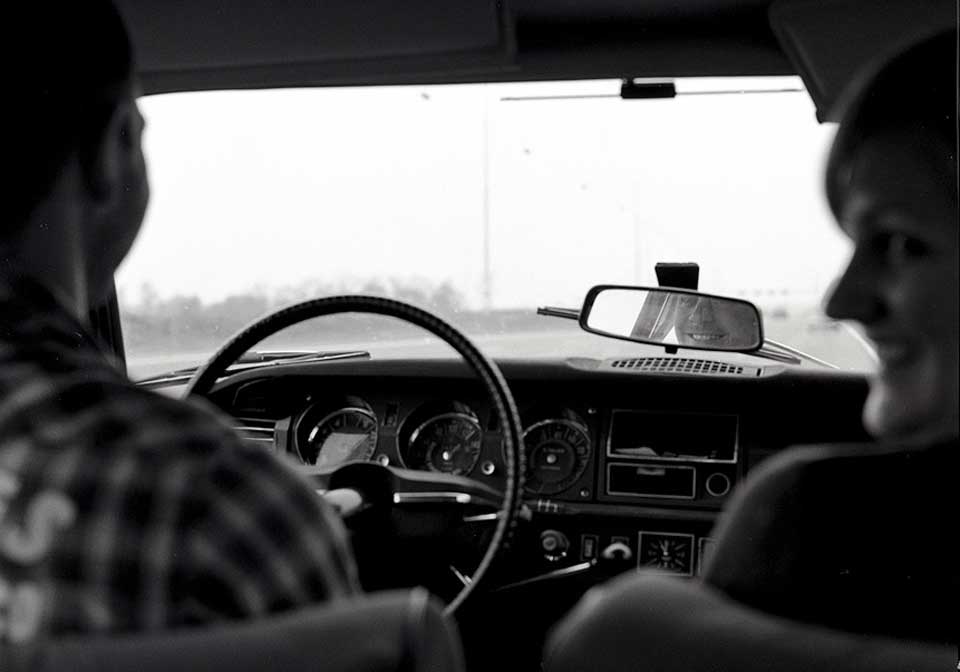
A few years ago, having just turned 27, I did the unthinkable. I quit my full-time job, moved out of my apartment, sold nearly everything I owned, and spent the next year of my life traveling to all 50 states.
We've long dismissed such epic journeys — physical or otherwise — as immature and escapist. When a 20-something sets off to travel across the country, or around the world, or simply to a new way of thinking, we immediately think of what responsibilities she must be trying to eschew. We imagine what romantic notion of a "find-yourself" adventure she must have in mind.
In fact, these were the voices ringing in my mind as I planned my own road trip. In my early 20s, I might have been given a free pass, I told myself. In my late 20s, I worried it made me seem unreliable, spontaneous, and flighty.
I'm here to tell you: we're wrong about road trips. It turned out to be the most responsible, reliable, committed thing I've ever done.
Traveling for a year forced me to rely on God in a way I never had before. Before I left, I relied on all kinds of things that weren't God. I relied on the "rules" and my ability to follow them, my bank account, my education, my great credit score, my friends, my good reputation and the reputation of my family. In order to go on this journey, I had to let go of each of these things, one by one.
I let go of the guarantee of regular income. Instead, I helped book performances for a musician friend who came with me. We brought in some cash with those shows, and by selling her CDs and other merchandise, but for the most part we lived day-to-day, never knowing exactly how our most basic needs would be met.
I let go of my established network of friends and family, using Facebook to track down people we knew in each part of the country. Or, in the case of Jackson Hole, Wyoming—hundreds of miles away from anyone we were connected to—we slept in our car. What we found when we stopped rescuing ourselves was God rescued us. God provided for us. He often used people to do it, but there was never any doubt it was from him.
And, like a child meeting her Father for the first time, I felt an empty place inside of me fill up when that happened, like a long-held question being answered. He loved me. God loved me. So much of my life had been spent meeting my own needs, I didn't know how truly satisfying it would feel to experience God's tangible provision and love.
Additionally, my time on the road gave me a chance to see how much my passion mattered. I spent so much of my 20s avoiding passion because I saw passion and responsibility as a contradiction to one another. Passions led me away from responsibilities, and therefore led me away from God.
What I found as I traveled is that the opposite is actually true. A life without passion is a life without relationship to God. A relationship involves two people who want things, need things, feel things and think things. If I never allowed myself to want anything, I was opting out of a relationship with God.
In order to get up and go on my trip, I had to pay attention to my passion for the first time in my life. It was scary, because I was worried my passion would lead me in the wrong direction, but I continued wake up every day, explain what I wanted, what mattered to me, how I felt, and ask God to tell me how he felt about the desires he'd built into my heart. As we talked, I stopped living out of obligation, and started living out of passion instead. That's when our relationship grew.
Truly, this is when I became an "adult," a person who felt and acted responsible for my own desires, ideas and even outcomes.
Finally, my road trip uncovered the selfishness, bitterness, and entitlement in me all along. In the years before, I thought if I didn't act entitled, I wasn't entitled. If I didn't act selfish, I wasn't selfish. I volunteered at my church, never swore or cussed or complained or cried over anything for too long. I had it pretty good, after all. I had a great life. When I felt myself getting bitter or entitled, I had my coping mechanisms, each of them very godly and admirable and good. I took time to myself, read my Bible, called a friend, went for a run.
But a thousand miles from home, without the usual comforts of friends and family and activities to make me feel rooted and safe, the strong facade I had held together for so long fell apart. I failed. I cried (for way too long about way too many things). I cursed God. I complained. And it was beautiful, because he met me there and taught me and showed me how much he loved me anyway. He cured of the entitlement and selfishness I didn't even know I had.
There's something about taking a journey, whether actual or metaphorical, that changes us. Something about stepping out of the safety and comfort of "home," and into the cool rush of the unfamiliar makes us new. We feel awkward and adolescent, strange and out-of-place and terrified. But I wonder if this is a necessary, responsible part of life.
I wonder if, sometimes, we need to take a journey (actual or metaphorical) to determine the place we fit in our own community, in the story we're trying to write. I wonder if we're missing something by not embracing journeys as a way to grow into ourselves, and into our relationship with God.
I wonder if the most responsible thing we can do is to stop following all of the rules, to live out of our passions instead of obligations and to let down our facade to be who we were made to be.
Allison Vesterfelt is the author of Packing Light, a book about learning to live life with less. She lives in Nashville, Tennessee with her husband Darrell. You can follow her daily on Twitter or Facebook.