





Cate Blanchett is beautiful. I am not. Most of us are not. Most of us are average-looking. And I'm okay with that—far more than those who suggest we can all be beautiful, if only we change the definition of "beautiful" to include everyone.
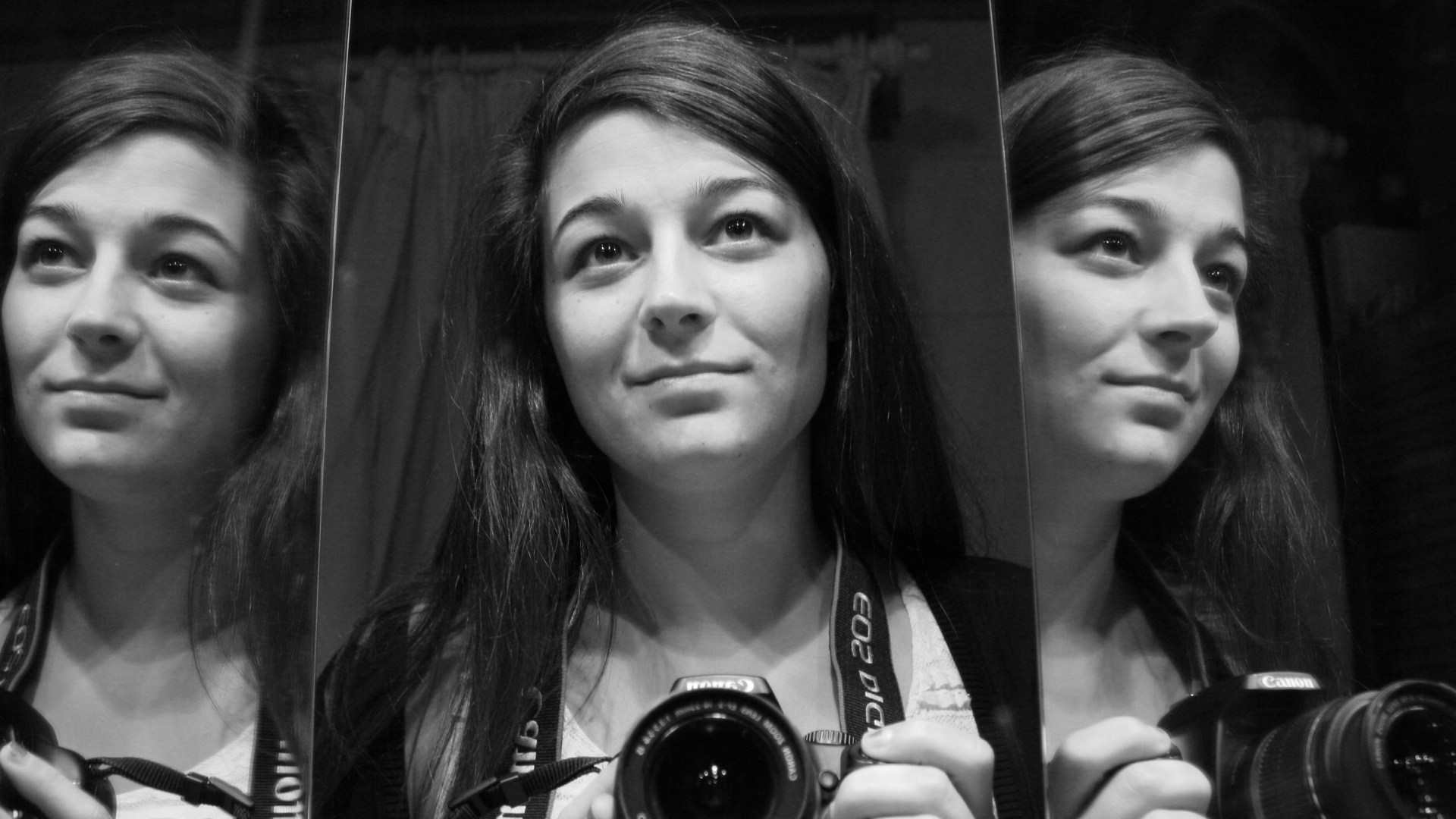
Take the latest installment in the ten-year-old Dove Campaign for Real Beauty. The short documentary, Selfie, which debuted last month at the Sundance Film Festival, insists that if we angle, crop, preen, pose, distort, and bend ourselves enough—along with the very definition of the word—we can all be beautiful. The "power to change and redefine what beauty is," the film purports, is in our own selfie-taking hands.
Some aspects of the documentary, to be sure, deserve praise. It depicts mothers and daughters talking about self-acceptance. The daughters' negative self-images are exposed as echoing their mothers' own insecurities. At the end of the experiment, the girls come to see and appreciate how their unique physical features are part of their very identities.
While Dove tries to help everyone become—or at least think they are—more beautiful (perhaps with the assistance of a few of the company's products), the rest of us might reconsider the meaning and value of beauty itself.
Certainly, our sense of what is beautiful should reflect the generosity and diversity of God's creation. Yet, while what is truly beautiful is by no means uniform, both classical tradition and scientific studies suggest judgments of beauty adhere fairly consistently to a mathematical proportion of perfect symmetry known as the Fibonacci Sequence. This "golden ratio" constitutes an objective (although not comprehensive) standard for beauty that is found universally throughout nature, art, architecture and even in the human face.
If God had asked me if I wanted him to make me beautiful, I'd certainly have said yes. Even so, if he'd asked me to list in order the personal qualities I desired to possess, beauty would not have been first. It wouldn't have even been second or third (though probably in the top 10). But God didn't consult me.
Part of the value of beauty is, in fact, its rarity. So it's not surprising that only 4 percent of women across the globe describe themselves as "beautiful," in a study commissioned by Dove. Yet 72 percent of the girls in the survey reported that they "feel tremendous pressure to be beautiful." Nearly two-thirds of the participants strongly agreed with the statements, "Women today are expected to be more physically attractive than their mother's generation was" and "Society expects women to enhance their physical attractiveness." Women feel overwhelmingly that beauty and physical attractiveness are increasingly mandated and rewarded in today's society, a perception backed strongly by other research.
But the rarity of beauty only partially explains why we so value it. Ultimately, we are drawn to beauty simply because it points to the source of all Beauty, the One in whose beautiful image we are made.
In one of his demonstrations for the existence of God, Thomas Aquinas argued that the gradations of qualities such as truth, goodness, and beauty that we see all around us in the world point to a God in whom these qualities exist in fullness and perfection. Made in God's image, we all possess more or less of these qualities, in degrees, including beauty. "Things that give pleasure when they are perceived are called beautiful," Aquinas says.
And there are different kinds of pleasures just as there are different kinds of beauty. Some are only skin deep and some go deeper. A soul can be beautiful. So, too, can a moment or an idea. This is why there is so much more to attractiveness than merely physical appearance: kindness, attentiveness, compassion, curiosity, for example. Aquinas distinguished helpfully between these two kinds of beauty, physical and metaphysical, by referring to the beauty of the body (characterized by proportion and clarity) and the beauty of the spirit (characterized by integrity). Both are good. But only one is the subject of the Dove documentary.
So, despite the positive messages in the film, ultimately Selfies only perpetuates the problem it purports to solve: the notion that women have to believe they are beautiful in order to feel good about themselves. Indeed, the obsessive selfie-ing that the film encourages, along with verdicts rendered via sticky note about each other's selifes at the end of the film, only fosters more insecurity and narcissism—two sides of the currency of a self-absorption. And nothing diminishes beauty more than self-absorption. For whatever beauty we see in ourselves or others is but a reflection of the One who is true Beauty. As Pope Benedict said about art, beauty makes "visible our need to go beyond what we see, and it reveals our thirst for infinite beauty, for God."
Only when we understand this purpose and meaning of beauty can we offer it our true regard. Let us free ourselves and each other from the tyranny of a need to be seen as beautiful in order to take delight in seeing beauty wherever it might be found.







