'Great Goddess Athena, great god Apollo, we ask that you impart wisdom in these proceedings today," Jennifer Zarpentine, a Wiccan priestess, prayed at the town board meeting of Greece, New York, in April 2008.
"Help the board to make the right, informed decisions that will benefit the greater good of this community. This we ask of you." As board members continued to bow their heads in prayer, several other meeting attendees responded with the pagan version of amen, "So mote it be."
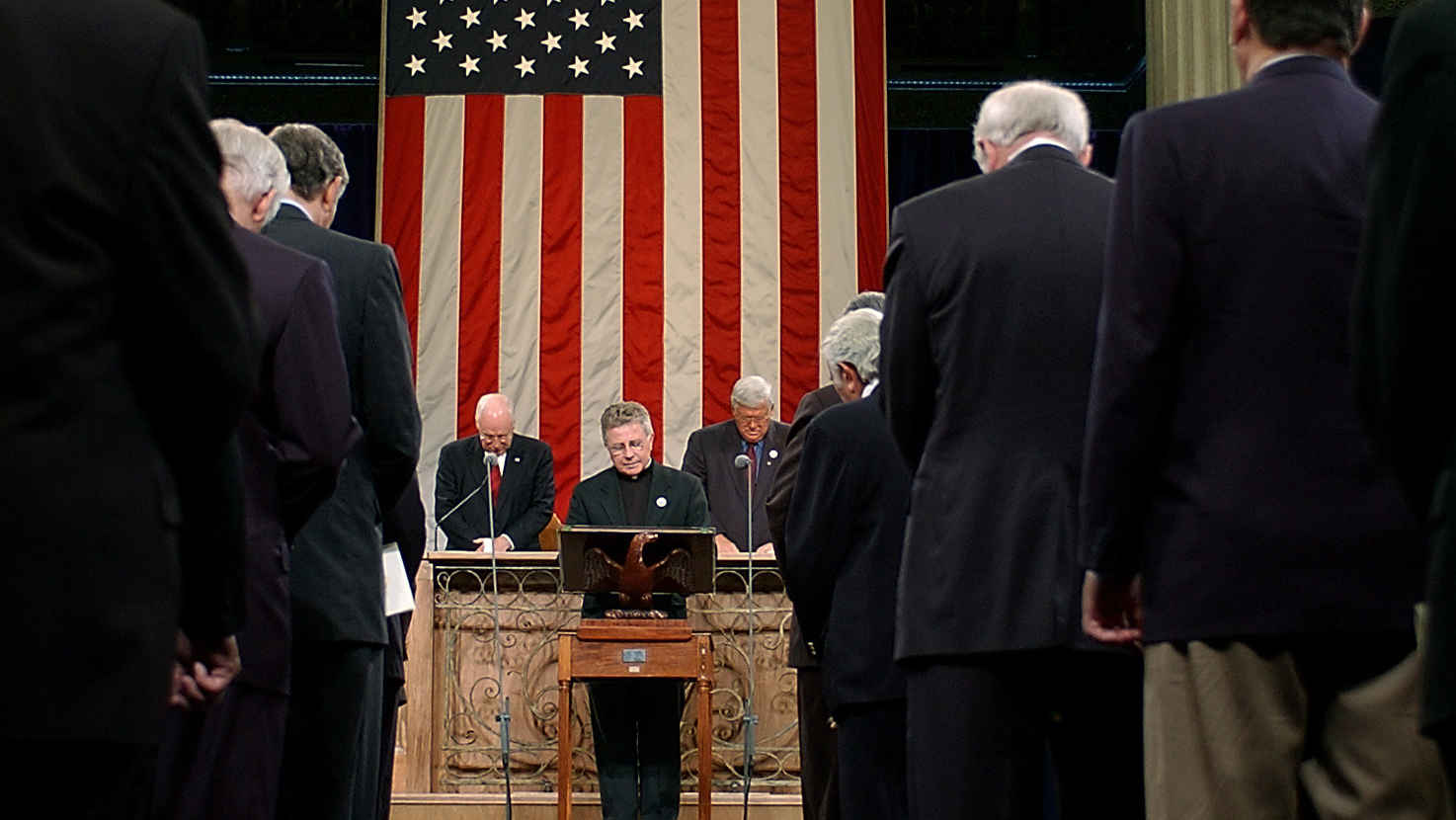
Around that time, two Greece residents sued the town over such prayers. It wasn't the pagan one that set them off, though. It was the other ones—almost all given by Christian pastors. Today, the U.S. Supreme Court ruled 5-4 that such invocational prayers do not violate the Constitution. Writing for the conservative majority, Justice Anthony M. Kennendy said, "Ceremonial prayer is but a recognition that, since this nation was founded and until the present day, many Americans deem that their own existence must be understood by precepts far beyond the authority of government."
Zarpentine's prayer illuminates the issues: Did the town of Greece officially beseech Athena and Apollo for wisdom? Was the local government endorsing paganism? Did the use of we imply the approval and participation of everyone in attendance? Should Christians be troubled by prayers to false gods? Should they protest? If they did so, would they have trouble presenting their other business to the board?
Now apply those questions to explicit Christian prayers.
Like the Second Circuit Court of Appeals, we wish Greece had been a bit better at indicating it wasn't, as a government, coercing anyone to worship Apollo (or Jesus). Like the Supreme Court, we think they stayed well within the constitutional rules.
The Supreme Court has generally approved invocations before government meetings. In 1983, the Court noted that we've had government prayer since the First Continental Congress, and that Congress authorized paid chaplains three days before it finalized the wording of the First Amendment. Such prayers are fine, so long as they are not "exploited to proselytize or advance any one, or to disparage any other, faith or belief." But it's not the government's job to "parse the content of a particular prayer," the Court said.
It even refused to bar a chaplain's prayer that declared, "Father in heaven, the suffering and death of your Son brought life to the whole world moving our hearts to praise your glory."
While some courts have tried to eliminate such specific Christian references, claiming that only "nonsectarian" prayers are welcome, the Supreme Court rightly disagreed. In fact, while the Supreme Court overturned the Second Circuit Court of Appeals decision, here was an area where the Second Circuit got it very right: "Under the First Amendment, the government may not establish a vague theism as a state religion any more than it may establish a specific creed."
"Because we've always done it" isn't a great reason to endorse invocations, but it's a sufficient one to tolerate them, constitutionally speaking. And there are other, "secular" reasons for these prayers. Credible social psychology studies reveal that introducing religious words and ideas may make us nicer to each other. In one notable experiment, people given religious sentences to unscramble were more generous to a stranger than folks given neutral sentences. Even that pagan prayer might help council members make better decisions for everyone concerned. From a Christian perspective, of course, not all prayers are efficacious. But we'd rather the pagans pray as pagans than eliminate prayer altogether.
There is no constitutional or biblical mandate for such invocations, but they are a form of neighbor love. "To invoke divine guidance on a public body entrusted with making the law … is simply a tolerable acknowledgment of beliefs widely held among the people of this country," the Supreme Court said in 1983. But it's also a reminder that the government is neither omnipotent nor omniscient.
For Christians, such invocations let us bear witness to our own submission, to our gratefulness for God's provision on a community level, and to our need for his wisdom and guidance. We needn't "proselytize or disparage" in these prayers, just as we don't do so in our prayers before meals, or with our families before bed. And we need not protest pagan prayers in our city council meetings any more than we protest them at our pagan neighbor's apartment. Instead, we should see their prayers as a triumph of religious freedom (and as reminders to compassionately share the gospel with them).
Christians see prayer not as a time when we try to force God's will or change his mind, but as a time to prepare and to cooperate with him in his will. When we pray before public events, we likewise do not see it as forcing God's will upon our neighbors or as a means of changing their minds, but as a time to prepare to cooperate with them in God's will for the common good.
Ted Olsen is CT's managing editor for news and online journalism.
See also Carl Esbeck's article about today's ruling, "Why I'm Not Cheering Today's Supreme Court Prayer Decision."