Many of us don't know what to do when we find ourselves in the spiritual desert. Because our hyper-connected culture provides everything on demand, when we don't get what we want, when we want it, we feel disoriented and cranky.
And if our losses pile up or our suffering becomes unbearable, we either blame God or doubt his existence. Even within the church, it's increasingly rare to find someone who doesn't run away from such pain. However, Scripture's insistent theme of redemptive suffering clearly communicates that we all need to learn the skill of suffering with Jesus.

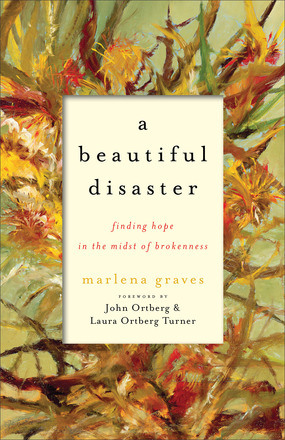
Author Marlena Graves is no stranger to the spiritual desert, and in her extraordinary new book, A Beautiful Disaster, she generously shares the many lessons she has learned about suffering well.
God began grooming her as a desert guide from the time she was young. She writes, "I lived in a world of turmoil…. I needed God to show me his path through the desert wilderness of poverty, DUIs, adultery, mental illness, prison, a house fire, the death of loved ones, and my own bad decisions. I needed him (and still need him) to show me how to live."
As a female minority born into poverty, Graves did not have the option of postponing lessons of dependence on God. She admits, "Growing up, I begged God to take the cup of suffering from me, but mostly he didn't." By stubbornly, perhaps naively, clinging to him, she discovered "the desert land is fertile ground for spiritual activity, transformation, and renewal."
Graves understands that because the desert strips us of everything, it forces us to stand naked before God, without the jobs, relationships, and resources that normally camouflage our weaknesses and prop us up. Our vulnerability will either lead us toward idols, which temporarily alleviate our suffering but ultimately disintegrate us—or toward God, who brings integration and reveals our true self.
Quite miraculously, during her many desert sojourns, Graves has made wise choices that have allowed both her faith in God and her identity as a child of God to prosper. I asked her to share how she has navigated the desert's many temptations in the hope that her experiences would encourage and guide others.
What have you discovered about your true identity as a child of God during these seasons in the desert?
Marlena Graves: I often feel so small and inadequate when I'm in the desert. My life has been such that I've had to depend on God for daily provision—I cannot truly flourish in my own strength. Expressing these needs to God and to others reminds me of my dependence on him and Christ's beloved community for my daily bread. God's grace comes to me through Christ's body. I'm like the paralytic in Mark 2: I'm not going to make it without help.
During my childhood—a long desert season—I remember not being able to grasp God's love for me. I knew it intellectually but it wasn't until an experience I had when I was 16, when I screwed up everything, that God's infinite love finally got through to me. I'm still surprised by how passionately he loves me.
Despite the reality that I now have a well-worn path into the wilderness, I'm not like, "Yeah! I get to put my toes in the sand again." Instead, I think, "Today I'll try to keep my eyes on you."
How have you continued to believe in God's goodness in the midst of an often-cruel world that might have ground you to dust?
I recount God's faithfulness to me and others. I try to live a grateful life. I read Scripture and serve while making room for solitude. I play, laugh, spend time in creation, hang around children. I imbibe the testimony of the great cloud of witnesses and try to contemplate the good, the true, and beautiful when the problem of evil gets to me (Phil. 4:8).
You write, "As with Moses, our hidden life—how we live in obscurity—is what shapes our character." Amidst a culture that promotes the self, why should we submit to the inevitable crushing that happens in the desert?
We submit to what happens in the desert to become more like Jesus. Obscurity slowly breaks us of our addiction to praise and our slavery to the opinions of others. As Dallas Willard observed, "We are freed from having to manage others' impressions of us." Those who are most like Jesus don't live in full view of others, always pandering to and performing for the crowds.
Obscurity, with its accompanying silence and solitude, contemplation of God and his ways, helps us better love God and others. Though we don't often welcome hiddenness, it's one means God uses to sanctify us. I think it helps guard against anemic, angry, and arrogant Christianity and foolishness. It helps us become slower in speaking and acting so we don't easily become another conduit of destruction in the world but more easily a conduit of goodness and redemption.
As Graves and the desert mothers and fathers who journeyed long before her have discovered, when we repeatedly choose the way of the cross, the desert forms Christ in us.
A Beautiful Disaster invites us to approach our inevitable wilderness experiences in confident assurance that we will encounter a loving God amidst the endless sand dunes.
In the wilderness, we remember that God did not bring us out here to die. He brought us out here to save us, to show us his power, to offer his comfort, and to put to death whatever is in us that is not of him. … God and our communion with him are so precious to us that death becomes preferable to hurting or disappointing him. Union with God is what we seek. It is what we hunger for. We willingly make whatever sacrifices are necessary to make him glad and do whatever lies within our power to keep his name from being defamed. Citing Oswald Chambers, we give "our utmost for his highest."
A Beautiful Disaster inspires and challenges all of us to willingly dwell amidst the blessings of the desert.