



When the White House announced plans to bar federal contractors from considering sexual orientation or gender identity when hiring, Christian leaders mobilized.
Dozens of leaders at colleges, relief and development organizations, publishing houses (including CT's parent company), and megachurches signed letters urging President Obama to include explicit protections for religious organizations. Without such exemptions, one letter warned, the move—intended to circumvent Congress's long-standing impasse over the Employment Non-Discrimination Act (ENDA)—"will come at an unreasonable cost to the common good, national unity, and religious freedom." The letters made national news, with signer Gordon College president Michael Lindsay becoming a particular focus for criticism in Massachusetts and Washington, D.C.
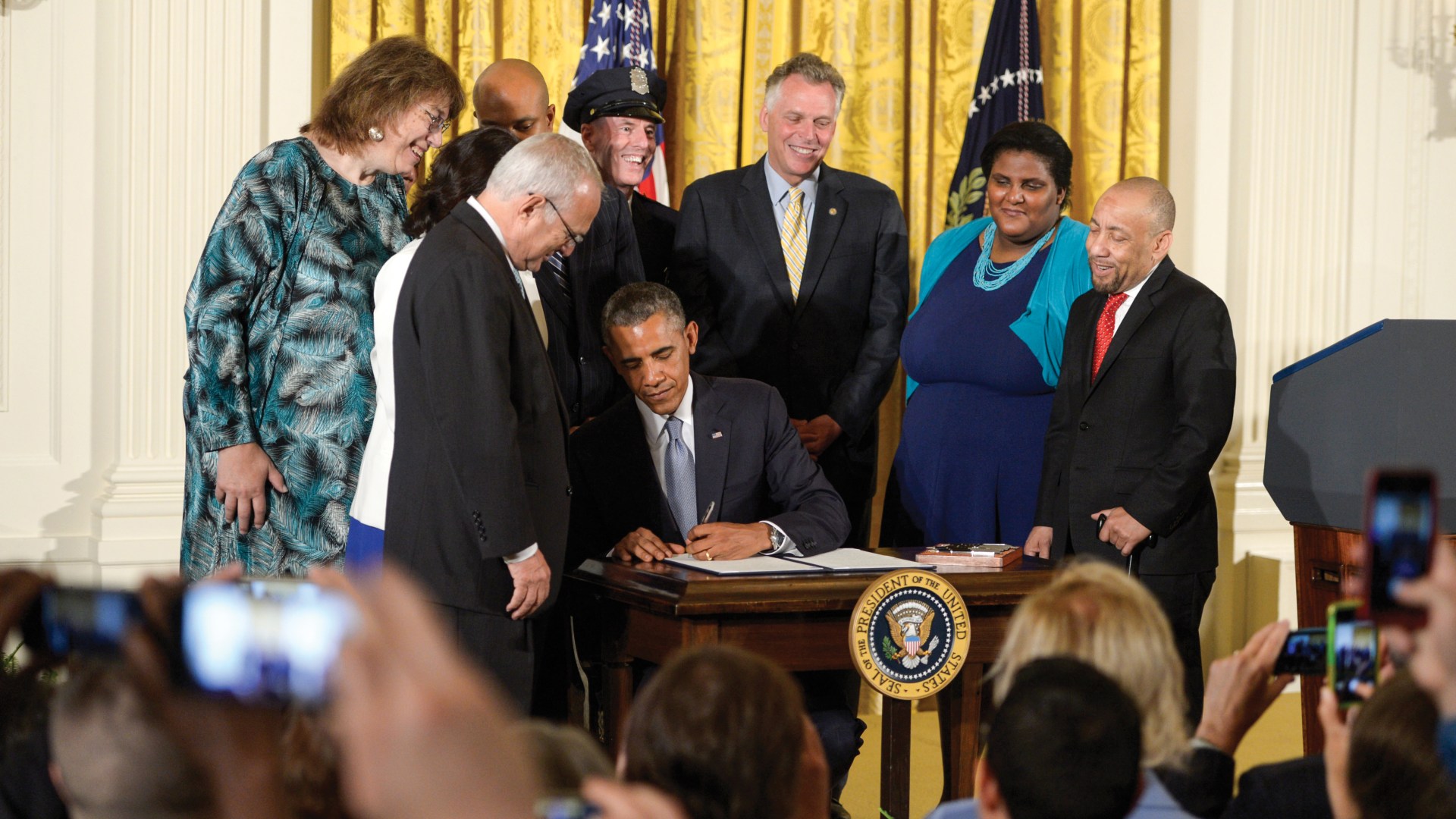
Obama signed the executive order in late July, and it included no such exemptions. (The U.S. Senate passed an ENDA bill that explicitly exempts religious organizations, but it has languished in the House.)
But Obama's order also didn't directly affect most organizations whose leaders signed the letters.
Many Christian organizations that work with the government—such as World Vision and World Relief—do so not through contracts but through grants, in a process that is much less regulated. Meanwhile, the President left untouched a 2007 Bush administration memo allowing World Vision (and, implicitly, other religious organizations that partner with the government) to hire and fire on the basis of religious belief.
So was the order actually a quiet win for religious groups? Leaders say no. They believe that, even though few ministries contract with the government, lobbying for an exemption was important.
"Our main concern is its implication on religious freedom down the line, where future executive orders could also include not just federal contractors but grantees as well," said Jenny Yang, vice president of advocacy and policy for World Relief. "It's a slippery slope, and we feel the need to speak up whenever we feel like religious freedom is threatened."
Experts say government departments such as the U.S. Agency for International Development (USAID) are pursuing fewer grants and more contracts. A few large religious organizations currently work through contracts. Catholic Charities recently completed a five-year $1 million federal contract to aid in U.S. disaster relief. And the Salvation Army operates federal contract facilities for some prison ministries and social services.
(The Salvation Army, which has hundreds of millions of dollars in federal contracts, declined to comment to CT on the executive order, except to note that it has a "deep commitment to nondiscrimination in hiring practices and service." In March, it settled a decadelong lawsuit with the New York Civil Liberties Union, agreeing not to ask employees at its government-funded services in New York agencies about their religious beliefs or to require them to adhere to church teachings. The Salvation Army noted this was not a new policy.)
Specifics are up in the air while the Department of Labor works out how to implement the executive order. But Carl Esbeck, law professor at the University of Missouri, says the order opens the door to lawsuits challenging the "World Vision" memo and other Bush-era provisions that form the current patchwork of legal protection. A Christian organization is likely okay with hiring a gay Christian who affirms its beliefs on sexual ethics. But is asking about that belief a religious or a sexual orientation question?
For small organizations thinking about contracting with the government, "you might very well just say it was marginal anyway because of the administrative costs, and now with this new burden it's just not worth it," Esbeck said. "Only if you're big can you say, 'Well, we can do some risk planning and adjust to the new environment' and soldier on."
Because so few religious organizations are currently government contractors, it seems Obama passed up a chance to make an easy but important statement on religious freedom, said Galen Carey, vice president for government relations of the National Association of Evangelicals.
"It's a lost opportunity for the government to create a more tolerant space for a very divisive issue," said Carey. "That's what we're particularly concerned about. If religious freedom is not clearly protected here, it's less likely to be protected elsewhere."