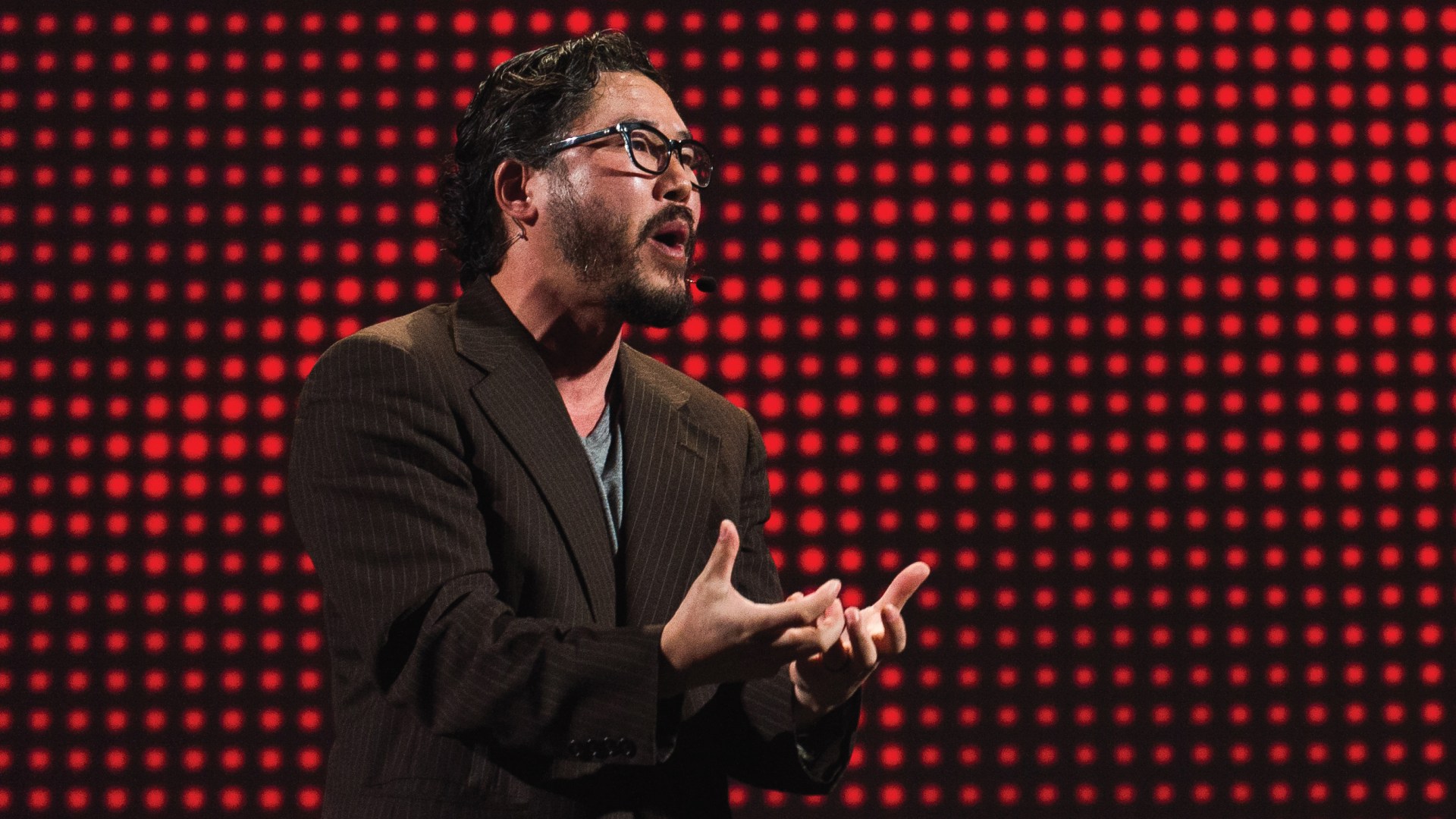

This summer, Eugene Cho, lead pastor of Quest Church in Seattle, was enjoying a sabbatical from active ministry and blogging—until events in Ferguson, Missouri, caught his attention. “I kept envisioning Michael Brown’s body, lying on the ground, completely exposed for hours,” Cho says. “Then seeing the anger and frustration of people protesting and the responses to the protests, I felt it was . . . a necessity to respond.”
So Cho sat down to write a heavy-hearted blog post: “Please don’t ignore it. Five ways that Christians and churches must engage Michael Brown’s death.” Cho is one of a number of Asian American leaders who consistently challenge the church to pursue racial reconciliation. “I don’t want a conversation about racism to be black and white,” he says. “It’s important for Asian Americans to speak on matters of race, as people who have been both perpetrators and victims. The church is called to speak out about justice, and not only when it involves our own kind.”
Ever since Cho planted Quest in 2001, the church has brought issues of race to the forefront in ways many of its congregants had never experienced. Bo Lim, professor of Old Testament at Seattle Pacific University (SPU), remembers a service early on in which Cho preached about the struggles of being an ethnic minority. “I found myself weeping. My wife was weeping. I looked around the room and saw many others weeping,” says Lim. “Quest helped me understand the gift of my ethnic background.”
And Quest starts naming that gift early. Its children’s ministry, Global Village, is decorated with images of children from every tribe, tongue, and nation. A bookshelf features books with titles such as The Skin You Live In, Shades of People, and All Kinds of Children. “Our library includes books you wouldn’t see in 99 percent of churches,” Cho says.
But Quest has gone beyond simply affirming all racial and ethnic backgrounds. For the past 10 years, the church has hosted an annual “Faith and Race” class for 4 to 6 weeks, open to non-Quest attendees. Billy Vo, director of the Asian American Ministry program at SPU, still remembers attending as a seminary student. “We talked about stereotypes, white privilege, and the idea of race as a social construct. I appreciated this, since these weren’t concepts I engaged in any substantial way in other churches or in seminary. Quest was the first Asian American–led church I’m aware of that made race matter.”
Doing this type of reconciliatory work, however, is no easy task. “We have messy conversations,” says Quest executive pastor Gail Song Bantum. “Our expectation is not that people have arrived in this area, but we create spaces to allow us to journey together, to hear others’ stories. Knowing someone’s stories is what breaks down barriers to reconciliation.”
Ultimately, this is what drives Cho, Bantum, associate pastor Brenda Salter McNeil, and other Quest leaders to embrace the ministry of reconciliation, and to engage with national events such as Brown’s shooting death. “The integrity of the church is at stake. When it’s all said and done, it’s not a race issue for me; it’s a gospel issue,” Cho says. “The gospel is so extraordinary that it begins to inform and, we pray, transform all aspects of our lives. We talk about race and racism because we believe in the gospel.”