
I will give you the treasures of darkness and the hoards in secret places, that you may know that it is I, the LORD, the God of Israel, who call you by your name. —Isa. 45:3, ESV
It’s difficult to imagine how light-saturated our age has become, or how dark the night can really be. One form or another of fire—torches, candles, or lamps—was used inside and outside until well into the 20th century. Only recently has electricity come on the scene to transform our understanding of night. There was some rudimentary form of public lighting by the end of the 17th century, but we didn’t have any electrical lights until the end of the 19th century. Now they are ubiquitous. Today, two-thirds of Americans and Europeans no longer experience real darkness.
In 2001, amateur astronomer John Bortle created a scale that describes levels of darkness, ranking them 9 to 1, brightest to darkest. He hoped his scale would “prove both enlightening and useful to observers,” though it’s also horrified some. Most of us have experienced the brighter end of Bortle’s scale—Class 9, Inner-city Sky; or Class 7, Suburban/Urban transition; or Class 5, Suburban Sky. This is normal dark for us. But Bortle’s scale shows us something darker, which few of us experience any more. Like a night dark enough to register 3 (“a rural sky” where only “some indication of light pollution is evident along the horizon”) or 2 (a “truly dark site”).
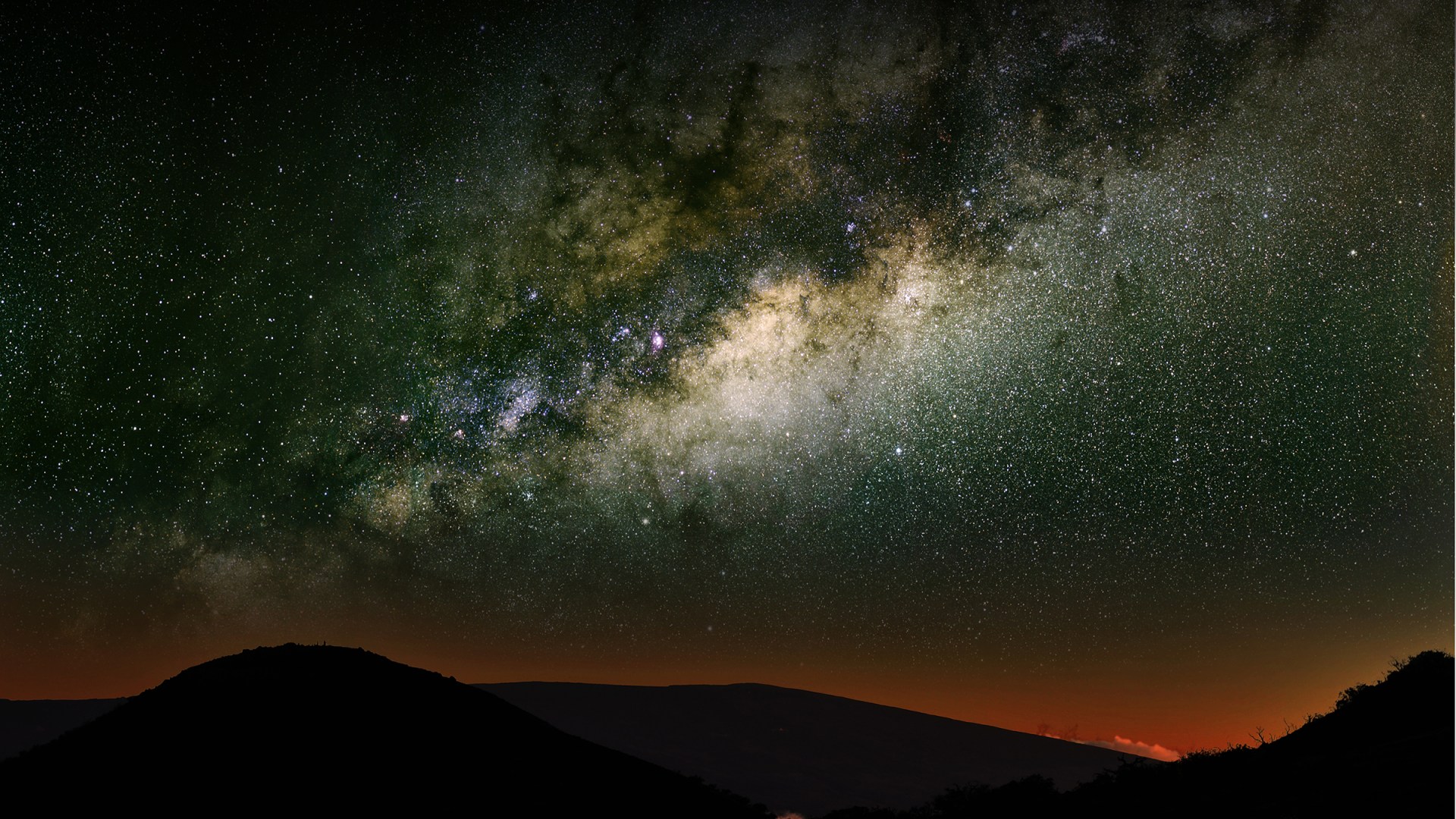
Then there’s Bortle’s Class 1, which is a sky so dark that “the Milky Way casts obvious diffuse shadows on the ground.” Many people doubt if such darkness still exists in the continental US.
Paul Bogard, assistant professor of English at James Madison University, wrote The End of Night: Searching for Natural Darkness in an Age of Artificial Light (Little, Brown, and Company, 2013, 2014) to help us understand all this—and more. Toward the end of the book, he describes Class 2 darkness.
“We’re going to be in a big black hole on the map,” says Dan Duriscoe, slowing his red Toyota Tundra so we can gaze down into Death Valley National Park. “There’s nothing between us and that mountain, and then there’s nothing for another 150 miles.” Duriscoe, who speaks in a low, gravelly voice and has a penchant for colorful language, has encyclopedic knowledge of the desert West. He’s full of dirt roads leading off into deserted valleys, and turnoffs no one else knows. As a founding member of the National Park Service’s Night Sky Team, Duriscoe has traveled all over the United States documenting levels of darkness. Death Valley holds some of the darkest places he’s seen. “I’ve been to probably 200 different locations in the parks doing measurements,” he tells me, “and there’s only 3 I gave Class One. One of them was here.” Tonight, we are headed to one of his favorite spots, Eureka Valley, between the Last Chance Range and the Sylvania Mountains. “This time of year . . . there’s not going to be anybody out here,” he says. “This is about as isolated as you can get in California.”
We drop into Eureka Valley, hit washboard gravel for miles, turn and climb 100 yards past a Road Closed sign, and park. Immediate stillness and quiet, no wind, no bugs, the scent of sagebrush and creosote, distant sand dunes 60 feet high. We set up chairs and a table and make a fire. “This is what I live for,” he says. “I can’t imagine life without this.” In the west, Venus is a brilliant white ball just above the desert mountain silhouette, bright like a porch light or like a headlight coming over the ridge. But there is no house, and there is no car. A loose chain of flights bob toward San Francisco far to the north, a faint amber glows from Los Angeles southwest, but there is no one anywhere for miles around, and not a single individual artificial light in any direction. Already the sky feels ancient—big, darker each minute, and filling with light, as though the growing dark is sifting stars, spreading them on black fabric before us.
Primitive darkness. The desert before civilization, before settlement. The dark land with no light of its own, and stars coming all the way to the ground: the Big Dipper setting, revolving into the northern horizon, Orion rising from the southeast with Betelgeuse flashing its red-orange cape in the atmosphere. The zodiacal band, like a fainter Milky Way, twirls skyward from the western horizon. The valley so dark you see by night’s natural light—the zodiacal light and airglow, and maybe 10 percent from the stars. Duriscoe and I see each other faintly. With no trees or woods we see in all directions to where mountains saw jagged horizons from the bottom of the sky. That sky becomes brighter and darker the longer we stay out, in a way almost no one in America experiences now. Our eyes go dark-adapted, good at 10 minutes, even more so at 45; but then, after 2 hours of wide-open eyes and the land with no lights, the sky shifts into focus, like an optometrist switching a lens and saying, “Better?” Before this there were stars, but now there are stars upon stars and a sense of stars you can’t yet see.
“In the city you will never see like this,” Duriscoe says. “Even out here it takes patience, and we expect instant results. People drive out from Las Vegas because they hear there’s a star party and say, ‘Now show me the night sky. I got about five minutes.’”
We climb from Eureka and drop on winding washboard to Crankshaft Junction. “These are the last of the wild roads,” Duriscoe says, “and we’re in the blackest part of the map.” We are within a few miles of the Nevada border, the Los Angeles light dome blocked now by mountains, but not the faint dome from Las Vegas some 160 miles southeast. I have been at the center of that, and now I am at the center of this—from the brightest spot on the map to one of the darkest.
This dark land. The way I no longer expect to see any lights. The way the dark feels both comfortable and comforting as the night goes on. “Lots of amateur astronomers don’t care, as long as they can see the sky,” Duriscoe explains, “but to me, it’s the land and the sky together that makes this experience unique in the West—the wild land and the wild sky.” And then, speaking of the Night Sky Team, he adds, “That’s what we’re trying to preserve, the ability to see and appreciate the natural night landscape.”
At the crest between valleys I take out binoculars, and in turn they take my breath, multiplying the number of visible stars tenfold. I feel as though I’m falling, and I have to pull away to find my balance in the dark. The ground on which I’m standing, the cloth of stars above. The great nebula in Orion’s belt, the Pleiades, Jupiter so bright and clear it makes me laugh. And then here comes Sirius. The brightest star we ever see, and—because it’s so low, the atmosphere a prism—flashing like a pinwheel sparkler, green and red and purple and blue. Then super-bright shooting stars, like green-yellow flares falling from the sky. And then for me, for the first time, the Andromeda Galaxy in clear detail—the most distant object we can see without a lens, at two million light-years away—the photons that have been traveling toward Earth all this time now touching the back of my eyes.
This article is adapted with permission of the publisher. You can find more about Paul Bogard (and a stunning image of a night sky) at www.paul-bogard.com. The Scripture epigram at the beginning was added by the editors.