
I was doing dishes in the kitchen when I heard the chorus of a song on an old playlist faintly playing on our iPod in the background.
I sang the lyrics to myself while rinsing food off plates, distracted by the task and unaware of the words, until I remembered. These words describing the worship that comes from the place of suffering had rocked me to sleep at night when my night was starless. These words were my lullaby when I was without words for my pain.
This wasn’t just background music to me once. It was my anthem.
I had listened to that song while curling my body into a ball in my bed and on my bedroom floor and on the family room couch, reaching for words that I didn’t feel in an effort to frame a story with God’s truth. I had listened to that song in my car while driving home from baby showers, singing its truths over myself and trying to believe them. I had listened to that song in my bedroom after arguments with Nate, in my loneliness on Sunday afternoons, and in my prayer room as I brought my pain, again, to a Father who never tired of my open heart.
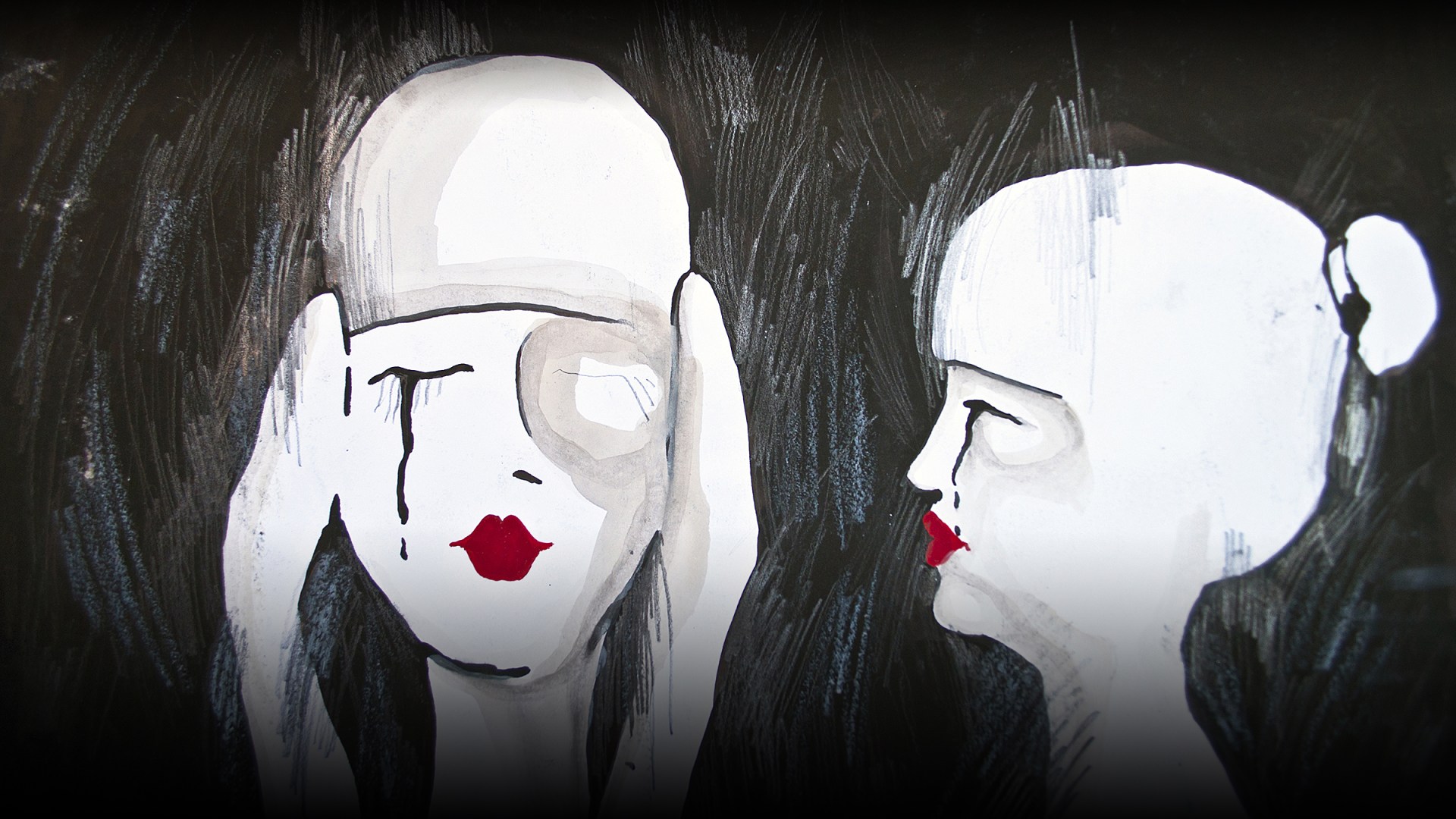
I stood in my kitchen and wept over the years past. My pain had not disappeared, but it had diminished. Circumstances were no longer at the peak of perplexity. But the music took me back to the waves of grief and loss and all the questions wrapped around a season I wasn’t sure would ever end.
Just as soon as I remembered the sharp moments of pain, I remembered the nearness of the Father, who came right into the middle of them. Both memories—the sting of pain and the balm of his coming to me in my pain—were vibrant, real again, but it was now as if his presence during that pain overshadowed the memory of the pain itself.
There in my kitchen, though, over dishes, I realized that memories of my closeness to him in that pain were not enough to sustain me. Nostalgia wouldn’t carry me with strength into the next season, much less the next day.
I had been a 15-year-old girl riding the bus back from Camp Storer, tracing her finger in the fog that formed on the windows and thinking about the decision she’d made the night before. That moment was life changing. But that moment and its memory weren’t enough to sustain me.
I had been a teenager rocking under the summer sky on my backyard swing, praying sweet prayers of trust and faith. But those evenings weren’t enough to sustain me.
Even the times I’d found him during my sharpest pain weren’t enough to hold me up under later griefs.
Intense seasons of spiritual growth provoked me, fed me even as they increased my hunger, but once they became memories, they could no longer be my sustenance.
The lowest points of pain and some of the sweetest touches of him came back to me as I heard the words of that song that had broken my fall and cradled me. I knew I would need hundreds, thousands of such moments across my life to grow. I couldn’t eat yesterday’s bread today. I had to continue to hunger both in the pain and in the ordinary.
My very worst days were purposed. My current days, the ones that stung but didn’t leave me folded on the floor, were also purposed. It would be naïve to think that future years wouldn’t hold more pain. It would be just as naïve to think that finding him in the pain would be my only story.
But in all seasons—times of searing grief, times of great redemption, times of the mundane—every single moment was pregnant with his whisper: Come, let us run together. Come find me. Here. “A satisfied soul loathes the honeycomb, but to a hungry soul every bitter thing is sweet.” I don’t want to be a hungry soul just for a season. I want to live hunger. This is what draws me to him. This is what fills every single bitter circumstance with the opportunity to know him more. This is what brings me to the sweetness of his presence.
And hope happens here at this nexus of bitter and sweet.
I will not talk myself out of hope, hiding behind Scripture to support all my reasons for being “wise” and “measured” in response to the not-yets in my life.
Because when I choose hope, when I choose to engage in that awkward intimacy of believing that he might say no while asking expectantly that he say yes, he gets the most beautiful part of me.
Hope is my precious oil, mingling with tears to wash his feet.
Hope, and the vulnerability it brings, is what moves his heart.
Hope, and how it draws me to him, means that not one of those minutes curled up in pain was lost, not one of those minutes of closeness with him is forgotten, not one of those negative pregnancy tests was wasted.
I choose to stand with those at the edge of flames and say with my life, “Our God whom we serve is able to deliver us from the burning fiery furnace, and he will deliver us from your hand, O king.” And I choose to say, too, “But if not . . .” Hope is still worth it when my desire becomes one crazy, beautiful offering to him.
Though pain rages on this side of eternity, I can find his words, his music, his arms. I can discover that our greatest testimony isn’t found in moments of victory over weakness or even in moments of hope fulfilled.
It is found in waiting, wanting, adoring. It is found in hunger.
Sara Hagerty is a mother to five and writer who blogs at EveryBitterThingIsSweet.com. This excerpt is from her book, Every Bitter Thing Is Sweet: Tasting the Goodness of God in All Things. Copyright 2014. Used by permission of Zondervan. All Rights Reserved.