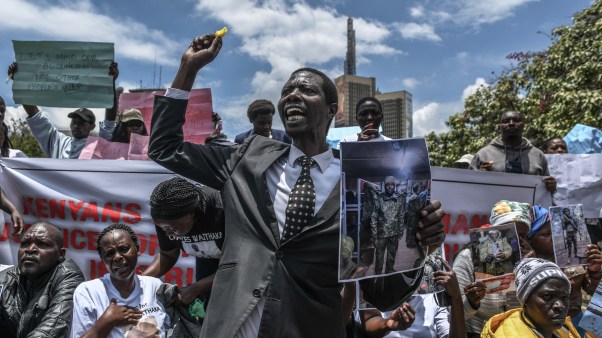

The avalanche of stories of police mistreating African Americans—from pulling them over for “driving while black” to shooting unarmed teenagers—has caught many white Americans by surprise. With legislation passed during the civil rights movement in place, and an African American President, many people believed racism had been quenched. It makes many wonder, after all the progress, whether that’s even possible now.
The short answer, of course, is no: Racism has not been quenched, nor will it be in our lifetimes. But hidden in that answer is some realistic hope.
Many well-intentioned leaders, intending to “eradicate all forms of racism,” champion laws and programs to end or at least debilitate racism in America. But laws can only do so much. Eventually, we’re stymied by continuing racial tensions, as Matthew Loftus, a physician outside Baltimore, noted for First Things:
Conservative commentators and liberal do-gooders alike look at Sandtown, the neighborhood that I live in, and shrug their shoulders…. Police officers justify brutality towards citizens because conditions here are brutal, which only makes the nihilism stronger when people who have never been respected by the law in turn have no reason to respect the law.
When despair is in the air, both the powerful and the disempowered agree: Peace and justice can be secured only by violence.
A simple dictionary definition of racism is “discrimination… against someone of a different race based on the belief that one’s own race is superior.” Racism, like all sins, is the result of something good gone bad—in this case, affection for loved ones. Such affection makes possible familial, ethnic, and racial pride, as well as love and sacrifice for family and community. But just as healthy sexual attraction often turns into lust, and healthy self-esteem into pride, so healthy loyalty to one’s own too often turns into racism.
The point is this: Given the human condition, we will never rid ourselves of racism in this age, any more than we will rid ourselves of lust or pride. And yet this seeming cause for despair actually prevents despair.
Just because we cannot eradicate racism doesn’t mean we have to succumb to its nasty expressions. Take lust. Though we cannot eliminate it, we still create social norms and laws that keep it in check. We still expect men to refrain from making lewd comments to women, and we prosecute employers who sexually exploit their employees.
The church has two gifts to offer in this respect. The first is theological: the doctrine of original sin. Many recent studies of unconscious racial bias affirm its truth—like the study published in the American Journal of Sociology that showed that newly released white felons experience better job hunting success than young black men with no criminal record. A CNN article published after the Ferguson riots noted, “Some whites confine racism to… the Ku Klux Klan [and] racial slurs in public.” But scholars say that instead of wearing a hood, “[Racism] causes unsuspecting people to see the world through a racially biased lens.” Duke University sociologist Eduardo Bonilla-Silva calls this “racism without racists” (also the title of his recent book). It’s the reason Doreen E. Loury, director of the Pan African Studies program at Arcadia University, says racism “permeates every facet of our societal pores.”
Yes, and here’s the paradox: Only by acknowledging the hopelessness of eradicating sin can we avoid despair. Ennobled by honest confession, empowered by a sure forgiveness, we can abandon utopian hopes and instead focus on more modest and achievable ends: ensuring that the worst expressions of racism are checked, and a creating a church in which blacks and whites enjoy a measure of reconciliation.
This leads to the church’s second gift: its convening power. Local churches can bring together blacks and whites to hear each other out. As social psychologist Christena Cleveland (who is also CT’s newest columnist—watch for her debut in the September print issue) put it, “Groups [meaning blacks and whites] that are accustomed to being at odds with each other must acknowledge the grievances and then do what it takes to make peace.”
The process is not unlike reconciliation in marriage. As every married person knows, reconciliation is a lifelong process requiring patience and forbearance. It’s not about eradicating all tensions, but creating arrangements where people can treat each other with grace while securing a measure of peace and justice. All the while, we wait for the reconciliation we can only dream of now, when “a great multitude…from every nation, tribe, people, and language” (Rev. 7:9) will together worship their God.
Mark Galli is editor of Christianity Today.