 Focus Features
Self/less is an excellent example of what science fiction looks like when it’s bad. Beyond that, there’s not really much excellence to speak of in the dry, overlong film.
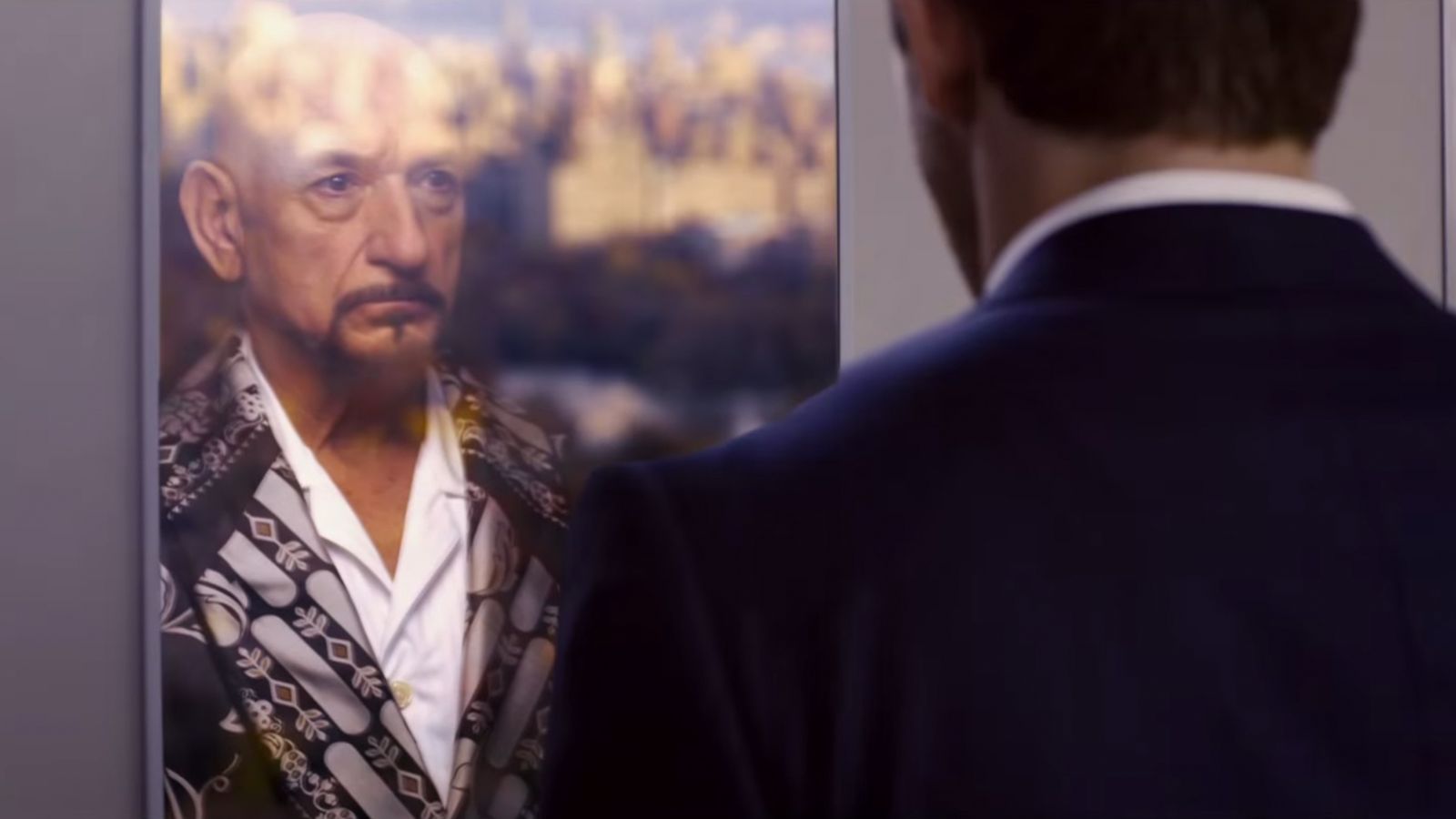
The film—a whose premise is a pretty overt homage to 1966’s Seconds—features Ben Kingsley as Damien, a New York real estate mogul whose luxurious, gold-leaf encrusted apartment speaks to levels of wealth measured in the mega-Trumps. Even at 68, Damien is still on top of his game, squeezing upstarts out of his business—however, his body is as sick as his business is healthy, Damien’s prognosis being somewhere in the six-month range.
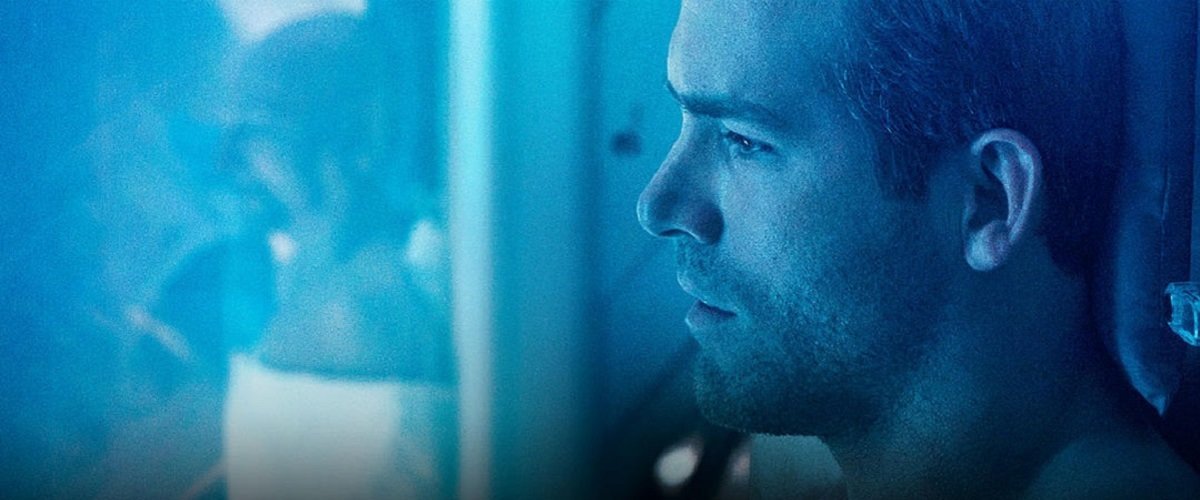
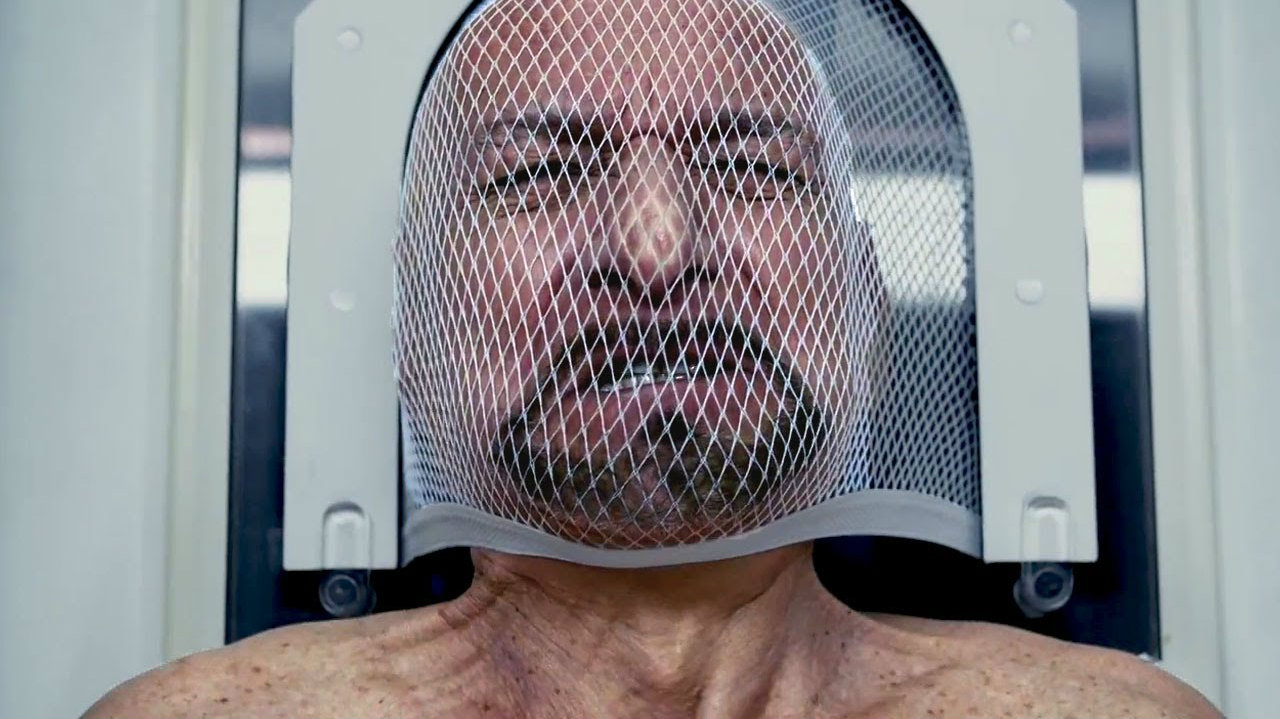
Damien meets with some shady people to undergo a shady operation known as “shedding”—the act of shuttling someone’s conscious from one body to another. Damien is assured that the Ryan Reynolds-envisaged body he’s leaping into was grown in a lab, though what a surprise it turns out to be when (spoiler, which is in the trailer) it’s not, but is instead the body of a young war hero who sold his body in exchange for money for his sick child.
The rest of the film simply plays out this early-on reveal—will Damien continue to medicate away his previous body’s occupant’s consciousness, and fade into oblivion himself?
The movie seems to have not a whole lot of interest in this question, though—for reasons both conceptual and practical. Conceptually, the body’s donor is almost a caricature of a Good Person: flashes of his memory feature his wife and daughter smiling, horses, and demonstrations of valor in the field. Kingsley’s Damien, in contrast, is clearly less of a good person—an absentee father, a real shark of a businessman, and a deeply accomplished liar.
The movie never actually sells the notion that its plot is organic; instead, it’s always looking outward, toward the audience: “What will they like?” “What do audiences find entertaining?” “Where should the plot go now?”
 Focus Features
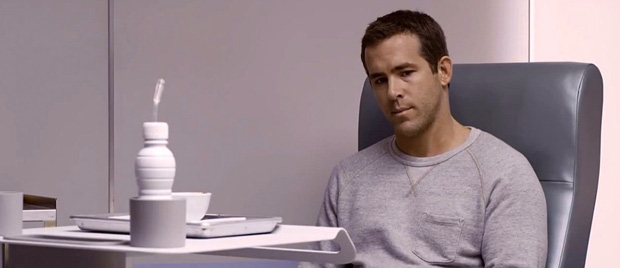
These questions are the film’s practical concerns, and are why the movie eventually spirals into uninspired shoot-em-up territory. In the search of likability the filmmakers cast Reynolds, who is (once again) miscast as a scowling Everyman that’s good with a gun. Reynolds’s lone redeeming quality as an actor is his relentless charm—he just has it in such a ridiculously concentrated form that, if he can be funny, he’s almost always worth watching. But he can’t shift between genres with the same multivalence of a Tom Cruise or Robert Downey Jr., so Reynolds spends most of the movie looking sour and put-out.
The end result is that the film never seems to have any real interest in its stratospherically high-concept setup: director Tarsem Singh seems willing to act out whatever plot is necessary to get people shooting at other people, even when it seems like that’d be the last relevant course of action. And if Singh had been content to keep the movie to a breezy sub-90 minute Future Shooting Extravaganza, then maybe it wouldn’t be such a problem. But the movie’s two-hour runtime really drones on.
Part of the problem is that science fiction, by nature, always operates on both a metaphorical and a literal level. Sci-fi is so distinct from our world that it easily lends itself to the allegorical readings that are similarly popular in fantasy and children’s works.
So on the one hand, you have the overarching theoretical concerns posited by the movie’s set-up; in Minority Report, that is the question, “To what extent are our actions predetermined? What does it mean for us to say we choose something? If we put ourselves into a bad situation, are we helping to predetermine what the outcome’s gonna be?” You know, the kind of stuff you walk out of a movie wondering about, or about which people write insipid-sounding but actually relevant discussion questions for teens.
But, simultaneously, the movie is tracking with its audience on a literal level, unfolding with its audience in time: “What is going to happen to Tom Cruise (in Minority Report)? Who killed his wife? Who’s going to win?” The metaphorical level sticks with you after the fact as a clump of generalities, but the literal stuff is that at which you lean forward and clutch your armrest in excitement.
 Focus Features
Great science fiction movies operate on both levels throughout the movie—keeping you both involved and interested, entertained and intrigued. Good sci-fi at least manages to smoothly alternate between one and the other with relative competence. Self/less, though, might as well be two movies, vacillating between boring, uninspired action scenes and boring, slow allegedly “thoughtful” scenes. Either way, nothing’s there to push the movie toward anything approaching goodness.
Caveat Spectator
Self/less is a violent movie, and an almost gratuitously violent movie for the genre of thing it is. I purposely opened with “violent” instead of “gratuitously violent,” as it’s worth noting that the movie isn’t, with respect to many other films of the same rating, really all that violent—it’s just more violent than it needs to be. Interestingly, this is mostly the responsibility of the sound designer—the movie features most of the staple violence of your average PG-13 flick, but with vivid, evocative sounds, whose effect is much more haunting than R-meriting blood splatter would be.
After acquiring Reynolds’ body, Damien goes on a one-night stand spree; we see one in detail (a woman topless, from behind), and the rest as a series of women collapsing onto his bed. Maybe 20 or so second-tier profanities (s—ts, etc), but none stand as particularly excessive or memorable. A henchmen of the Big Bad’s alludes to having “No kids, aside from some pictures I found online.”
Jackson Cuidon is a writer who lives in New York City with his wife and dog. Sometimes he tweets @jxscott.