Today’s post comes from one of the winners of the Her.meneutics Summer Writing Contest, responding to the question, “What do you wish the local church knew?” Winning entries will appear on the site each Wednesday through Labor Day. –Kate
There’s an old Southern Baptist joke: A teacher told her students to bring in symbols of their faith for show and tell. Johnny is Catholic and shares a crucifix. Suzy is Jewish so she presents a Star of David. The teacher is confused, though, to find Bobby holding a casserole dish. “What religion are you, Bobby?” He replies, “Oh, I’m a Baptist!”
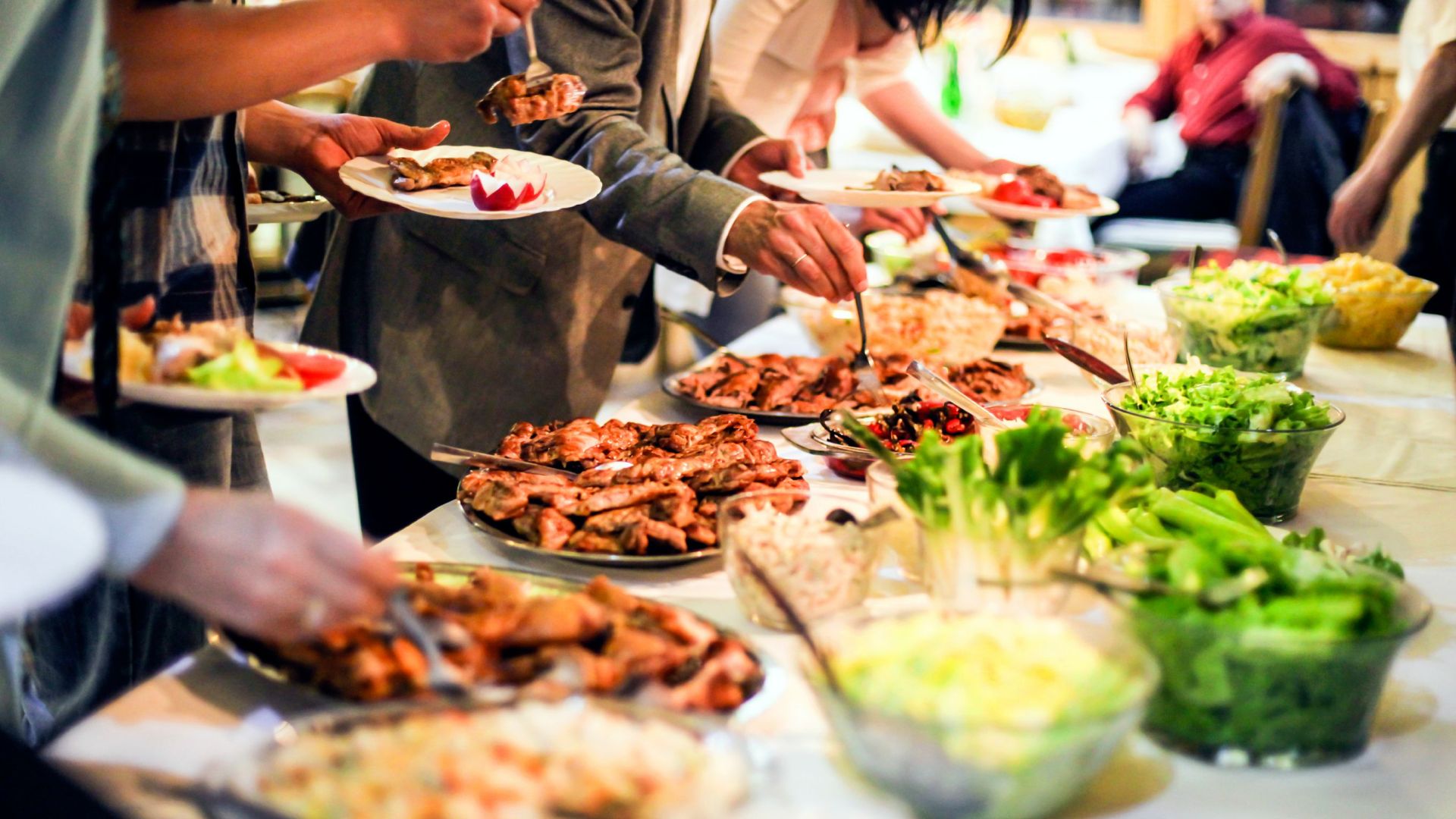
The joke gets repeated in sermons and online because we Protestants still love our covered-dish meals. We host dinners on church grounds and potlucks for Christmas, birthdays, and funerals. In the South, we bring fried chicken and peach cobbler to the ailing and bereaved because we know that there is healing at the table.
Yet, the same table we gather around to comfort one another and to pray for the sick offers us the very foods that can make us sick and bring disease. As a diabetes specialist in Mississippi—where the disease is more prevalent than nearly anywhere else in the country—I note the connection between these heavy meals and the national rise in obesity and lifestyle-related illnesses. But for a long time, we’ve refused to bring this issue up in church, perhaps because overindulgence hits too close to home.
Like every good gift, our Enemy perverts the blessing of food. Eat just a little honey, says Proverbs 25:16, but “too much, and you will vomit.” Indeed, some of the earliest church traditions involve feasting, from agape meals to holy days, but the modern church often skips the fast, the delay in gratification that sets the feast apart.
Our response to the hungry in our communities needs to shift. Whereas the poor used to risk starvation, now poor families are overfed but undernourished, with spiking rates of Type 2 diabetes and heart disease. Working families without support cannot plan for seasonal, healthy dinners, so they often resort to cheap meals of convenience. Our churches’ well-meaning food pantries perpetuate these tendencies. Shelf-stable instant potatoes, canned meat, and macaroni and cheese can hardly be classified as nutritious, but we tell ourselves that people should be glad to have it. When compared to an alternative of nothing, they are.
There are many layers to this need, however. For my patients and their families, life is difficult. To change their approach to a basic need like food is insurmountable. Radically altering their plates three times daily is akin to asking them to start sleeping on their roofs.
The multibillion-dollar diet industry isn’t doing us any favors. People who can hardly pronounce the names of the blood pressure medications they have been taking for years can flawlessly request the latest ineffective herbal supplement hawked by “medical” TV shows. They will pay a day’s wage for this snake oil in hopes that their weight struggles will end overnight, rather than doing the hard work of caloric restriction with the slow, gradual weight loss that we in the medical community urge.
My patients ask about paleo, low-carb, blood-type specific, gluten-free, and every other stripe of diet. Much like the payday loan industry, the diet machine preys on the gullible and the under-educated, making use of pseudoscientific language to pilfer the few expendable dollars in their pockets. When these diet plans fail, people can end up more confused and depressed, and often even heavier, than when they began.
Where are we as Christians in this pain? We are right alongside our brothers and sisters. One study has shown that regular churchgoers are almost twice as likely to be obese than their less devout peers. We know that obesity is as life-limiting as smoking, but we are hesitant to address this problem. American society hasn’t found a sure-fire answer to reversing abnormal weight gain once it begins; research shows that serial dieters tend to regain the weight they lose. Many obese children will know no other way to live or state of health in which to exist.
Additionally, the conversation in modern circles does not relate to weight as a health issue. Instead, to be thin is to be physically attractive, and we are rightfully wary of the implications of discussions of weight to body image and worth. We also worry that this will distract from the message we have to offer the world about our ultimate hope: Come just as you are, without one plea, but that Christ’s blood was shed for you. But there is power in that blood: power to save, power to redeem, and power to change; power to not leave us just as we are.
When we address sexual immorality, we are comfortable referencing 1 Corinthians 6:19, that the body is a temple; and we refer to this verse regarding other health issues, such as reducing stress. But do we really believe that our temples should be sustained with powdered donuts and French fries? What better path can we, as the body of Christ, offer to the world?
The first is to take gluttony seriously. While we are beginning to address the problems surrounding our culture’s materialism, we want to skip over the strong wording in Scripture to avoid excess food. “Put a knife to your throat if you are given to gluttony”? In my 33 years of regular church attendance, I’ve never heard that Proverb addressed from the pulpit.
The second is to lead our communities in promoting in healthy lifestyles. We can open our family life centers to the community so that our neighbors have a safe place to exercise. We can stock our food pantries with healthy items. Our fellowship halls are perfect for hosting healthy cooking classes and community meals. Our youth can tend community gardens. Diet trends may come and go, but temperance is a long-standing church tradition.
Most important, though, we can address the underlying need, the void that we are trying to fill with unhealthy food and drink. Putting Christ first is the greatest joy of our lives—and that’s something to celebrate. He invites us to his table. He fed multitudes with two fish and five loaves. God rained down manna and doves to the hungry Israelites in the wilderness. His abundant provision is sufficient for our needs. And as an individual, as a Christian, as a physician, I must crucify my greed for food as I work to care for this body, to serve as a role model for my patients, and to honor my Creator.
Until the day we feast together at his heavenly banquet, may we be thankful for his good gifts and work together to ensure that we all have what we need, and no more; that we all look to his grace for our ultimate sustenance.
Jessica Sparks Lilley, MD, is a pediatric endocrinologist and the medical director of the Children’s of Mississippi Tupelo Specialty Clinic. She is the mother of two girls and the wife to Smith, a Methodist minister. The Lilleys are in the process of adopting a third child from Honduras.