
The videos are hard to refute, and much harder to stomach. Conversations recorded and released by the Center for Medical Progress have dealt a hefty blow to Planned Parenthood’s public image. While the reversal of Roe v. Wade seems a distant legal mirage, the videos have powerfully reminded us what abortion is: it is always the death of an unborn person, whose body parts can be crushed and extracted and exchanged for money.
Planned Parenthood has responded tepidly, apologizing for the “tone” used by its medical director. The activists behind the videos have slated several more for release. As the videos continue to stir public debate, we can expect to hear a common refrain: If you care about women, you will support their right to choose an abortion. You are either for women’s well-being and empowerment, or you are pro-life.
This is a false dichotomy—one that women in particular need to dismantle.
The dichotomy is reinforced by lobbyists, media, and tone-deaf politicians alike. In 2012, pro-choice advocates warned of a “war on women,” arguing that male politicians can’t create policies that involve women’s bodies. Meanwhile, Todd Akin’s “legitimate rape” comment and Richard Mourdock’s statement that rape is God’s plan reinforced that, if there wasn’t a war, there was serious lack of compassion toward women. Throughout 2016, Planned Parenthood will assuredly argue that Hillary Clinton—whom they awarded for her “unwavering support of women’s health and rights”—“gets” women like other candidates can’t.
But on the level of hearts and minds, politicians don’t have the last word. Charmaine Yoest, president of Americans United for Life, and Carol Tobias, president of National Right to Life, are shaping pro-life federal and state legislation. Lila Rose and Abby Johnson are younger activists exposing the brutalities of the abortion industry. Together, they show that you can understand women’s experience from the inside out, and still believe that women deserve better than abortion. As Yoest told CT, “One big reason I’m in this movement is that I’m offended by the idea that abortion is foundational to women’s power.”
These and other leaders remind us that to be pro-women is to be pro-life. The first US feminists knew this instinctively. Elizabeth Cady Stanton, Susan B. Anthony, and others understood that partners and doctors often coerce women into abortions; that abortion can compound women’s shame over an unplanned pregnancy; and that it often entails a grief as deep and scarring as a child’s death outside the body. When pro-choice advocates ignore these realities, they fail women and undermine their well-being.
“The abortion movement essentially tells women that they are weak, that they cannot handle an unintended pregnancy,” Abby Johnson told CT. A former Planned Parenthood director, Johnson believes young women are ready for a new women’s movement: one that says “women are strong enough to face whatever comes our way, including unintended pregnancy,” she says. Indeed, millennials are more likely to identify as pro-life than previous generations. And one of the biggest pro-life groups comprises college students; under Kristan Hawkins’s leadership, Students for Life of America has tripled in size since 2006 to 900 campus groups.
When it comes to advancing a pro-life ethic, Christians have many resources at our disposal. We can appeal to moral reasoning, that unborn persons have a fundamental right to live. We can appeal to spiritual authority, that every major religion views abortion as killing of the innocent. We can point to astounding research that shows unborn babies are, physically speaking, tiny humans. But in a postmodern culture in which personal experience is given much authority, women can make a powerful contribution to the pro-life movement.
Abortion is not a “women’s issue”; rather, it is a human issue that affects women uniquely. Congressman Henry Hyde, drafter of the Hyde Amendment (which restricts certain federal funds from being used to perform abortions), understood this well. In debates with pro-choice Democrats in the 1990s, he was accused of speaking on something he knew nothing about. So he turned to Marjorie Dannenfelser, now president of the Susan B. Anthony List, and said, “We’ve got to have women doing this.” Hyde supported the pro-life nonprofit in its early years.
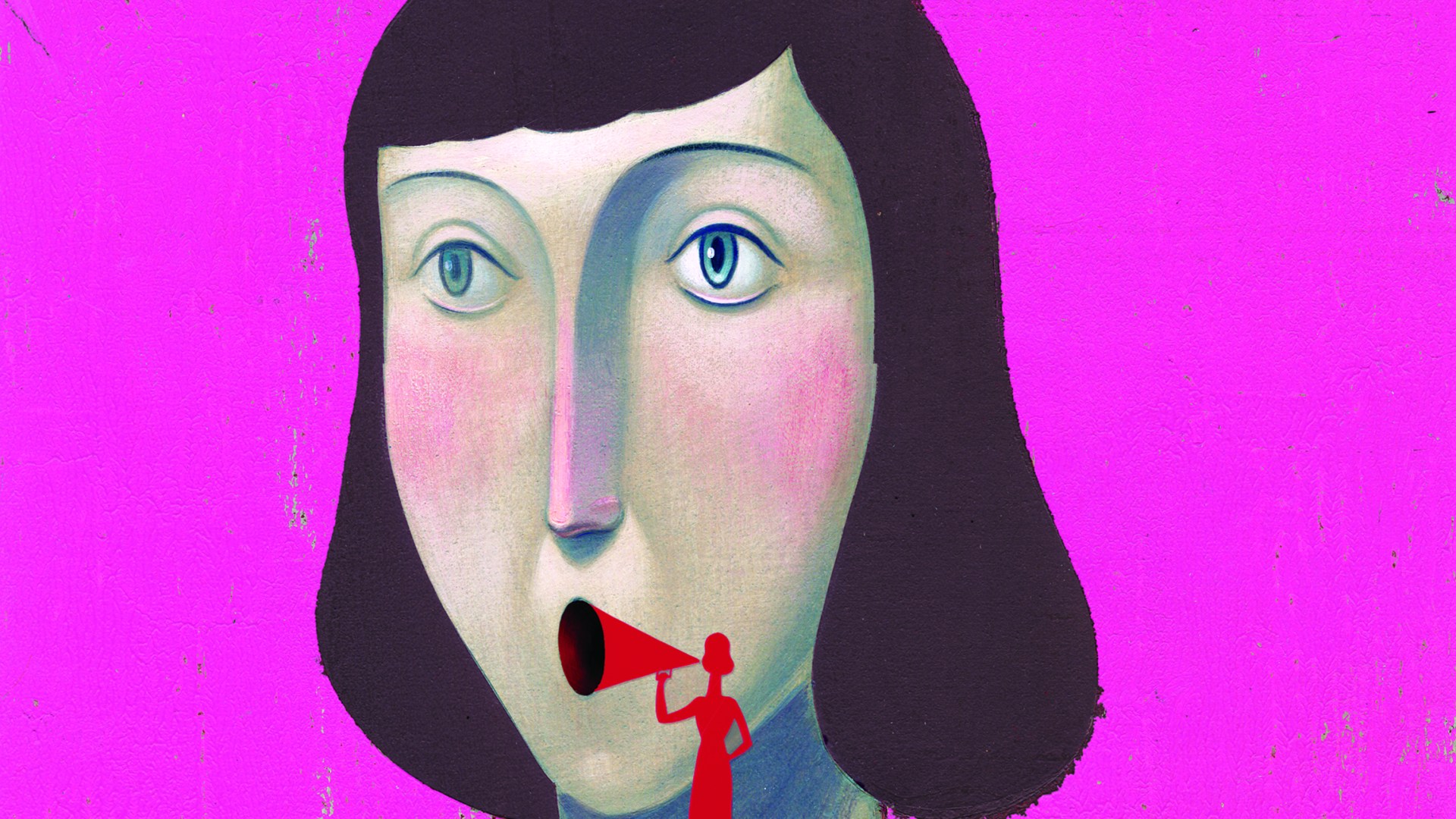
“When men speak, people can hear the intellectual argument,” said Dannenfelser, “but they want to hear if there is female support for the position.” As the 2016 election approaches, may more people hear that support loud and clear.
Katelyn Beaty is print managing editor of Christianity Today magazine.