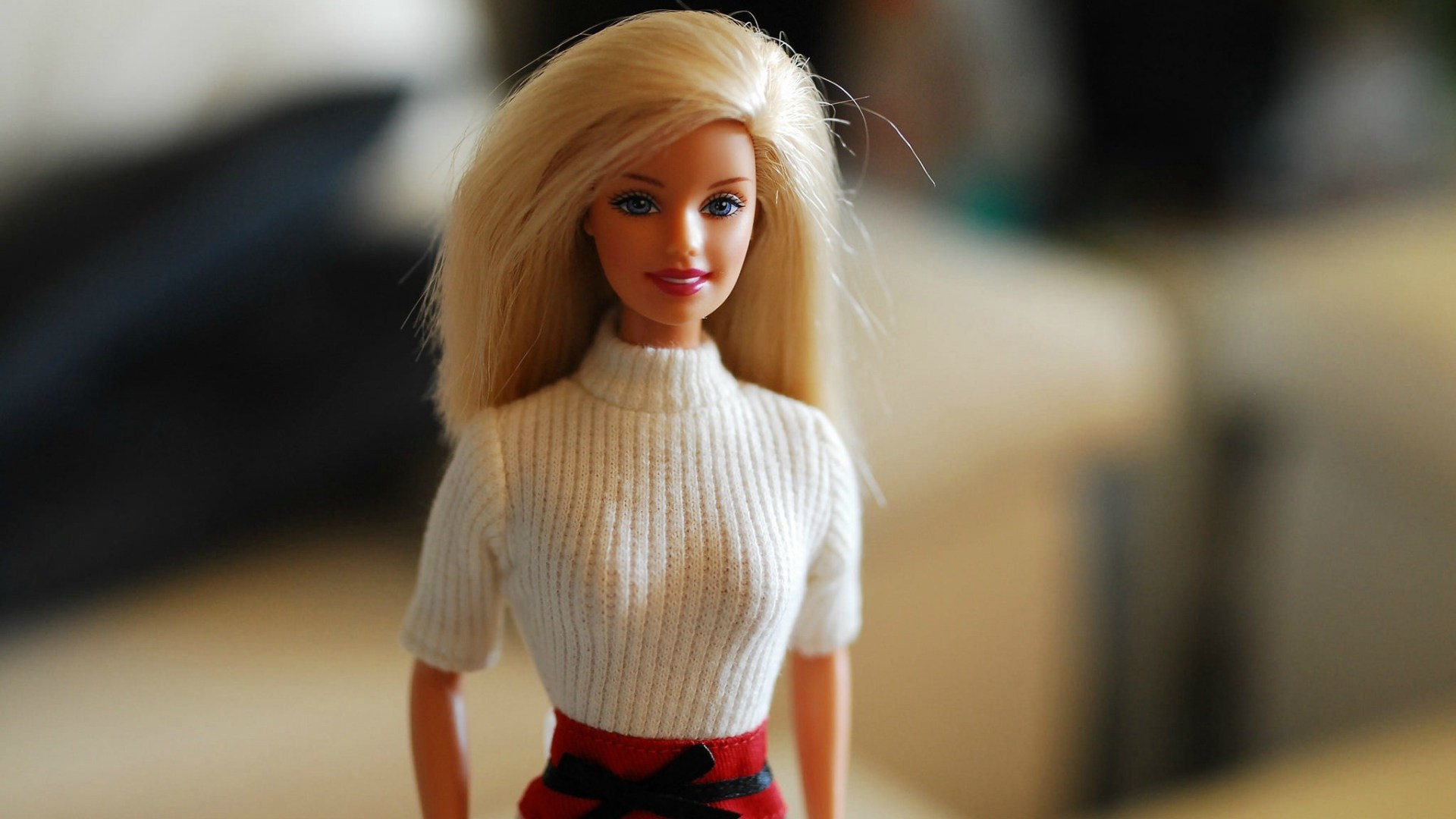
After 57 years, Barbie has a new shape. Several, actually.
In an effort to boost declining sales, Mattel unveiled curvy, petite, and tall Barbies late last month. These new dolls will be sold alongside traditional Barbies. While mothers around the country will appreciate this historic change, a few millimeters difference in size cannot reverse the cultural message about women's bodies that has already reached many young girls.
My three daughters have collected Barbie dolls for years. Given her reputation as impossibly skinny, usually white, and overly commercialized, Barbie’s presence among our kids’ toys has caused well-meaning friends to silently question our parenting: Don’t they know that Barbies foster body image issues? Can’t they see that they teach destructive ideas about being a woman?
Of course I can see it. Barbie’s traditional proportions make no sense, and her look implies that beauty is exclusively defined as thin, white, and silky blond. For five whole years, we intentionally kept Barbie out of our home. But after our oldest daughter’s fifth birthday, we could hold out no longer.
We threw her a butterfly-themed party, and one guest brought a present to match: a Barbie with extendable orange, pink, and black wings, like a monarch butterfly. This thoughtful neighbor, having recently arrived in the US, was likely unaware of our American angst over Barbie, and she clearly did not share it. She simply chose a toy that a little girl who was into butterflies would love. There was no question that we would embrace this thoughtful gift with gratitude and gladness.
And so it began. The Saddle ‘N Ride horse was out of the barn. Next came friends for butterfly Barbie; we bought a few more dolls at a secondhand store, making sure to select non-white ones. Along with them came the clothes and the accessories.
Barbie and her extensive wardrobe and real estate portfolio turned out to be an excellent platform for my girls’ imaginative play. For kids who love play acting and world-making, this set of toys helps them generate one creative scenario after another. My daughters have engineered a pulley-operated elevator for her house, designed her a wardrobe crafted from painters tape, and displayed her at their “bookstore” tenderly cradling Smurfette to illustrate Richard Stearns’s God’s Love for You. This Christmas I found the Joseph from our nativity scene camping with one of the shepherds outside Barbie’s RV.
I could have tried to quash my kids’ love of this svelte fashionista, but I chose not to. To express disdain for Barbie risks communicating to my daughters that their interests are frivolous, their delights are wrong. I won’t do this. At heart, is love of fashion and design not love of beauty? I believe that God himself planted this love of beauty, color, and texture in us.
Playing house with dolls is a way to explore our own world. This is no less true when the doll’s proportions are unrealistic and her clothes a bit tight. If there had been another line of toys that I could have easily found secondhand with as many interesting accessories, I would have bought those. Instead, we have allowed our girls to relish the endless creative opportunities Barbie offers despite her downfalls.
Like most American moms, I worry about my girls’ body images. I want them to view women as strong, wise, and gifted by God. In a society flooded with airbrushed pictures, no woman is immune from self-doubt and confusion. I wish that for the next 20 years I could hide all the commercials, billboards, and celebrity photos. I would love to create a world in which my kids only saw real women with realistic bodies.
I’m grateful that the newly shaped Barbies help us take a step toward that world, but it’s only a tiny step and will likely make little impact on girls who learn early our cultural preference for skinny bodies. When I was wrestling a few years ago with whether to let my kids play with Barbie, I realized that to eliminate her would simply be to remove one trickle from a fire hose….at the cost of my kids’ favorite way to play and create. I decided that it was more important to foster their gifts and interests than to assuage my uneasy conscience (a conscience that on this issue was perhaps more informed by society's expectations of me as an educated Christian woman than by the Holy Spirit).
This is not to say that I am off the hook. My husband and I must still ask, how will we build up our daughters in truth and strength? How will we give them God’s vision for women? We’ll start off by ensuring that Barbie is not the only female figure they know and admire.
We surround them with godly, brave, gifted women. We read biographies of Corrie Ten Boom and Harriet Tubman. We play soccer, practice math, and make art. We call them to love God with their hearts, souls, minds, and strength. We push them to love their neighbors as themselves. And yes, we discuss their Barbies’ absurd proportions.
We talk of building sharp minds and strong bodies, soft hearts and deep souls. We cheer their ingenuity. We root them in a rich faith community. We play with Legos and with light sabers. We laugh and delight in what delights them. We tell the stories of Scripture. We trust that God is using their creative play with Barbie to develop their unique gifts.
Laura Goetsch blogs at Thinking About Such Things, hunting down wisdom and humor with equal ferocity. She is a thinker, laugher, and networker who loves clotheslines, public schools, and the midwest.