





I had a recurring dream that lasted from age 6 or 7 all the way through college. In the dream, I leave my parents’ home to embark on a journey—one that will take many days and introduce me to many people and new things. I have to keep moving because my father is looking for me (we have a great relationship, really); as soon as he catches up to me, the dream ends. The emotion at the core of the dream was always exhilaration—the rush of exploring a world unknown. I wish I still dreamt it.
Wanderlust—the insatiable desire to explore—dates back to the earliest eras of human history, but only recently have humans traveled, not to survive, but for the sheer fun of it. More of us are traveling outside national borders, too; last year, the United Nations World Tourism Organization found that 1.1 billion of us—about 1 of every 6 people on the planet—traveled internationally as tourists last year.
Likewise, more of us are traveling alone. According to one 2015 study, 24 percent of people traveled by themselves on their most recent overseas vacation, up from 15 percent in 2013. The same study found an increase among “Wander Women”—solo female travelers (SFTs) who aren’t waiting for a spouse or family and friends’ schedules to line up in order to adventure. Scads of TripAdvisor reviews and blogs are dedicated to helping SFTs pack lightly, find new friends, be safe, and make the most of their time away. If we’re in “an epoch of single women,” as journalist Rebecca Traister claims, then travel is just another thing (alongside buy a home, raise a child, and start a business) women apparently don’t need a man in order to do.
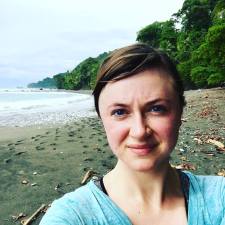
As a reward for writing a book, last fall I decided to spend 10 days in Costa Rica, “with my by myself.” For years the Beaty family had talked about going for the natural beauty and abundance of birds, but when my parents’ and brothers’ schedules didn’t line up, I decided to go it alone. Despite scary all-caps warnings on the State Department website, I figured the risks for this particular destination were no greater than, say, walking alone at night in a major US city. (By the way, Mom, I never do that.) I did all my research and bookings a couple months before the trip. Then one dark, chilly Chicago morning last December, I headed to the airport, the exhilaration in my childhood dreams rushing back.
 Katelyn Beaty
One of the most common responses to the rise of STFs is that it’s not safe. Indeed, for specific women in specific places, traveling alone hasn’t been. This February, a pair of female backpackers hiking in Ecuador were killed by men who offered them a place to stay. The response to their deaths was telling: What were these women doing wrong? One Argentinian psychiatrist tweeted, “You are also responsible for your own preservation.” Others wrote that “women will continue to be killed if they don’t take precautions for their safety.” In reaction, many women took to Twitter with #viajosola (“I traveled alone”), explaining why they do so and the good things that have come from it. There are many stories of STFs, and the vast majority are not horror stories but fairy tales.
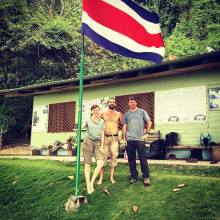
My own experience in Costa Rica was mixed. There was something freeing about taking to the open road in a rental SUV, stopping at beautiful vistas and trailheads on my own schedule. Absorbing all the clean air and lush forests was breath to my soul. On the last three days in country, I took a 24-mile hike with two men—a guide and another hiker—through jungles where monkeys, sloths, and toucans greeted us overhead every few minutes.
Yet for all my chutzpah, pesky reminders of my own vulnerability and fears kept cropping up. There were nights when I couldn’t fall asleep, imagining animals or strange men lurking outside my cabin. Driving on one-lane dirt roads at night is enough to give a Marine trooper some jitters. On the jungle hike, I noticed the hole at the bottom of my tent was exactly the circumference of a snake—many of which can kill with one bite.
 Katelyn Beaty
And then there was the time I fell into a hole. I was leaving a restaurant at lunchtime in Santa Teresa, one of the many beach towns on Costa Rica’s Pacific Coast. As I started off down the dirt road, I noticed someone up ahead waving his arms. Before I could register his signals, the left front tire of my rental SUV dropped about two feet into an unmarked ditch, scraping metal as it went down. Embarrassed and shaky, I got out of the car, and the panic set in: What am I going to do?
At that moment, three men started running up to the car and assessing the situation. Calling some friends over, the men sank all their body weight on the opposite, back side of the car, and it began to tip out of the hole. The entire ordeal was over in five minutes. Tears of gratitude sprang up as I thought of all that could have gone wrong (this could have happened at night; this could have hurt someone; this could have hurt me) and, by the grace of God and the kindness of strangers, all that didn’t.
There is much in our beautiful, broken world to fear. Any woman worth her salt knows this and will look squarely at the perpetual wickedness of man and her own mortality before setting out on a solo trip. For my next international trip, I would probably try to go with a friend. But whether we leave home or stay cozy inside, we are not to live in “a spirit of fear; but of power, love, and a sound mind” (2 Tim. 1:7 KJV).
Upon my return to the States, I told a friend all about the trip. “That sounds really brave,” she said, and I had to agree. While the trek was challenging, it was empowering to do something hard and come out alive and kicking.
Everything good in God’s world requires some risk. And I for one am not going to let fear—of the unknown, of poisonous snakes, of being alone in some ultimate sense—stop me from heading out on the journey.









