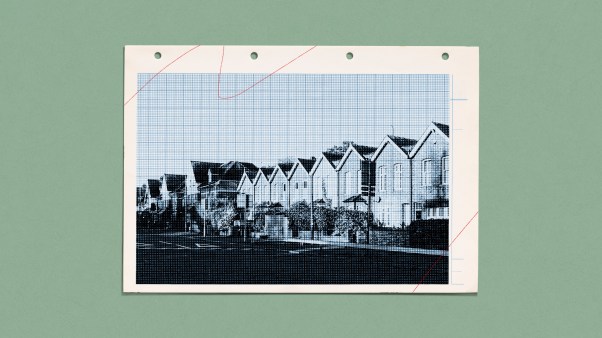
Several years ago, our church went through a massive remodeling effort, updating a tired, ‘90s-era look with more modern, chic, 21st-century décor. Peeling wallpaper was replaced with fresh paint. Hideous brown siding was covered over with a beautiful new stone treatment. A landscaper transformed some tired and unkempt bushes into a beautiful garden walkway. Our building, which many mistook for an abandoned union hall or a Masonic lodge, now looked, to passersby, like a place that might have signs of life.
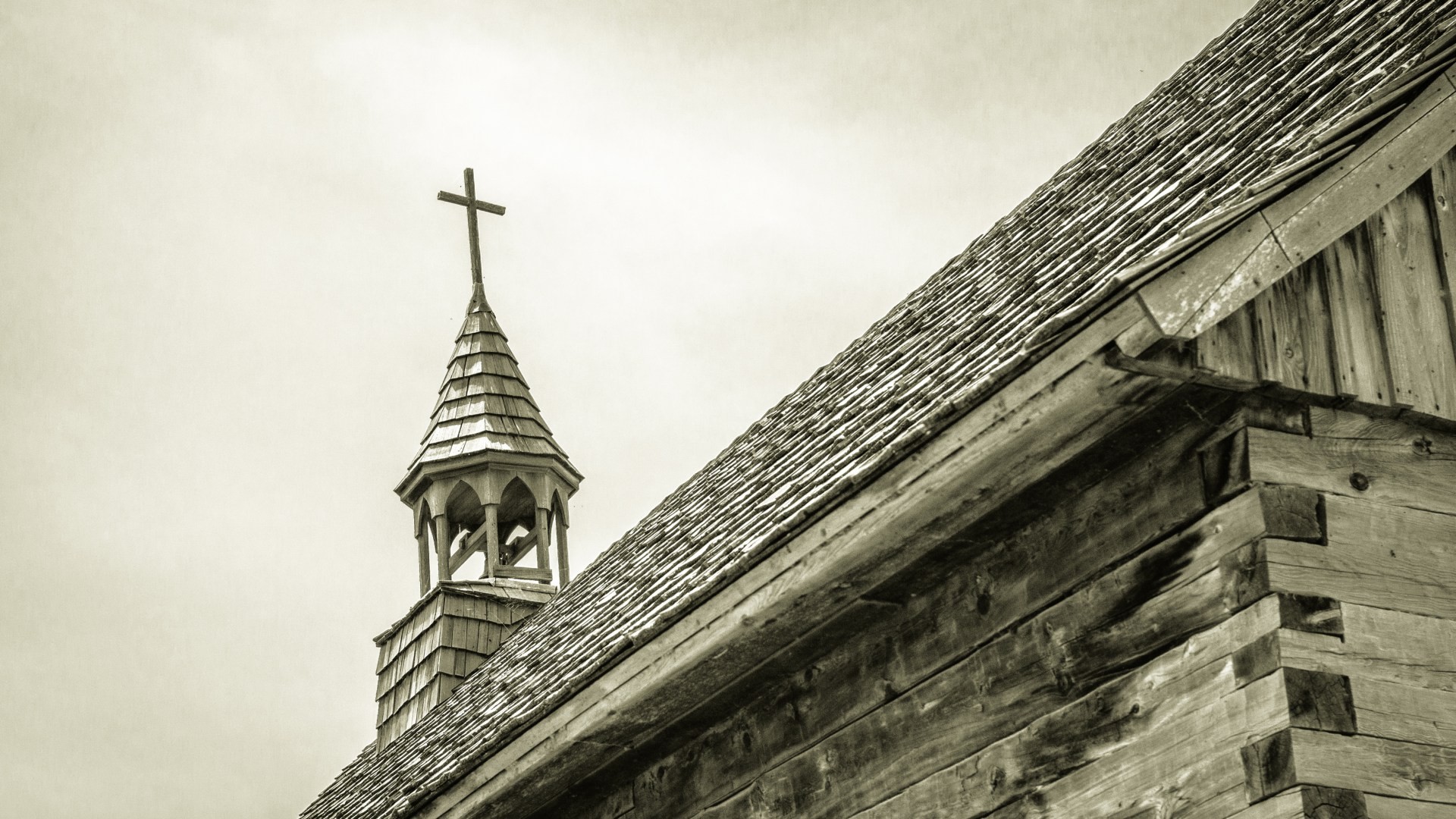
Interestingly, though, we capped off our remodeling effort by adding a steeple. Yes, you heard that right—as part of our revitalizing, modernizing, moving-our-church-forward renovation, we added an architectural element straight out of the Dark Ages.
A fresh logo. A modern auditorium. A welcoming lobby. And a steeple.
The history of church steeples is a bit mysterious. Nobody knows for sure when the first steeple was built, but the oldest one still standing is the massive spire on the 12th-century Chartres Cathedral in France, about 80 miles southwest of Paris. They made their way to America, it seems, with the architecture of Christopher Wren during the colonial period and were ubiquitous up until very recently.
Why steeples? Some historians speculate that they are an attempt to symbolize Christians’ desire to lift up their hearts and minds toward the heavens. Others note the more practical benefits. According to Joe Carter of The Gospel Coalition,
The addition of a steeple to a church often had three functions. First, vertical lines of the steeple helped to visually enhance the lines of the church, directing the viewers' eyes vertically to the heavens. Second, steeples gave church buildings—which were usually short and squat—an aesthetically pleasing feature that enhanced the harmony of the design. Third, steeples were often the highest architectural feature in an area, which provided a landmark for people to find the church from any part of town.
Today, of course, people find a church in other ways. As Cathy Lynn Grossman says, “People hunting for a church don't scan the horizon; they search the Internet.” This and other reasons explain why steeples are far less common nowadays. The ‘90s seeker-sensitive movement saw the rise of more utilitarian church architecture as evangelicals sought to distinguish personal faith in Jesus Christ from the stuffy, legalistic religion of traditional Protestantism. Symbols like steeples and crosses were seen as obstacles to those who might be turned off by institutionalized religion.
And yet, something, I think, is lost with our “Jesus versus church” dichotomy, and it shows in our church architecture. Of course, steeples aren’t the sign of a healthy church, but we shouldn’t be so quick to abandon historic church architecture simply because it looks too Christian. There is something otherworldly about a church building that looks distinctly like . . . well, a church. To those who seek something more than the emptiness of modern life, it can be a beacon of hope—and, to those who know Jesus, a reminder of their allegiance to another, higher kingdom.