The media has settled into its expected narratives around childbirth. In sitcoms, you get sweaty and yell. In movies and documentaries, it never goes as planned, with some bizarre surprise—even the news that you were pregnant in the first place. (To echo almost every woman who has ever been pregnant: How does this show exist?) Magazines feast on documenting the “baby bump,” then waiting for it to disappear postpartum. Chrissy Teigen joins Kim Kardashian and Kate Middleton as another pregnant celebrity whose red carpet photos and Instagram pics make headlines on People’s baby section.
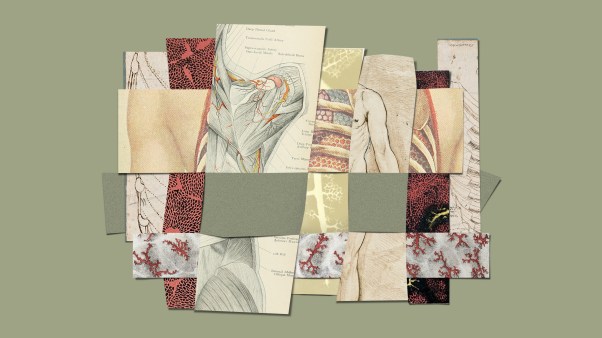
Like almost everything else, pregnancy and childbirth are much harder and messier than we see in the media. Going into my first pregnancy, I knew that. I wasn’t going to give birth according to sitcom timing, and my post-baby body wasn’t going to bounce back like these actresses’. Even when the difficult and wrenching sides of childbearing come up in popular conversation, it’s hard to grasp how gruesome the whole process is.
At a childbirth class my husband and I recently attended, the facilitator listed some of the things to expect after birth—uterine cramping, a swollen postpartum stomach (and its new normal size), bleeding. One new mom raised her hand. “You mean you bleed for awhile after the baby is born? For how long?” Without hesitation I said, “Forever.”
The laughter in the room broke the tension, and the nurse continued. “Four to six weeks. It’s completely normal—part of birth, in fact, but women don’t talk about it much,” she said. “Birth is difficult, but it isn’t scary. Postpartum bodies are different, but they aren’t broken.”
Scripture’s unblinking look at the messier parts of existence reminds us that we needn’t shy away from talking about the difficult parts of bodily life. Speaking openly about the struggles of infertility, the anguish of miscarriage, and the bodily trauma of carrying and birthing babies can free us from the isolation that comes with these physical changes.
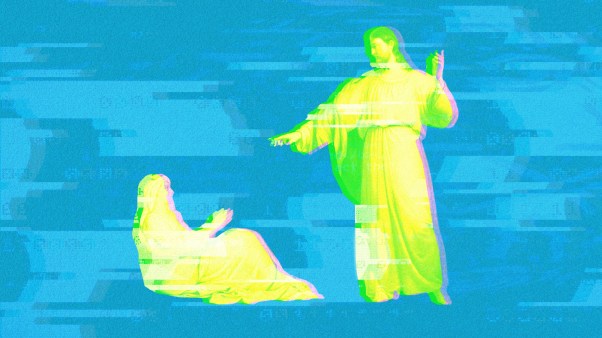
The Bible proves time and time again that God is not just unafraid of the mess; he is present in it. Witness his love for the tax collector and the demon-possessed. Watch him reach out and touch the bleeding woman and the leper. It’s not that brokenness is itself good. No woman struggling with postpartum bleeding hopes that it continues forever. It’s that God is at work in and through it.
When a friend began suffering a miscarriage, she was shocked at how little she knew about what to do. Not just how to grieve, though that question would come—but what to do. Miscarriage isn’t often discussed unless you’re initiated into the club of those who have walked its road, and by then the information usually comes too late. My friend wondered, should she go to the hospital? Wait and see? Google it? Try to pretend her period was just really late?
At her lowest point she found herself weeping in a restaurant bathroom as her bleeding increased to where she knew for certain the pregnancy had ended. Back at the table she simply whispered to her husband, “We have to go. Now.”
One of the wonders of God is that he chose to share in the grisly elements of human existence—not just walking in our shoes but being born and dying in them, too. He could have descended from heaven as an adult, but instead he endured birth, poverty, hunger, and thirst. From his beginning, he is marked as one of us—born as a commoner, raised by a carpenter, baptized by a cousin.
Jesus’ baptism in the Jordan River by his cousin John is often depicted as a purely cheerful event. The Holy Spirit descends as a dove, along with sunbeams and perhaps a soft strain of the Hallelujah Chorus. The Father speaks of being well pleased. Jesus is blessed. In my 3-year-old son’s picture Bible, Jesus smiles beatifically as drops of crystal-clear water glisten on his brow.
Yet any time something or someone is being born anew, there is pain. Mark’s Gospel paints a more dramatic picture of Jesus’ baptism, speaking of the heavens being “torn open” (Mark 1:10, NIV), or “split apart” (NLT). As someone who was a bit rent asunder herself when delivering a baby, I couldn’t help but see the image of physical birth in Christ’s baptism. Indeed, in our churches baptism is often referenced as a second birth.
New life never comes without a cost. Labor precedes birth. Our eternal life costs Jesus his own. The tearing of the heavens in Mark 1 is a foreshadowing of how the curtain to the temple will be torn in two when Jesus is crucified. It’s a precursor to how the foundations of heaven will be split apart when God’s perfect son goes down to the grave for us.
The heavens tear open so that God can bless his son. Our bodies struggle and grow and change so that God can bless us and the world through our weakness, our stories, our strength. He promises when we walk through the waters, be they the broken waters of birth or the beautiful waters of baptism, he will be with us.
So let’s be honest about the brokenness of our bodies and our birth, and find together that we are not as alone as we may have believed. Millions of women are right there with us. Jesus is, too.
Courtney Belcher Ellis is an associate pastor for spiritual formation at the Church of the Master in Mission Viejo, California. You can read more from her at courtneybellis.com/blog and glutenfreejesusfreak.blogspot.com.
She previously wrote for Her.meneutics about breastfeeding as a spiritual discipline.