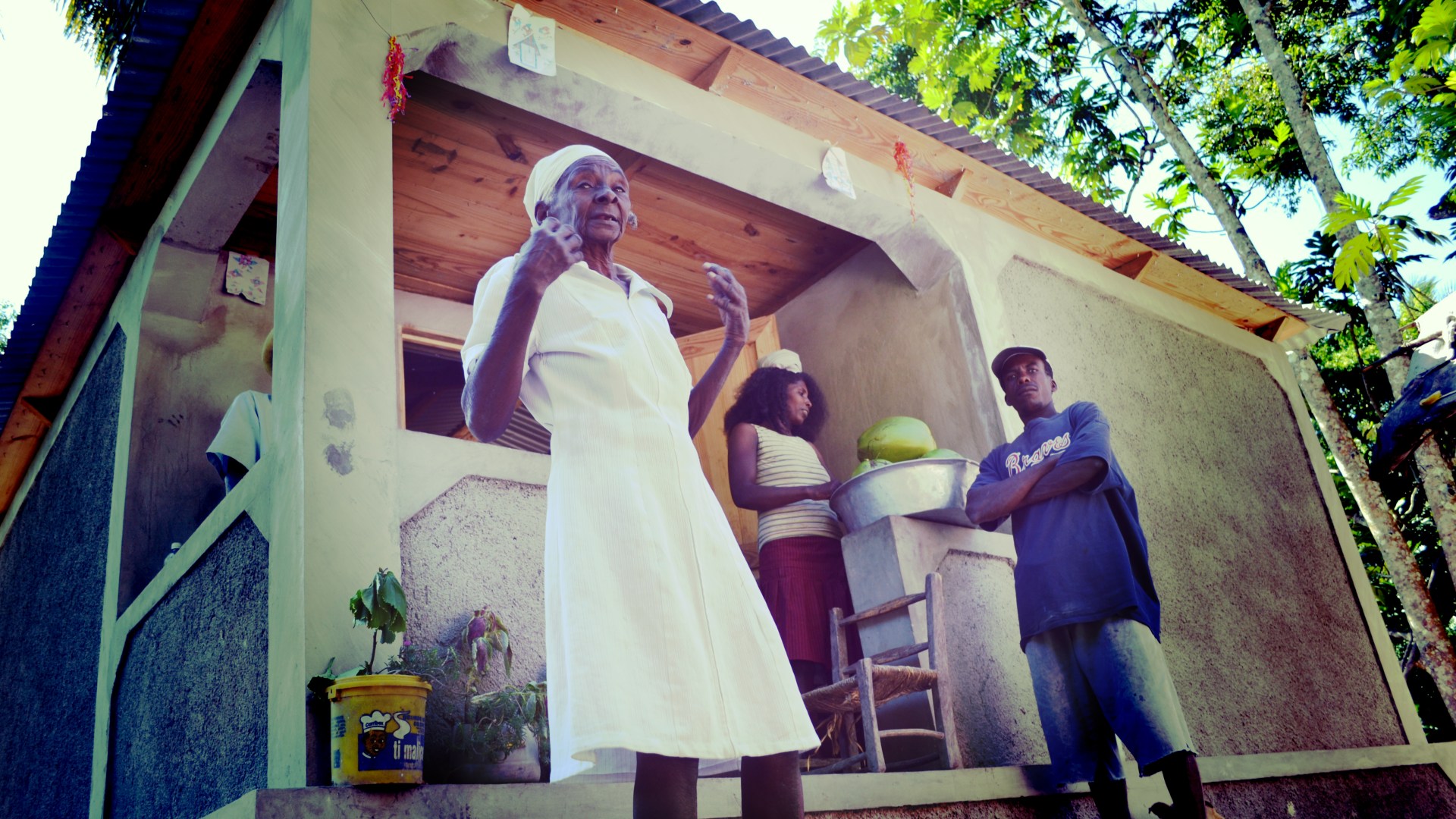
You walk down a dirt path in a Haitian village and come to the edge of someone’s yard, called a lakou. It’s more than a yard. Much of life happens outside—washing clothes, repairing farm tools, cooking, eating. Walking directly into this space would be like barging through someone’s front door in Pittsburgh.

You call out, Honé, meaning “honor.” This announces that you visit with honor for them, their family, their property. You’re acknowledging their humanity, their dignity, their right of response. You’re confirming that it’s up to them whether you will enter and on what terms.
Respé, meaning “respect,” is the word you wait to hear. Perhaps the woman over a pot of rice in the cooking shack recognizes your voice and calls out without seeing you. Or maybe it’s someone you’ve never visited before, and the person walks up without saying respé to inquire about the reason for your visit. Honor and respect are established as integral to your interactions moving forward.
The ritual slows one down to recognize there is a you and an I, to commit to the work of respect that is ahead. These words are not only said the first time one visits. Best friends still call out honé and await respé.
Respect is having a due regard for the feelings, wishes, and rights of others. This is essential at every stage of doing justice, loving mercy, and walking humbly in the world. If we rush through without slowing down, we may not be offering respect, even if the goal is helping. Sometimes we call out honé and need to wait years to build trust before hearing respé. The pause honors the different circumstances and concerns, the varying hopes and histories and values, whether we’re relating to a next-door neighbor or a community on the other side of the world.
“In everything, do to others what you would have them do to you,” Jesus said (Matt. 7:12). We’re often inspired by the Golden Rule to help others. People are walking barefoot where the terrain is tough, and shoelessness can make someone uncomfortable and vulnerable to disease. It’s good to think, If I didn’t have shoes in that situation, I’d want shoes. Let’s give them shoes!
The question is whether we will slow down enough to show respect by considering every implication. Will local shoe vendors go out of business if the market is flooded with free shoes? What if the donated shoes wear down too quickly and cause other health problems? Who will gain or lose power in the local community because of how we distribute the free shoes? Does it contribute to any systemic problems if they come from white Westerners? Is there a more cost-effective way to help people buy their own?
Honé–respé slows down to see things in their true complexity and then emerges with humble but determined vision. We give people the respect they deserve and together find our way to better solutions.
Taken from Slow Kingdom Coming by Kent Annan. Copyright © 2016 by Kent Annan. Used by permission of InterVarsity Press, P.O. Box 1400, Downers Grove, IL 60515.