In this series

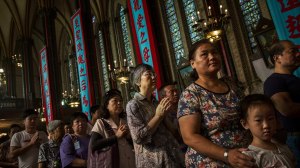
This week is the last chance Chinese Christians have to tell their government what they think of its latest religion law.
They have an awful lot to comment on.
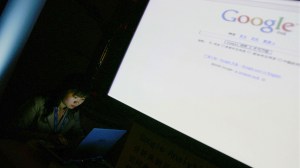
China released a draft of new religious restrictions in September, including the prohibition of online religious services, running religious events in schools, and organizing people to leave the country to attend religious training or conferences.
The State Administration for Religious Affairs (SARA) then opened up a one-month window for responses to the 26 new rules in its Regulations on Religious Affairs. The final day for public response is Friday, October 7.
The draft law opens with the assurance that all Chinese citizens are free to believe whatever they want and to engage in religious activity—as long as it’s within the tighter limits. One Chinese religious policy expert, who asked to remain anonymous, summed up some of what the regulations include:
- No religious activities that are not approved by SARA.
- No one may provide a venue for religious services that are not approved by SARA.
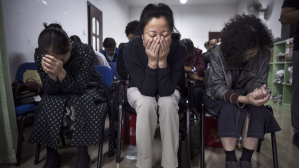
- No one may use their home for religious practices that are not approved by SARA (including home or family Bible studies).
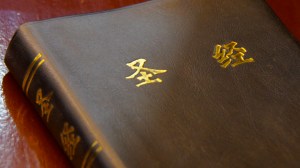
- No publishing religious materials without approval from SARA.
- No foreign or domestic donations may be made to any religious organization that hasn’t been approved by SARA.
- No one may call themselves a pastor without the approval of SARA.
- No international religious exchanges may happen without the approval of SARA.
- No one may study theology at school without the approval of SARA.
“As you can imagine, these amendments to the administration of religion in China by SARA would in effect leave no space for the house or unregistered church in China, and will significantly curtail many of the activities of the TSPM [Three-Self Patriotic Movement] as well,” the expert told ChinaSource.
He continued:
The 2005 draft that SARA currently administers was much more abstract and was difficult and even impractical to enforce. Under the 2005 draft, the house church and other religious activities have been able to continue to operate. The different and worrying aspects of the amendments that SARA has proposed and are currently under review are that there are significant penalties attached to violations and they have included a mechanism for enforcement.
Thomas DuBois, a professor of China Studies at the College of Asia and the Pacific at Australian National University, laid out a side-by-side comparison of the 2005 and 2016 restrictions.
“According to the law itself, the purpose of state regulation is precisely to protect ‘legitimate’ religious activity, while making sure that religion does not fall into the hands of ethnic separatists or become a threat to national unity,” he wrote for East Asia Forum.
The law extends the power to restrict religion all the way down to local communities, one pastor told ChinaAid. “The government wants to control everything, even the smallest aspects. … This revision will further reduce the possibility of loosening religious control in China. It is becoming impossible.”
“The revisions provide a powerful legal base for future suppression,” wrote US-based pastor Gao Baosheng in an analysis cited by ChinaAid. “This draft will bring upon a religious winter so harsh that we must seek guidance from God.”
At least 20 lawyers, academics, and religious leaders wrote a letter of protest to China’s parliament, Radio Free Asia (RFA) reported.
“Citizens' right to freedom of religious belief is enshrined in … the constitution, as is state protection for normal religious activities,” Li Guisheng, a Christian rights lawyer who contributed to the document, told RFA. That freedom to believe should lead to freedom to practice that belief, he said.
Li pointed out another problem: SARA shouldn’t have the ability to make these regulations in the first place.
“The State Council is part of the executive, and has no power to enact legislation,” he told RFA. “Only the NPC [National People’s Congress] can do that, in a plenary session.”
If the government doesn’t perceive any major problems with the regulations, they could take effect early next year, ChinaSource president Brent Fulton told CT. But if the reaction is strong and creates concern, China could return the law to the status quo, blame SARA for reaching too far, or do something completely unexpected.
“In other words, the threat at this point is real,” Fulton said, “but the process is by no means straightforward, and it's not clear where all this will end up.”
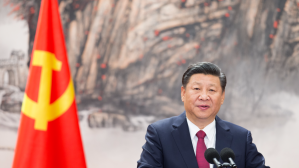
Earlier this year, Fulton analyzed for CT a significant speech by president Xi Jinping that revealed what China wants to do with Christianity.
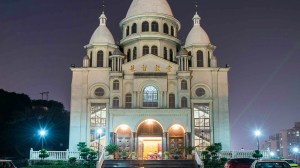
CT has examined the significance of China’s campaign to lift high the cross right off of hundreds of churches, and what China wants churches to do instead. CT also reported the arrest and contested confession of a leading lawyer defending “China’s Jerusalem,” as well as the jailing of the lead pastor of one of China’s largest churches for protesting the cross removals.