They identify as Christians, attend church at least once a month, and say their faith is very important in their lives. Barna Group calls them “practicing Christians.”
But according to a new report by Barna and Summit Ministries, in addition to their Christian beliefs, many practicing Christians have embraced beliefs from other ideologies.
Among these practicing Christians, Barna claims:
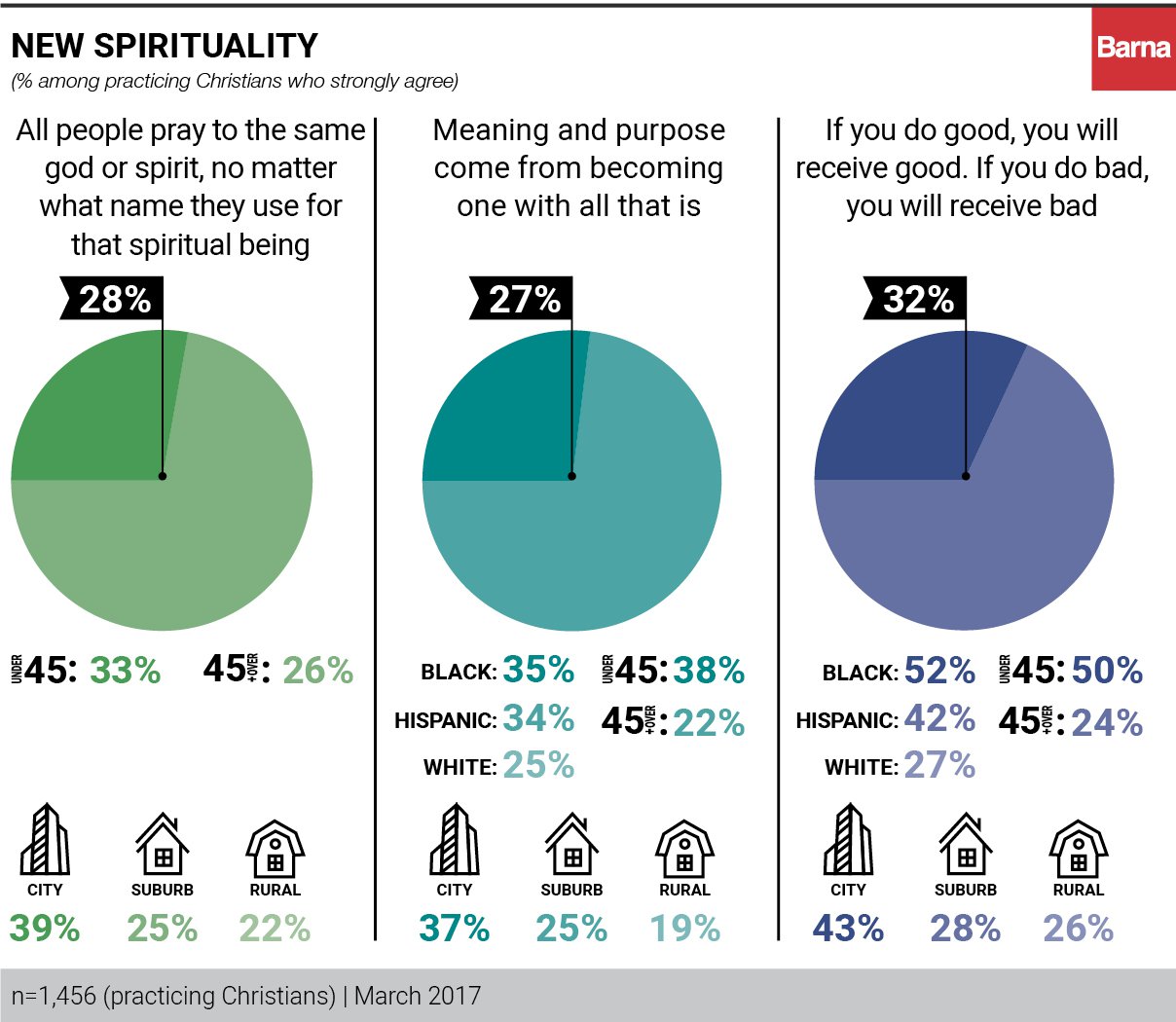
- 61% agree with ideas rooted in New Spirituality.
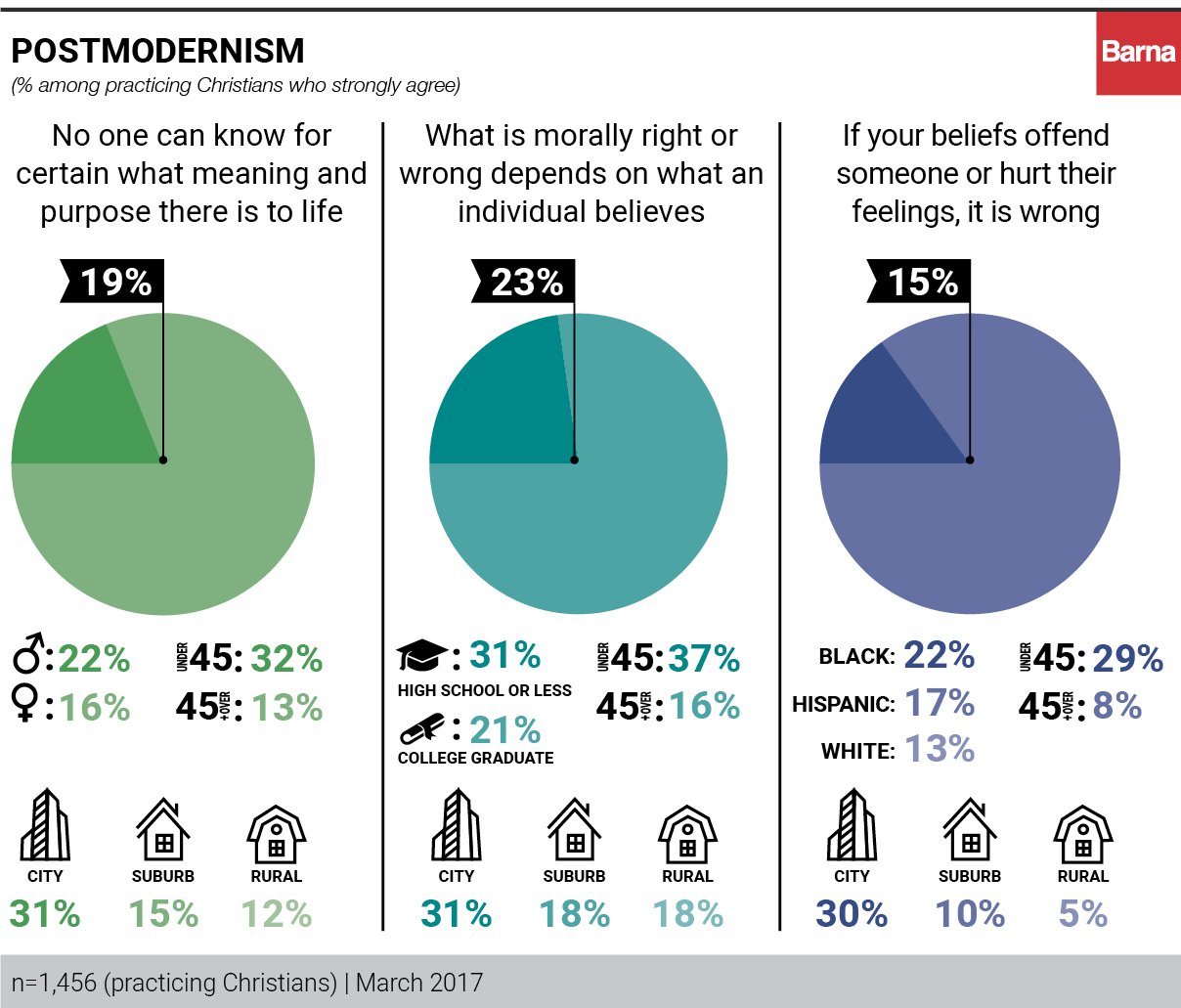
- 54% resonate with postmodernist views.
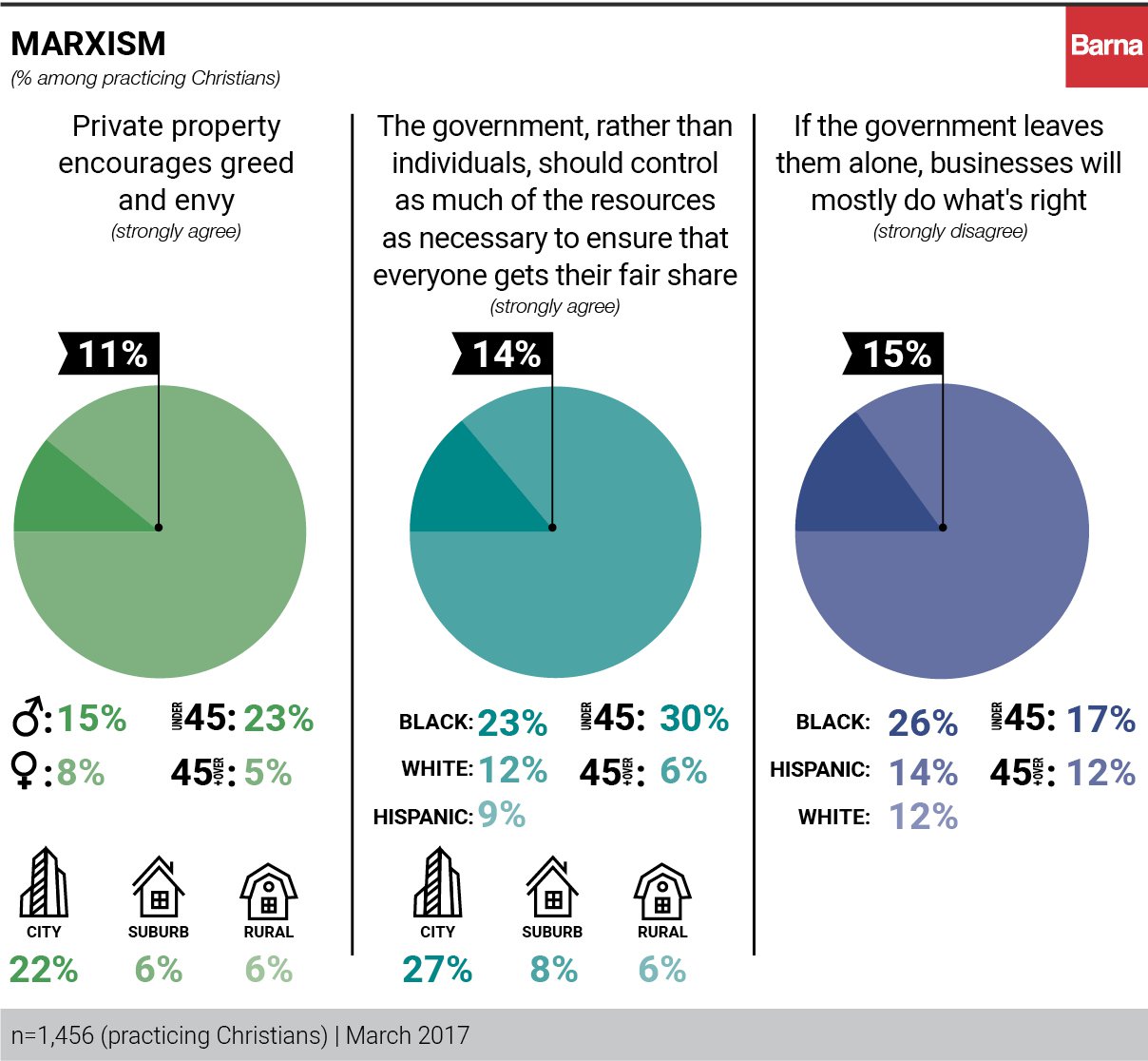
- 36% accept ideas associated with Marxism.
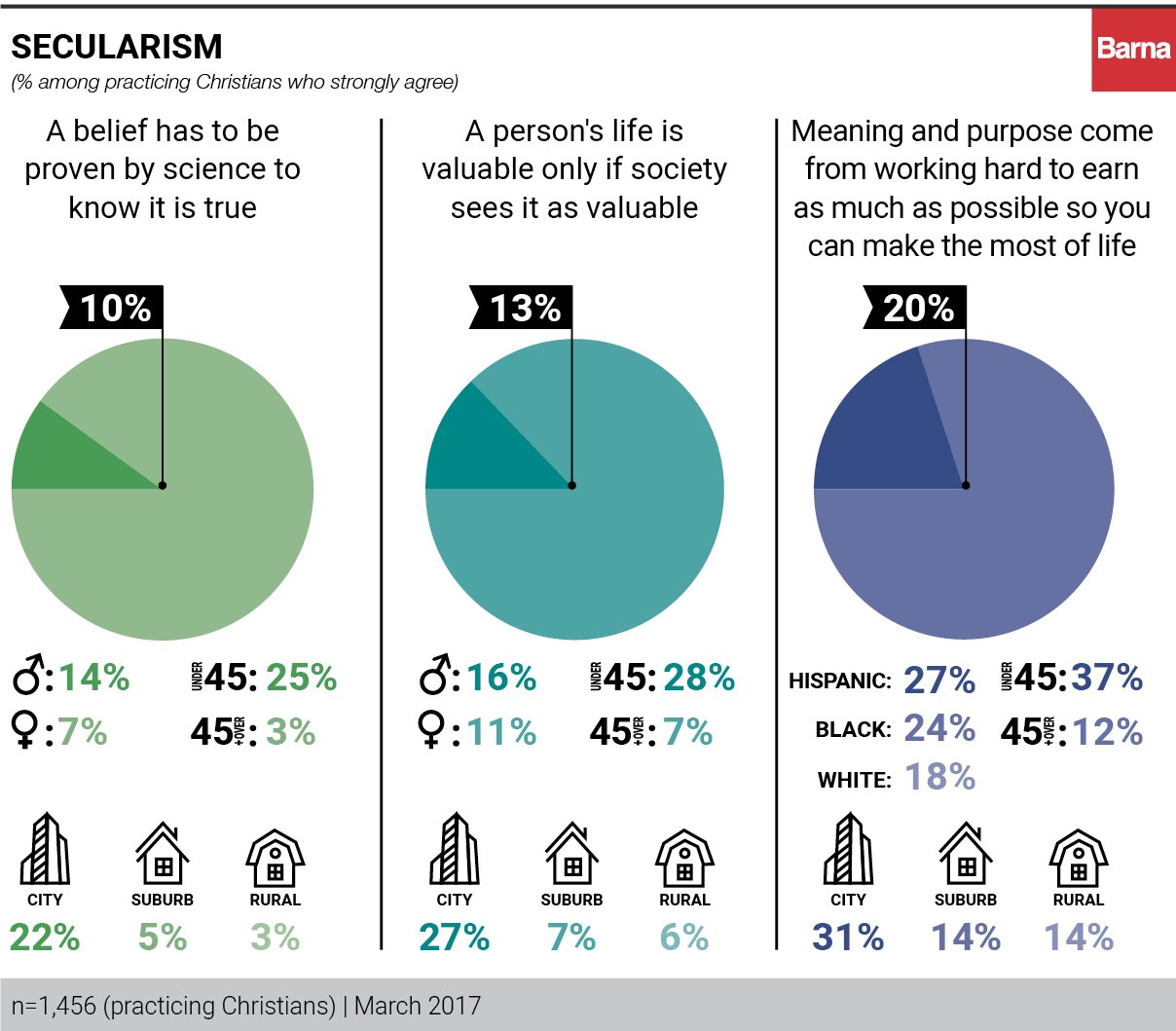
- 29% believe ideas based on secularism.
New Spirituality
Nearly 1 in 3 practicing Christians strongly agree that “if you do good, you will receive good, and if you do bad, you will receive bad.” Barna suggested that these beliefs appealed “to many Christians’ sense of ultimate justice.”
“Another Barna study found that 52 percent of practicing Christians strongly agree that the Bible teaches ‘God helps those who help themselves,’” the report stated.

Secularism
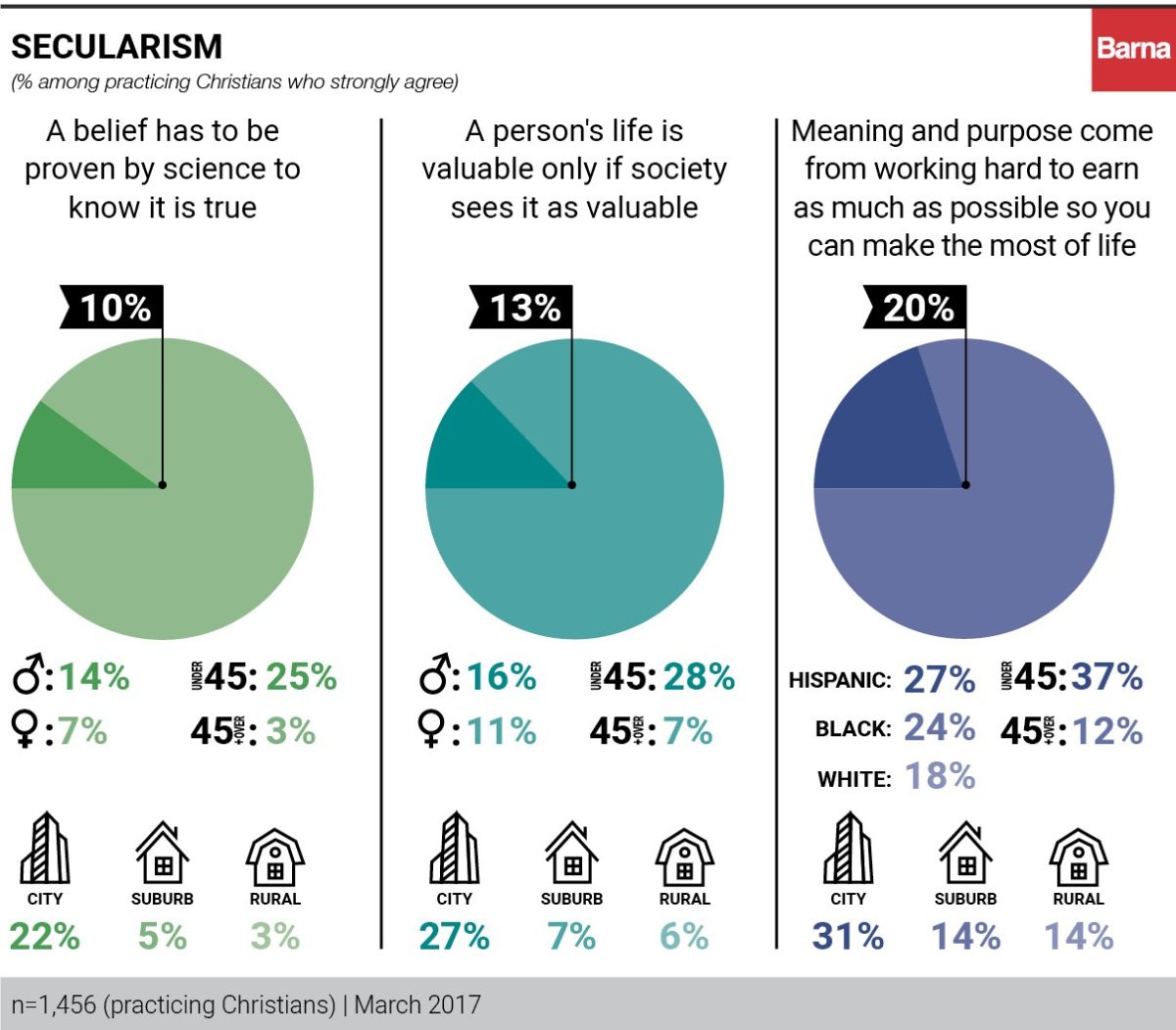
While most “practicing Christians resist scientism and a Darwinian belief … a larger contingent of practicing Christians are more inclined toward materialism,” Barna stated. The report found that 1 in 5 practicing Christians believe that “meaning and purpose comes from working hard to earn as much as possible so you can make the most of life.”
Postmodernism
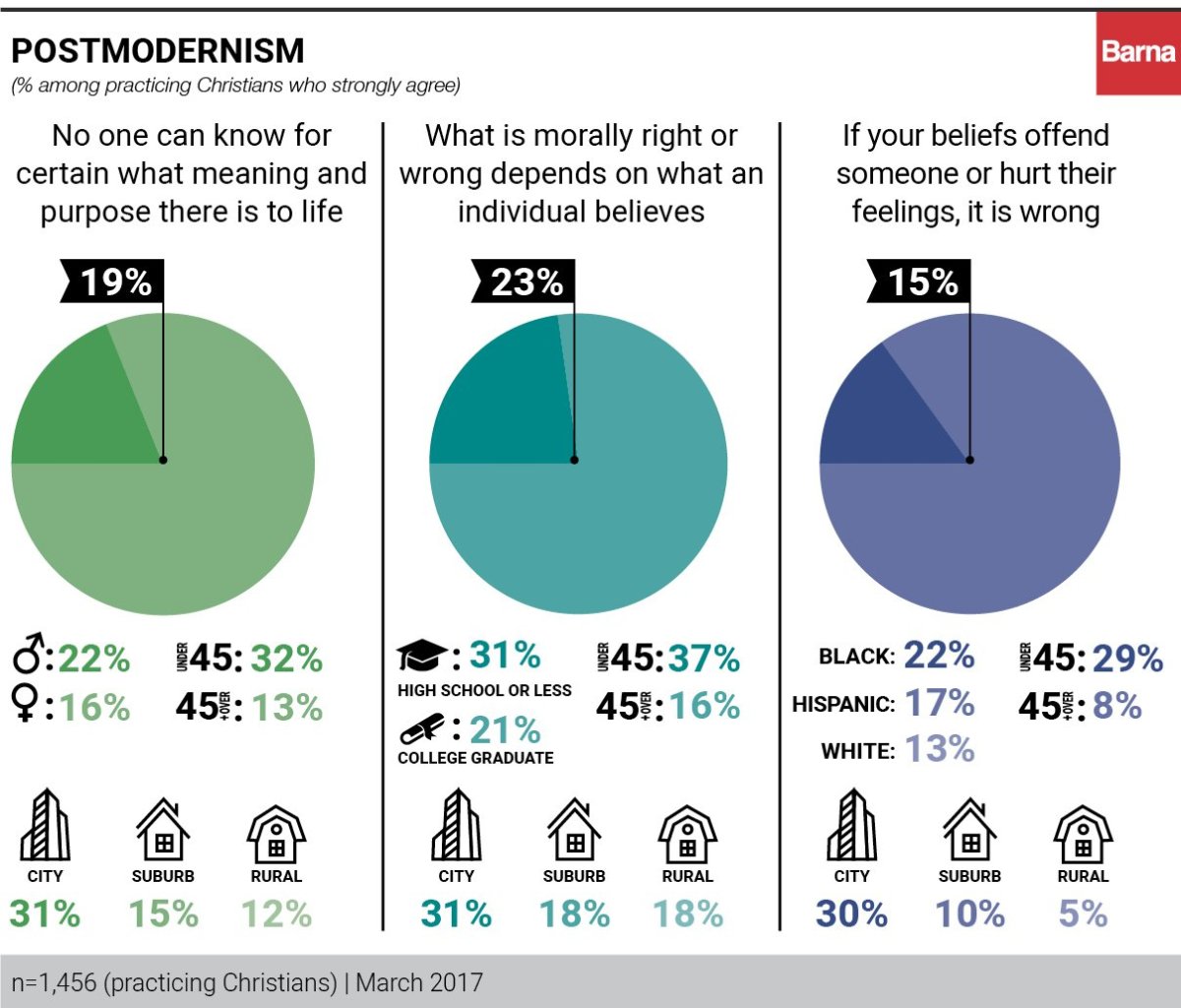
While most practicing Christians reject postmodernism’s claims about subjective truth, 1 in 5 practicing Christians strongly agree that “no one can know for certain what meaning and purpose there is to life.” A similar number (23%) of practicing Christians strongly agree that “what is morally right or wrong depends on what an individual believes.”
Marxism
While very few practicing Christians would support communist (0%) and socialist (3%) political candidates, 1 in 10 practicing Christians strongly agree that “private property encourages greed and envy.” Barna also found that 15 percent of practicing Christians strongly disagree that “if the government leaves businesses alone, they will mostly do what’s right.”
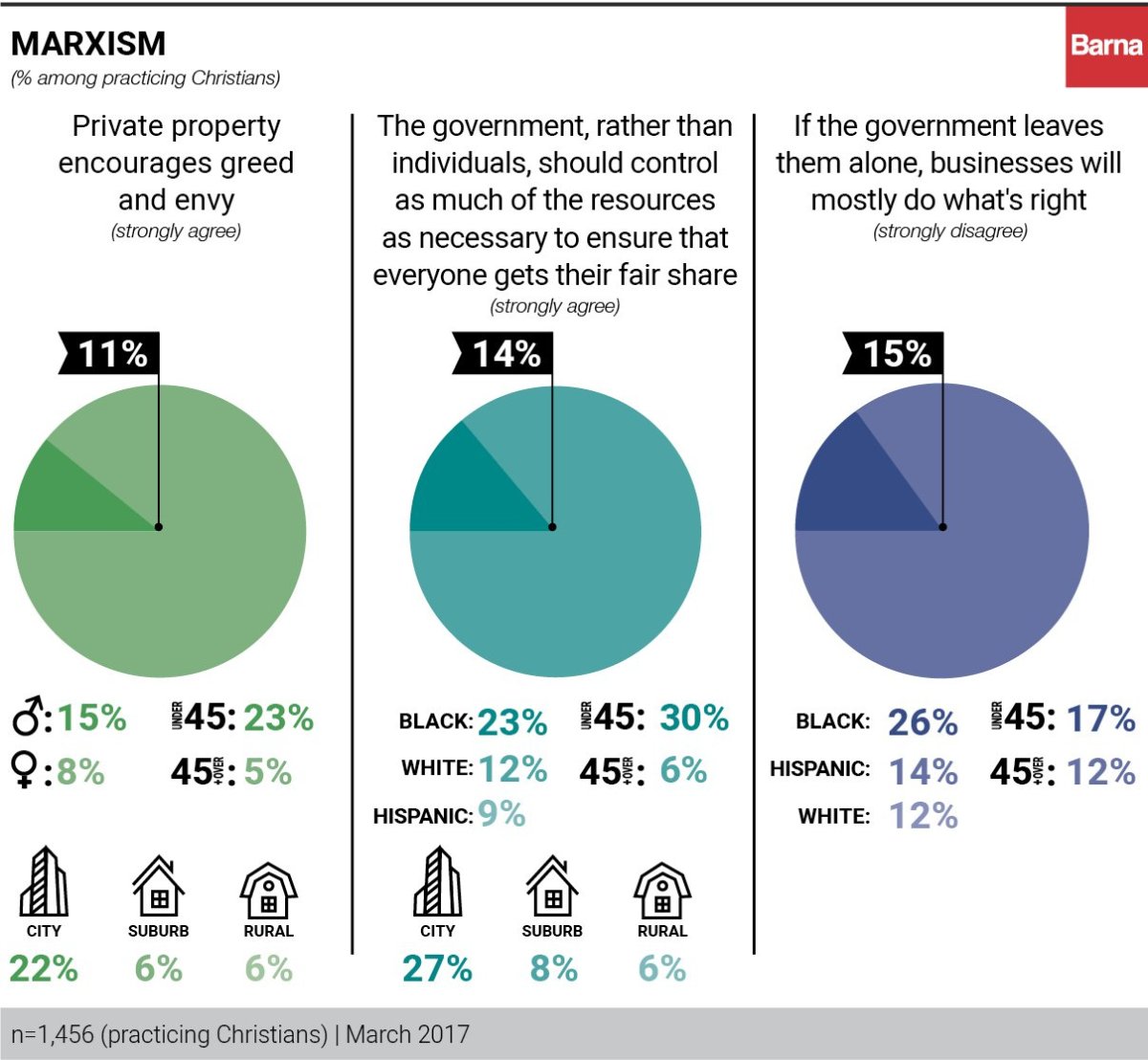
“What stood out most to us was how stark the shift was between the Boomer and Gen-Xer generations,” stated Brooke Hempell, senior vice president of research for Barna. “We expected Millennials to be most influenced by other worldviews, but the most dramatic increase in support for these ideals occurs with the generation before them.”
Overall, men were more likely than women to blend the worldviews, as were people of color and residents of cities.
Barna also found that 4 in 10 practicing Christians are “sympathetic to some Muslim teachings,” and will explore those findings in a future report.
Conducted this March, Barna’s study is made up of 1,456 web-based surveys answered by a representative sample of adults and had a margin of error of plus or minus 2.4 percent.
Barna defines a “biblical worldview” as:
Believing that absolute moral truth exists; the Bible is totally accurate in all of the principles it teaches; Satan is considered to be a real being or force, not merely symbolic; a person cannot earn their way into Heaven by trying to be good or do good works; Jesus Christ lived a sinless life on earth; and God is the all-knowing, all-powerful creator of the world who still rules the universe today.
CT previously noted that, according to one estimation, the top three adversaries of Christian conservatives were communism, Islam, and the emergent church.