In this series


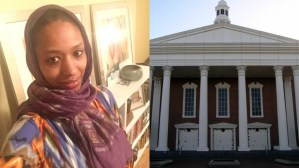
The controversy over a former Wheaton College professor’s theological explanation for wearing a hijab in solidarity with Muslims during Advent was one of the biggest religion news stories of last year. Still, nobody expected Larycia Hawkins to come up in a Senate confirmation hearing for a new Trump administration nominee.
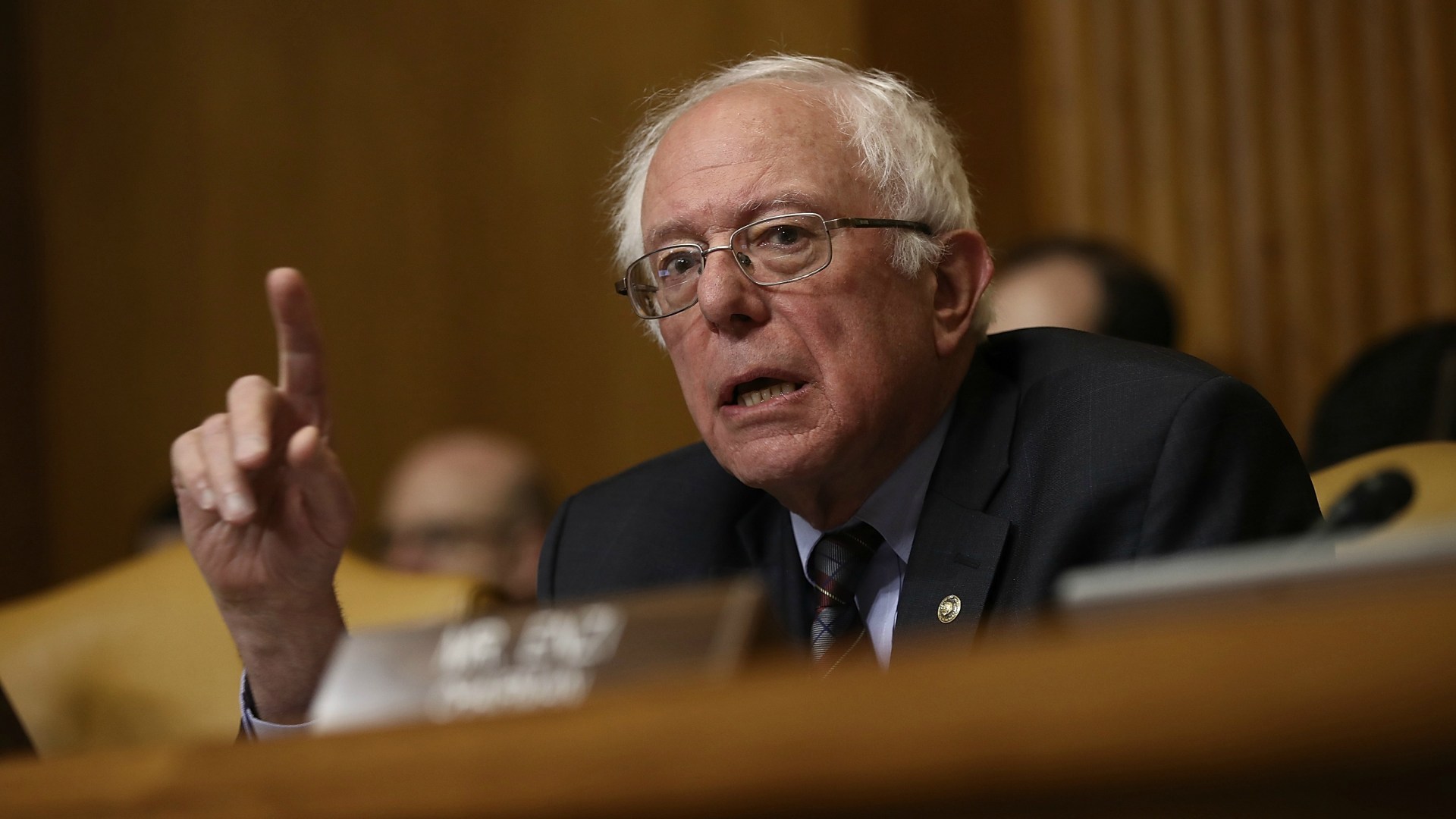
This week, Wheaton alumnus Russell Vought, President Donald Trump’s pick for deputy director of the Office of Management and Budget, was repeatedly challenged by Senator Bernie Sanders for his Christian convictions and specifically quoted Vought’s disagreement with Hawkins’s position.
While Sanders accused Vought of being Islamophobic and making statements that are “indefensible” and “hateful,” Christian onlookers saw the senator applying a religious test to deem an orthodox evangelical unfit for office.
Sanders’s line of questioning was different than the initial debate launched by the Wheaton-Hawkins situation, which focused on whether Christians and Muslims worship the same God. (Americans are evenly split.) Instead, Sanders pushed back against a principle that is not up for debate within the realm of Christian orthodoxy: the belief that salvation is only secured through Christ.
“I don’t know how many Muslims there are in America. I really don’t know, probably a couple million. Are you suggesting that all of those people stand condemned? What about Jews? Do they stand condemned too?” demanded Sanders, himself a secular Jew. “I understand that Christianity is the majority religion. But there are other people who have different religions in this country and around the world. In your judgment, do you think that people who are not Christians are going to be condemned?”
Evangelicals affirm salvation through faith in Christ alone. This principle is the basis of everything they believe. It comes up in three out of four measures that the National Association of Evangelicals uses to label evangelicals: salvation through Christ alone; his death as the only way to remove sin; the importance of encouraging non-Christians to trust him as Savior.
“Even if one were to excuse Senator Sanders for not realizing that all Christians of every age have insisted that faith in Jesus Christ is the only pathway to salvation, it is inconceivable that Senator Sanders would cite religious beliefs as disqualifying an individual for public office,” said Russell Moore, president of the Ethics and Religious Liberty Commission of the Southern Baptist Convention.
As Vought stated during his hearing, “I’m a Christian, and I believe in a Christian set of principles based on my faith.”
Yet, these distinctive beliefs—and any claim of exclusive salvation—are increasingly viewed as offensive or problematic. In America’s pluralist landscape, even Christians are shifting away from such views.
“When it comes to religion, the word exclusive is synonymous with bigot. Even worse, Christians who communicate the exclusivity of their faith are castigated and dismissed,” wrote John C. Richards, who directs the Billy Graham Center for Evangelism at Wheaton.
According to a LifeWay Research survey conducted last year, only half of Americans agree that eternal salvation only comes to those who trust Christ alone. Earlier research from LifeWay found that Protestant pastors (77%) are far more likely than their congregants (48%) to oppose the idea that people can obtain eternal life through other faiths.
Still, a 2013 YouGov poll found just 3 percent of the population believes in universal salvation, that all people will go to heaven. A plurality (33%) believe that “some” will to go heaven, yet most don’t make distinctions on religious lines. Instead, nearly two-thirds of Americans believe that people who don’t follow the same faith as they do will still make it to heaven.
But for evangelicals, the exclusivity of their faith—Christ as the way, the truth, and the life—in many ways fuels their practice and their desire to share their beliefs with others. Amid changing social norms regarding religion, evangelicals have moved toward a sense of principled pluralism: a kind of religious freedom that allows for people of various faiths—or no faiths—to live out their views in the public square.
“We don’t imagine that all moral views are equally valid or that all roads lead to God. Pluralism isn’t relativism,” said Stanley Carlson-Thies, co-author of Free to Serve. “Ideally, we’ll continue to argue vigorously about different principles and work on persuading each other to try a different path. But when we haven’t persuaded each other, we need space to live out our convictions.”
It’s a tricky balance, as people falsely infer that claims of exclusive salvation dictate how another faith should be treated in the public square. The American Civil Liberties Union, following Sanders’ criticism, stated that Vought’s views “threaten” fundamental religious freedoms.
As Emma Green wrote for The Atlantic:
It’s one thing to take issue with bigotry. It’s another to try to exclude people from office based on their theological convictions. Sanders used the term “Islamophobia” to suggest that Vought fears Muslims for who they are. But in his writing, Vought was contesting something different: He disagrees with what Muslims believe, and does not think their faith is satisfactory for salvation. Right or wrong, this is a conviction held by millions of Americans—and many Muslims might say the same thing about Christianity.
Several pastors chimed in on the Vought hearing on Twitter. One pastor suggested that without believing in an objective truth outside of the individual, people will tend to make such claims personal and take offense. “Disagreement is always and only construed as bigotry,” tweeted Washington DC pastor Duke Kwon. “Our moral discourse problem is an epistemological problem.”