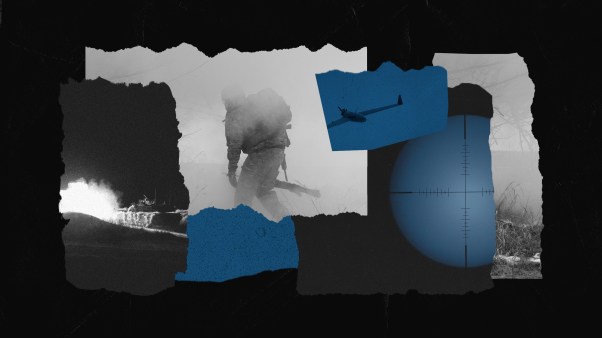
With military operations in Afghanistan back in the news, we’re hearing again about the fog of war. The term was first introduced by Prussian military analyst Carl von Clausewitz to describe the lack of clarity in the battlefield, despite the best-laid plans. Military leaders say it prevents us from knowing the best strategies for success in foreign wars. Military heroes are never heard from again, lost forever in the “fog of war.”
Like the fog of war, the fog of sexual assault stokes confusion, clouds judgment, and obscures reality for the victims. Public and private institutions often make it hard to report sexual assault and easy to discredit the victim. Perpetrators present alternative “facts” about incidents. Psychological and emotional barriers make it difficult for victims to accept their victimhood. Altogether, these forces form the fog of sexual assault and often prevent victims from speaking with lucidity about the crimes committed against them.
Last week in a Denver courtroom, pop icon Taylor Swift—who recently dropped a much anticipated single from her sixth album—took significant strides in clearing the fog surrounding sexual assault. Buttressed by an all-star legal team, high-powered PR, and significant social standing, Swift spoke in stark terms about the assault perpetuated against her by radio DJ David Mueller. After bluntly describing how Mueller grabbed her underneath her skirt, Swift forcefully and unwaveringly repeated her testimony throughout an hour-long interrogation: “He did not touch my rib; he did not touch my hand; he didn’t touch my arm; he grabbed my bare a–.”
The jurors—six women and two men—found that Mueller assaulted and battered Swift and awarded her the damages she sought, a symbolic $1. In a statement, Swift thanked the judge and her legal team for “fighting for me and anyone who feels silenced by a sexual assault. … I acknowledge the privilege that I benefit from in life, in society, and in my ability to shoulder the enormous cost of defending myself in a trial like this. My hope is to help those whose voices should also be heard.” One of Swift’s fans, Abbey Shaw, 16, was delighted by the verdict: “She is putting out a message for women like us: Stick up for yourselves.”
The fog of sexual assault affects those both within and without the church. At first glance, even the clean, clear breeze of Scripture seems to do little to sweep away the fog. I spoke recently with a young atheist about what he regarded as the main barrier to Christianity. “The condoning of rape,” he replied, without hesitation. It’s a common objection of skeptics.
To bolster their argument, they often point to passages such as Deuteronomy 22:28–29, which says, “If a man happens to meet a virgin who is not pledged to be married and rapes her and they are discovered, he shall pay her father fifty shekels of silver. He must marry the young woman, for he has violated her. He can never divorce her as long as he lives.”
However, biblical scholars explain that the law was designed to protect women, who in the ancient Near East had no rights or legal standing. “If the girl who was violated was not married or engaged, the penalty was not death but a fine and the loss of the right of divorce,” says Gary Hall, former professor of Old Testament and Hebrew at Lincoln Christian Seminary. “The law protected both the girl (economic security) and the father (loss of bride price). The girl’s loss of virginity would have made her virtually unmarriageable.”
In the three specific rape cases found in the Bible, all of them triggered wars. Shechem, son of the regional chief, raped Dinah, the daughter of Jacob. Despite his position and his desire to marry her, Shechem was murdered by Dinah’s brothers, who declared, “Should he treat our sister like a harlot?” When men from the tribe of Benjamin raped a concubine “throughout the night,” people responded by saying, “Such a thing has never been seen or done, not since the day the Israelites came up out of Egypt. Just imagine! We must do something! So speak up!” The rest of the tribes waged war against the tribe of Benjamin. Similarly, when Tamar was raped and left desolate by her half-brother, Amnon, her brother Absalom had him put to death and incited a rebellion against his father King David, who had refused to intercede.
“If we follow the trail of abused women in Scripture, we see both sin against women as well as the ways God speaks to condemn and restrain it,” writes Wendy Alsup. She notes that, although “women’s rights in biblical times were severely limited,” nonetheless “much of the cries of modern society against sexual harassment, abuse, and exploitation find their origins in God’s laws.”
Sexual assault is an abominable affront against the dignity of women made in the image of God and an atrocity that should never be misconstrued, denied, or buried. Although too many women still face the same silence as Tamar, nonetheless we see some like Swift who are given a greater chance to tell their story to a listening public. “[Swift] said what a lot of women would want to say, if given the opportunity,” Terri Poore, policy director of the National Alliance to End Sexual Violence, told The New York Times. Women today need not relive the horror of Tamar’s destiny, whose voice we never heard, who tore her garments, clothed herself in ashes, and lived her life in desolation. What Tamar needed is the same thing that all women need, yesterday, today, and tomorrow: a clarity of mind about sexual assault and our own personal dignity, and the courage to let our voices, our stories, ring clear and true.
Halee Gray Scott is the director of the Kaleo Project at Denver Seminary, which is focused on enabling churches to build ministries that reach millennials. The author of Dare Mighty Things, she is currently at work on her second book, which explores how men and women can forge effective partnerships in ministry.