Books

New & Noteworthy Fiction

Refugees at the Canadian border, a father’s fervent hope for forgiveness, and school segregation in 21st century America.

The Boat People

Sharon Bala (Doubleday)

This powerful and timely debut is based on an actual 2010 incident. When a cargo ship docks in a Canadian port carrying 500 Sri Lankan refugees, the passengers believe their ordeal is over, trusting in Canada’s reputation for “being a soft touch.” But government officials, fearing the ship harbors members of a terrorist cell, resolve to detain the passengers until investigators can ensure they present no threat. Bala weaves together the stories of a refugee, his lawyer, and an inexperienced adjudicator to explore the difficult decisions at the intersection of compassionate ideals and political reality—and the consequences for all involved.

No One Ever Asked

Katie Ganshert (WaterBrook)

Thunderstruck by an episode of This American Life about segregation in today’s schools, Ganshert set aside the project she was working on to write this story. When a failing school district loses its accreditation, the affluent neighboring district reluctantly admits the bused students as the law requires. “This isn’t about race,” the PTA chair proclaims at the town meeting, but it’s undeniable that the bused students are mostly black and brown, and the students at their new school mostly white. Weaving together fact and fiction, Ganshert portrays three very different women, connected by the same classroom full of eight-year-olds, whose lives are changed by the challenges and revelations of the groundbreaking school year.

A Place for Us

Fatima Farheen Mirza (Hogarth)

Mirza’s story about an Indian-American Muslim family opens with a celebration, but not all is well: The bride scans the crowd for her prodigal brother, hoping he’ll appear despite being estranged from the family for years. Through a series of flashbacks, Mirza examines the series of small betrayals that splintered the family, skillfully imbuing quotidian events—a chance meeting at a party, a dinner conversation about a spelling test—with deep significance. Despite their smallness, they have irrevocably altered the course of the family’s life. A powerful meditation on faith and family, love and loss, and a father’s fervent hope for forgiveness.
Also in this issue

Our cover story this month is an examination of how suffering affects our personal view of God. It's arguably the biggest question humans ask of faith. And data suggest that the problem of evil is increasingly cited as the chief reason for abandoning faith. Given such circumstances, CT adds a voice to the small but growing body of research on tragedy, spiritual resilience, and how the church can better minister in the midst and in the aftermath of tragedy.

Our Latest

Make Faith Plausible Again

Bryce Hales

A peculiar hospitality can awaken faith in our secular contexts.

Public Theology Project

Russell Moore’s Favorite Books of 2025

CT’s editor at-large recommends a handful of biographies—from Augustine to Robert Frost—along with sci-fi, Stephen King, social media, and more.

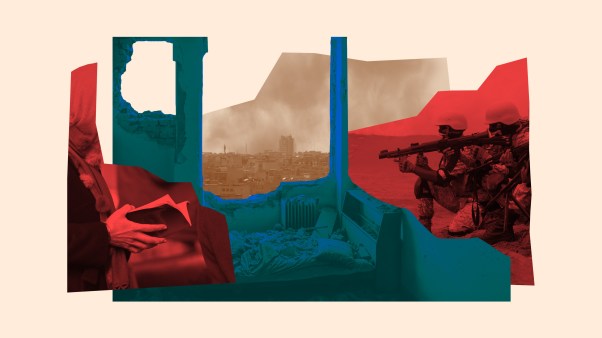
The Priest and Social Worker Deradicalizing Jihadists in Prison

One Catholic and one Muslim, they disagree on the role of religion in their work in Lebanon, but are united in their aim.

News

Hong Kong Church Rallies After 60 Congregants Lose Homes in Deadly Fire

Joyce Wu

The territory’s worst fire in decades claimed more than 150 lives.

The Russell Moore Show

 Listener Question: N.T. Wright on the Parable of the Talents

N.T. Wright takes a listener’s question about the parable of the talents told in Luke 19, and why it’s not all that it seems.

Celebrating Christmas with Hot Chai and Crispy Murukku

Amid rising persecution, Indian Christians share Jesus’ love with friends and neighbors through delectable dishes.

My Top 5 Books on Christianity in Southeast Asia

Compiled by Manik Corea

Explore how the faith has flourished in Singapore, the Philippines, Indonesia, and other countries in this religiously diverse region.

Review

Today’s Christians Can Learn from Yesterday’s Pagans

Grace Hamman

Classicist Nadya Williams argues for believers reading the Greco-Roman classics.

Apple PodcastsDown ArrowDown ArrowDown Arrowarrow_left_altLeft ArrowLeft ArrowRight ArrowRight ArrowRight Arrowarrow_up_altUp ArrowUp ArrowAvailable at Amazoncaret-downCloseCloseEmailEmailExpandExpandExternalExternalFacebookfacebook-squareGiftGiftGooglegoogleGoogle KeephamburgerInstagraminstagram-squareLinkLinklinkedin-squareListenListenListenChristianity TodayCT Creative Studio Logologo_orgMegaphoneMenuMenupausePinterestPlayPlayPocketPodcastRSSRSSSaveSaveSaveSearchSearchsearchSpotifyStitcherTelegramTable of ContentsTable of Contentstwitter-squareWhatsAppXYouTubeYouTube