Silent night, holy night.
Austrian priest Joseph Mohr wrote these words in 1816, starting off my favorite—and one of the most ubiquitous—Christmas hymns.
Some of my affection for the song stems from purely pragmatic reasons: It is easy enough to strum on my acoustic guitar. At some point in my life, I realized aspects of the song were too simplistic and the night of Jesus’ birth was likely not so silent. But I always appreciated how the simple melody seems to float gently above the chaos of Christmas shopping lists and year-end deadlines.
Despite its shortcomings, the hymn points to a kind of tranquility many of us long for in the world. Silence feels foreign in modern American life. It has become rare, suspect even. Every moment seems filled with questions, commentary, content, and outrage. Social media offers an opportunity to scroll endlessly, speak constantly, and react reflexively—all of which is more pronounced in our politics than in any other sphere of life.
In our national conversations, the refusal to rage can be interpreted as a kind of naiveté. The attention economy rewards the sharpest take, the quickest response, and the most performative certainty. A quiet spirit is easily mistaken for disengagement, cowardice, or complicity. But the Christian tradition shows that silence and its close cousin solitude are not necessarily means of withdrawing from public life. Instead, they can be critical spiritual practices that help us resist chaos, recenter our thoughts, and became more faithful witnesses to the watching world.
All is calm, all is bright.
The first Christmas took place in a land under political occupation, among a people subject to state surveillance, and in a social environment accustomed to imperial violence. Caesar ruled from afar. Herod schemed in the community. And yet it was in full view of these realities, not in a denial of them, that Mary sang the words of the Magnificat: the proud being scattered, the powerful brought low, the humble lifted up.
Mary’s song highlights what I love about the calm of Christmas: the stillness that comes from knowing where authority truly resides despite a noticeable lack of calm. More than 2,000 years later, her words still ring true today. Christians are calm not because the world is stable. We are calm because God has entered history without shouting, coercing, or dominating and still achieved the victory (John 16:33).
Round yon virgin, mother and child.
When the eternal king arrived on earth, he came through a humble young mother, quietly and vulnerably. He did not announce himself through a press release or demand anything through mass mobilization. He came in power but still as a child, dependent, exposed, and entrusted to a family.
related


If my years in politics have taught me anything, it’s that Christian political engagement must begin from a similar heart posture. If God chose to enter the world through weakness, then how much more should believers resist the temptation to seek popularity above fruitfulness or to devolve into fleshly fights with those who disagree.
But the discernment to know that—or to know how to live our lives more generally—is not cultivated amid spectacles. It’s formed in stillness. Like Elijah, we often find God is not in the wind or fire but in the “sound of sheer silence” (1 Kings 19:12, NRSVue).
I’m not saying silence and solitude show us what to think. But they do shape how we think and, perhaps more importantly, how to speak with words ordered toward truth and love. Without these practices, we risk mistaking constant commentary for courage and noise for relevance. Over time, that erosion costs us—not because we spoke too boldly but because we spoke too quickly and listened too little in return.


Holy infant so tender and mild.
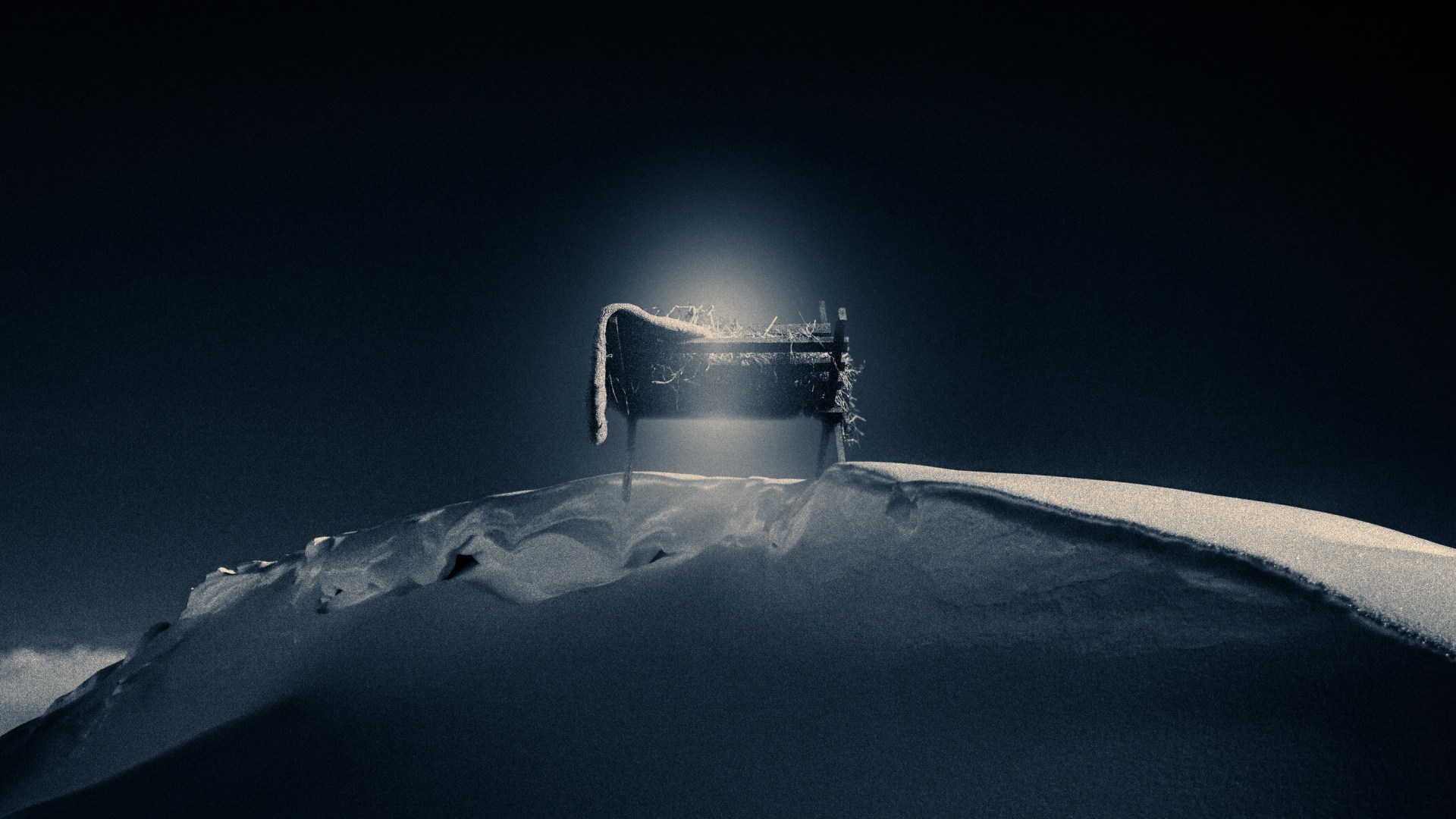
So much of what our Lord would teach through his life and preaching is also revealed in the Christ child. The tenderness of the babe lying in the manger does not make him any less King of Glory; it reveals his discerning intentionality.
Jesus spoke when speech was necessary, such as when the scribes and Pharisees required public rebuke. Other times, he refused to be baited into a spectacle and remained silent (Matt. 27:11–14). He often sought solitude and withdrew into desolate spaces to pray. He resisted the tempter’s demand to turn stones into bread and the pressures of the crowd in Nazareth to prove himself through a sign.
The systems of our world suggest to us the opposite: Respond now. Condemn now. Signal now. But imitating Christ requires speaking from depth rather than impulse.
Sleep in heavenly peace.
In the biblical imagination, peace is not merely the absence of conflict but the presence of order, right relationship, and rightly ordered loves. Godly peace is achieved through trust in the Lord, with the awareness that his purposes do not depend on our power.
From the first night in Bethlehem to the night before his arrest, God incarnate slept. Surely his sleep did not diminish his calling or jeopardize his victory, and our own moments away from the noise won’t either.
The meaning of “Silent Night” is not that the world will finally become calm because it is Christmastime but that the God who gives us the hope of peace has entered our chaotic world without being overwhelmed by it. On that night, heaven drew near, and that same nearness is what steadies us now. If Christ could enter history quietly and still overturn it completely, then surely his people can learn to engage public life without shouting, posturing, or surrendering their souls to the noise.
Chris Butler is a pastor in Chicago and the director of Christian civic formation at the Center for Christianity & Public Life. He is also the co-author of Compassion & Conviction: The And Campaign’s Guide to Faithful Civic Engagement.