Like many kids, I grew up picking wild grasses believing that they were wheat. I would pick one from the yard of my childhood home, believing the harvest I held in my hands could be transformed into food. As I grew up, I quickly learned that the “wheat” in my yard was far from a bountiful harvest and instead was actually weeds and wild grasses.
Yet, my childhood confusion about wheat is, in one sense, understandable. Wheat is a part of the grass family. In Matthew’s telling of the Parable of the Weeds, the “weeds” represent darnel, “a poisonous weed organically related to wheat, and difficulty to distinguish from wheat in the early stages of the growth,” writes New Testament scholar Craig Keener.
In the Bible, wheat is used as a metaphor for the people of God. The scientific study of wheat prompts reflection on how what distinguishes God’s people and how our vast diversity can strengthen us all.
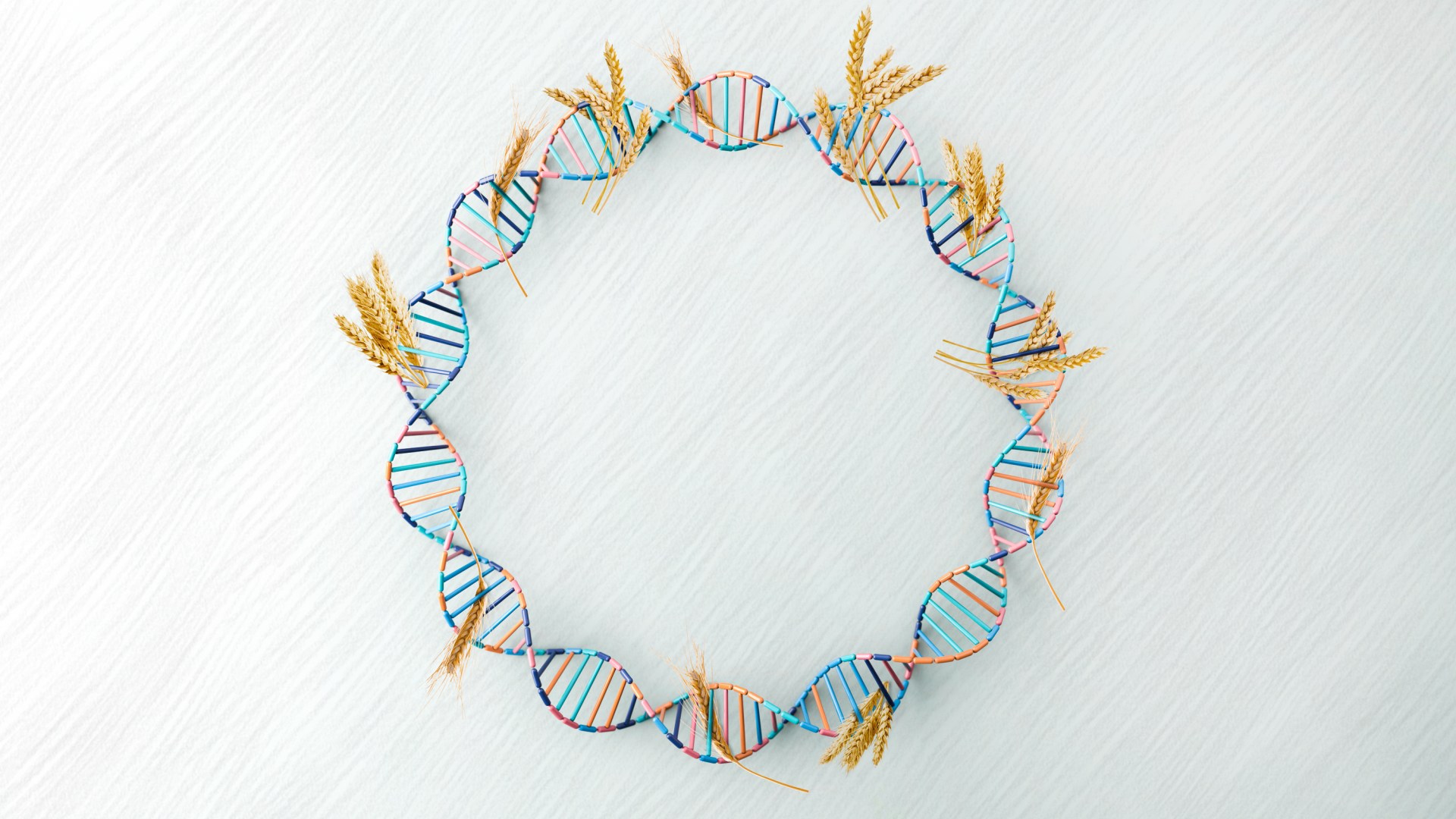
Wheat’s genetic makeup has baffled scientists. But last summer, after 13 years of research, a team of international scientists cracked the wheat’s genome to reveal the baffling, beautiful genetic material that makes wheat, well, wheat.
Essentially, a genome contains all of the genetic knowledge needed to create and sustain an organism.
It would be easy to assume that the wheat genome would be more straightforward to sequence than the human genome. After all, human beings are the crowning achievement of God’s creative work while wheat is a mere plant. However, the wheat genome holds mysteries that offered significant challenges to research scientists who wanted to understand this plant at the most minute level.
The full sequence of the human genome was published in 2003, concluding a project begun in 1990. But early crop sequencing projects finished faster than that. It took four years to complete both the rice genome, published in 2002, and the maize genome, published in 2009.
But the wheat genome is massive and complicated. Bread wheat boasts 16 billion DNA letters, a staggering number compared to the 3 billion found in the human genome. Additionally, over thousands of years through natural hybridization and human domestication, the wheat we consume today actually contains three different genomes, which makes mapping the genetic sequence a daunting mission.
Yet the International Wheat Genome Sequencing Consortium—a team of scientists from 19 different countries—recently published a nearly complete genome of the wheat variety Chinese Spring. Taking 13 years and $75 million, the scientists were able to shed light on the material God uses to create wheat.
By understanding in-depth the genetic makeup of wheat, scientists will be able to focus on how different genetic traits impact wheat production and more quickly and precisely refine our wheat to ensure bountiful harvest.
Throughout the Bible, wheat is used symbolically and literally to illustrate how God is at work in the world. The lack of grain and dried up fields are indicative of God’s judgment on his people, and likewise the presence of a bountiful harvest reflects God’s grace. Moreover, Scripture repeatedly points to the harvest of wheat as an illustration of God’s work of gathering a people to himself.
And this metaphor was continued by Jesus during his teaching ministry. In Matthew 13, Jesus explains the Parable of the Weeds to his followers.
He answered, “The one who sowed the good seed is the Son of Man. The field is the world, and the good seed stands for the people of the kingdom. The weeds are the people of the evil one, and the enemy who sows them is the devil. The harvest is the end of the age, and the harvesters are angels.
“As the weeds are pulled up and burned in the fire, so it will be at the end of the age.”
It's easy to get caught up with eliminating weeds or worrying that they will choke out the wheat, but Jesus’s teaching doesn’t indicate that's our job is to concern ourselves with labeling wheat and weeds. We aren’t the harvesters.
In a sermon on this passage, Martin Luther explains that Christians are prone to want to “outroot the tares by our own power, as if we were the ones who could reign over hearts and spirits, and make them pious and right, which God's Word alone must do.”
Instead, the wheat and the weeds grow together, and the angels do the work of the farm hands in separating them.
The recent mapping of the wheat genome may inspire us to notice how these scientists concentrated on wheat itself and not on any of wheat’s challengers—weeds, pests, weather—that many other kinds of scientists focus on in their studies. Ultimately, they believe that understanding wheat better—knowing more about which genes express desired traits—will help breeders build better crops.
As Christians, we could fret over the elements that could destroy wheat and worry about when and how the weeds will be separated from the wheat, or we could focus on what makes wheat unique and look there for sources of strength. Unlocking the wheat’s genome reminds us that there is more to being wheat than simply not being darnel. Likewise, there is more to being the people of God than simply not being weeds.
In the genetic material of wheat are opportunities for improvement, to create a more bountiful, nutrient-dense harvest. There are also many varieties of wheat from which to learn. Researchers have actually only sequenced one variety of bread wheat, named so for its main use, but there are many varieties of bread wheat. A different variety of wheat—durum wheat—is used to make pasta. Heritage wheats, such as spelt, einkorn, or Kamut, are less frequently grown today (and making a small comeback) but are varieties first cultivated thousands of years ago.
Together, these are all part of the wheat family, and their genetic traits have intricate histories spanning centuries, geographies, and farming practices. Sound familiar?
God’s people, likewise, have complex, intertwined histories, and diversity of place and practice. As we anticipate and long for a rich harvest, we would do well to remember that our strengths are spread across this panoply of a family—and sometimes the struggles of one member are made stronger by the resources found in another member. As we note that wheat varieties are bred and ancient varieties reinvigorated, we, the church, are all kinfolk, tied together distinctly and uniquely across time and space. We benefit from drawing on knowledge of our “spiritual genome” to cultivate a richer crop as we anticipate the future harvest.
Ultimately, we are unified by our farmer. He is the sower of good seed. As we wait on him with expectation, we look to the rich history and bountiful diversity of the church given us by the Creator to flourish until harvest. As Augustine wrote on Matthew 13:
O you Christians, whose lives are good, you sigh and groan as being few among many, few among very many. The winter will pass away, the summer will come; lo! The harvest will soon be here.
And we know that we are wheat and we will soon be gathered to him.
Abigail Murrish writes and hosts a podcast about food, agriculture, and faith from Norwood, Ohio, where she lives with her husband.