In South Korea, Lent and the coronavirus have settled in simultaneously. Although Daegu, about three hours south of Seoul, has been hit far harder, the capital city prepares for the worst.
As Christians spend certain days fasting, or swear off sugar, caffeine, or social media for the season, Seoul shuts down schools and churches, canceling everything from Fashion Week to Ash Wednesday services to BTS concerts.
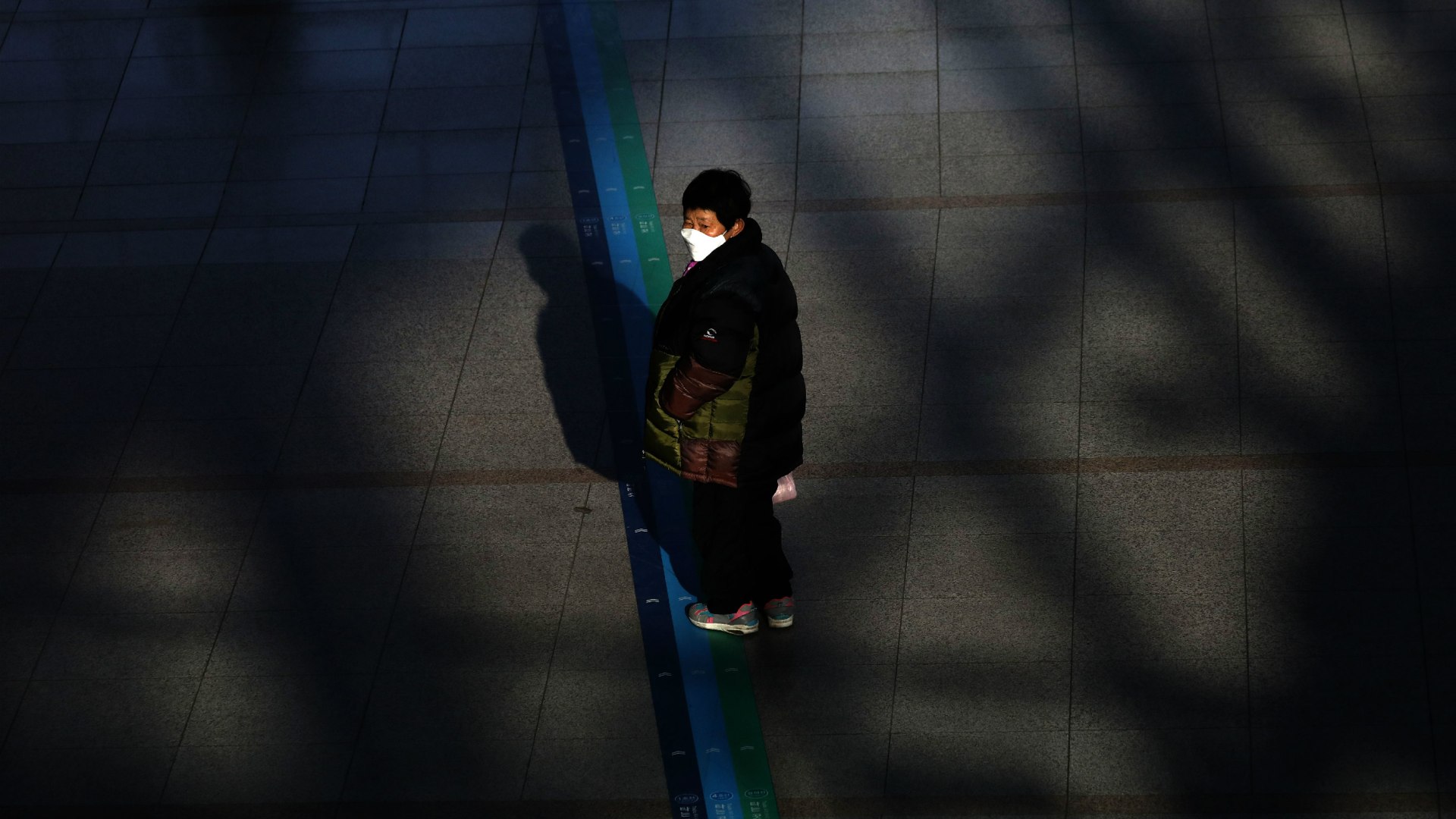
It’s as if the whole sprawling, frantically productive city has been forced to sit and think. The greater Seoul area houses half of the country’s 50 million people, at twice the population density of New York City. We are accustomed to sardining into subways and buses, standing nose-to-nose with strangers. Now, for the most part, streets lie hushed. Occasionally a pedestrian in the ubiquitous mask wanders by.
Seoulites seek to balance sensible precautions with some semblance of normal life. For all the shuttered restaurants and museums, Costco still hums (how else can we stockpile liters of arctic krill oil?). We attempt to choose factual sources of information like the Centers for Disease Control and the World Health Organization over sensationalist clickbait. We do our best to prevent panic from making our decisions. Most patients with COVID-19 recover, after all.
Everyone evaluates how to live wisely. Some fellow expats have quietly evacuated. Those of us who remain receive daily text notifications from the government: Patient No. 40 visited this mall, patient No. 1050 shopped at that supermarket—our supermarket—before diagnosis. It feels like the virus awaits around every corner. Unless necessary, we do not leave our three-bedroom apartment in southeast Seoul.
Lent’s invitation to fast and pray could not come at a better time for a world nervously eyeing pandemic.
I spend curiously luxurious days at home with my family. The kids continue school online. In lieu of dodging taxis and forcing merges for the 50-minute school commute, we eat waffles together at the table for half the morning. We make eye contact. I read aloud a Lenten devotional, and we take time to meander down many a theological rabbit hole. I drink a cup of tea, still hot, in one sitting. Slow gifts of a gutted calendar.
Total isolation is not all brunch and quality time, of course. I try not to think about the confines of my “coronabubble” but continue to bump against its limits. We cannot go to the library or the playground. Churches get creative with virtual services, but my little international church can’t meet in person, and I miss our community. It is not good for man to be alone. I yearn for physical human presence: the smell of lavender and laundry one friend always carries, the lumpy heft of another’s newborn baby. Video calls just don’t cut it. God made us bodies on purpose.

And then there’s the communal fear, as the country’s case counter ticks over 2,000, then over 5,000, and keeps climbing. Each day adds hundreds of patients. It is wearying to fight the constant undertow of a collective, well-founded anxiety. Frankly, it’s during times like this when I would usually crave an engrossing TV show, a distracting scroll through Facebook feeds, or something indulgently delicious. Lent wants me to fast and pray. I want to binge and veg. Under threat, I scrabble for escapism like a caged rodent.
The metaphor is not far off. A study at University of California–San Francisco found that chronically stressed rats sought increased levels of sucrose and lard. Harvard Medical School corroborates. Sweet fats deliver high amounts of energy quickly, which would be useful in escaping predators if they were, say, actual tigers, rather than a lurking illness and creeping isolation. Comfort food tells an adrenalized system, “You’re okay now. You have what you need.” It’s a cheap substitute for the genuine, inexplicable peace God’s Spirit alone can bring.
Lent in the time of coronavirus lays bare my reliance on creature comforts and human contact. I feel like Edgar, the insectile alien in Men In Black, drawling ghoulishly for more sugar. I want touch. I want feast. I want Brooklyn 99.
Although the virus is novel, my mindset is not. I end up here early every Lent. I am always embarrassed by how intensely I crave whatever I give up. This year it feels particularly shameful, in the face of so much sickness and death, to think a thousand times a day of chocolate or Instagram like a tongue obsessively probing a lost tooth’s gap. When did these habits become so entangled with my sense of wholeness?
Lent arrives just in time. Part of the season’s purpose is to surgically expose just such unreliable dependencies and exchange them, once again, for Christ. As Father Matt Woodley writes, during Lent we “face the facts unflinchingly and hopefully choose to change. … It roots us in repentance and reminds us where to place our hope.” The 40 days before Easter are not about not beefing up our willpower to resist temptation. Rather, like the Old Covenant, they provide visceral proof that we are dust indeed. Encountering our true nature draws us to the cross.
My weakness pairs well with God’s power. The Holy Spirit is always trading my insufficiency for his fullness. It’s his signature move. Relationally, emotionally, sensually, I thirst, and the Living Water pours out. Here, now, God uses an atmosphere of fear to draw my attention to Scriptures about his sovereignty and strength. Fasting’s physical tremors remind me to pray. In loneliness, in a dearth of community, I am given sweetly focused time with God and my family.
I am weak, but he is strong. I am anxious, but he is good. I am lonely, but he is here.
During bedtime at the end of another day stuck indoors, my six-year-old shares her worries about not going to school and all the people getting sick. Lying side by side in the dark, we talk. I tell her I’m a little worried too, and that I’m glad we worship a God who takes care of people. Out loud, we recount story after story from the Bible about God working his surprising, excellent plan. Together we pray for Seoul, Daegu, China, Japan, and on out in expanding rings.
We cry out to our ever-present help in trouble. Lent’s invitation to fast and pray could not come at a better time for a world nervously eyeing pandemic.
Doctors need stamina, researchers need insight, patients need healing, believers need courage. Populations need peace, and leaders need wisdom to prepare and respond. And with a wildly craving heart, in a strangely still city, how deeply do I need Jesus.
Jeannie Whitlock is a freelance writer and mother of two in Seoul. She has written for Roads & Kingdoms, Backpacker Magazine, and StoryWarren, among others and blogs about culture, parenting, and the expat experience over at Roots in the Road.