Theology

When Healing Hurts

Do we want to get well?

Hulton Archive / Handout / Getty

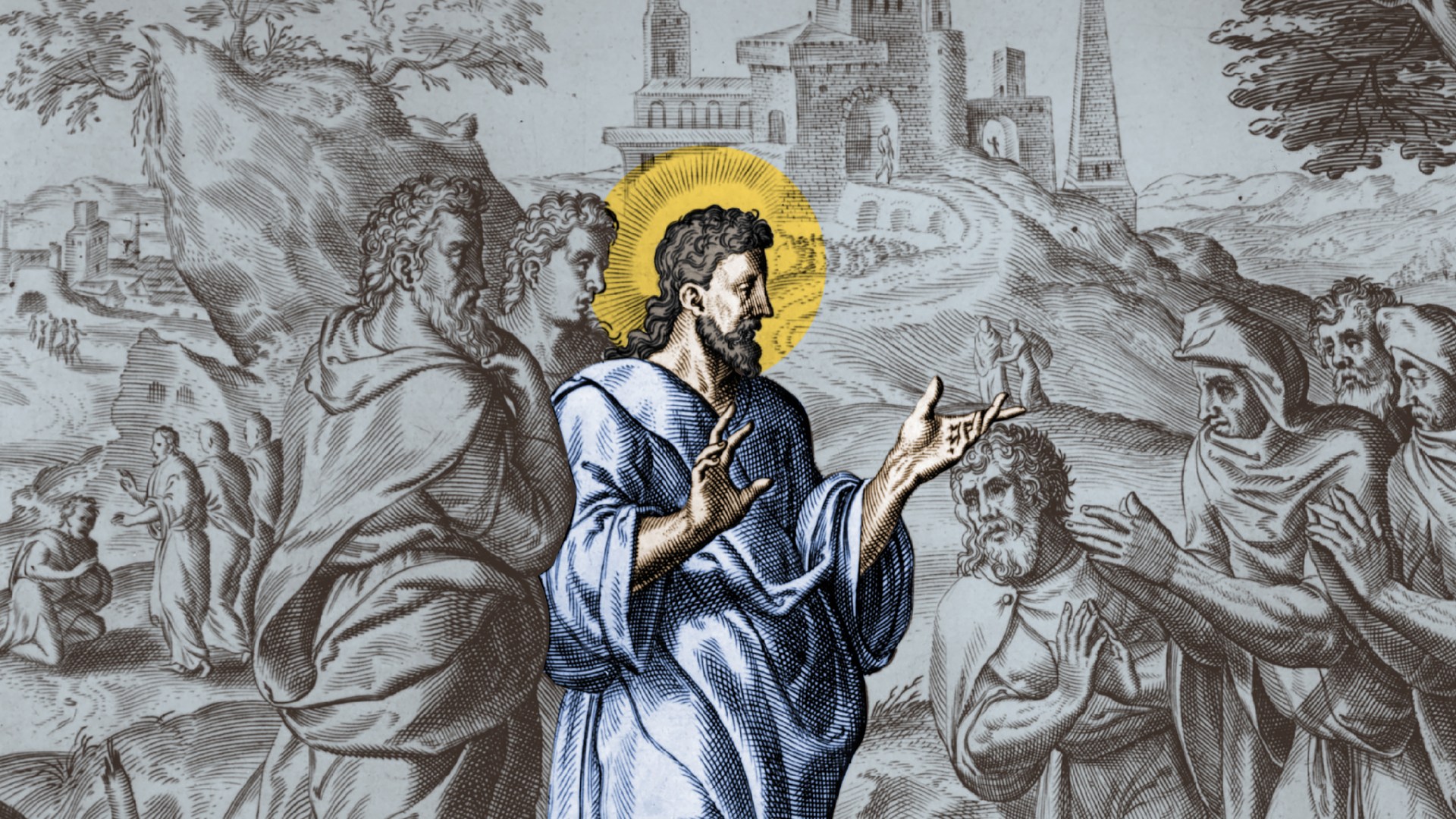
In the fifth chapter of John, Jesus asks a poignant question: “Do you want to get well?” The Son of God stood amid the splendor and suffering of Jerusalem, under the elaborate covered colonnades of the Pool of Bethesda. The afflicted gathered there and entered the waters in hope of healing. We imagine Jesus kneeling beside the man who had been paralyzed for 38 years. What moved him to approach this particular person? And what inspired him to ask what seems like an absurd question? Who would not want to be healed from a lifetime of paralysis?

But perhaps it’s not absurd. Suffering, especially chronic suffering, can become precious to us. When suffering persists, we sculpt our lives around it. We craft an identity that encompasses our suffering until we scarcely know who we would be without it. We become so comfortable and accustomed to our suffering that the prospect of living without it becomes frightening. Of course, suffering can also be instructive. Paul learned humility and utter dependency on God from his thorn in his flesh. Even if the apostle could have removed the thorn, he might have chosen not to, or he might have kept it in a jar as a treasured reminder of all it taught him.

Which brings us to the present. The issue you hold in your hands reflects the many afflictions we confront as a people today. An unrelenting global pandemic. The profound and enduring wounds of our racial history. Political polarization that tears at the fabric of our families and communities. A culture that feels unmoored, confused, and permeated with despair.

Seeing the delight we take in torching our political opponents, the stubborn persistence of conspiracy theories, and the refusal to see the rationality and goodness in one another, one wonders: Do we want to be healed? Are we willing, like Paul, to listen to suffering’s instruction? When suffering is entangled in sin, perhaps humility comes before healing. And perhaps this is another reason why the paralytic might not have wanted to be healed—because healing takes work. It requires us to rethink our lives and revise our very understanding of who we are.

Some people prefer the familiarity of old sins and sufferings to the difficulty of reconciliation. As Christians, we should not be among them. What if Christians could be known as the most generous, compassionate, thoughtful, and hopeful participants in these painful conversations shaping the future of our people? What if we, like the paralytic, could become witnesses to the world of the healing found in Jesus? At Christianity Today, we will do our humble part. For everyone who supports and joins us in this work, we are profoundly grateful.

Timothy Dalrymple is president and CEO of Christianity Today. Follow him on Twitter @TimDalrymple_.

Also in this issue

Despite the historic fervor surrounding public debate about policing in America, little attention has been paid to the theology of law enforcement. Our cover package this month explores that theology in two parts. In the first, New Testament scholar Esau McCaulley outlines the apostle Paul’s challenge to policing and the state that authorizes it. In the second, pastor Michael LeFebvre argues that Old Testament law and practice make a clear case for policing that prioritizes the protection of society’s most vulnerable.

Cover Story

The Old Testament’s Word to Police: You Answer to God’s Higher Court

Michael LeFebvre

Cover Story

Paul’s Word to Police: Protect the Weak

Politics Has a Strong Grip on Our Hearts. The Gospel’s Grip Should Be Stronger.

The Roots of the Black Prophetic Voice

Jerry Taylor

On Matters of Race and Justice, Listening Isn’t a One-Way Street

News

On the Front Lines, Some Pro-Life Activists Think Twice About Supporting Trump

5 Books on Understanding the Human Brain

Bradley L. Sickler

Testimony

My Savior Had Arrived—but He Wasn’t Elijah Muhammad

Damon Richardson

Even in Times of Crisis, Learning Is Never a Waste of Time

Perry L. Glanzer

Reply All

Little Christs or Little Caesars

News

When Is It a Sin to Vote for a Political Candidate?

J.I. Packer: The Bible’s Guide for Christian Activism

J. I. Packer

News

Gleanings: September 2020

News

COVID-19 Concerns Accelerate Homeschool Movement’s Growth

Paula Ramirez

Why One Texas Pastor Believes Racial Justice Should Start with Stories

Sarah Holcomb

News

Satellite Ministries Cross Boundaries. That’s Their Promise and Peril.

Threw Away Your Shot? You’ll Get Another.

Our September Issue: The Bible in Blue

Daniel Harrell

God Knew What He Was Doing When He Gave Jesus Two Family Trees

Review

Secular Faiths Are Remaking the American Religious Landscape

David Zahl

Review

Sex Is the Earthly Glow of the Heavenly City

Katherine James

New & Noteworthy Fiction

Erin Bartels

View issue

Our Latest

Review

Review: ‘Project Hail Mary’

Ryan Gosling’s new science fiction movie shows an astronaut who saves the world and dies to self.

The Bulletin

Kristi Noem Fired, Iran Chooses Leader, and Pakistan Fights Taliban

Mike Cosper, Clarissa Moll

Secretary of DHS fired, former Ayatollah’s son declared new supreme leader, and Pakistan’s war with Taliban.

A More Literal View of ‘the Body of Christ’

Thomas Anderson

Scripture’s description of the church is more than a comparison to human anatomy.

Excerpt

C.S. Lewis on the ‘Solemn Fun’ of Nearing the End

C.S. Lewis

An excerpt from Letters on Living the Faith.

News

Conservative Anglicans Nix Plan to Elect Rival to Archbishop of Canterbury

Emmanuel Nwachukwu in Abuja, Nigeria

Instead, Gafcon chose a committee-style leadership as it sought to reorder the communion due to Canterbury’s leftward shift.

News

Texas Ministries Help International Students Face Job Uncertainty

Hannah Herrera

As H-1B visas become more difficult to obtain, ministry workers provide housing, community, and biblical hope.

News

How EMDR—and Drawing Close to God—Helped a School Shooting Survivor

The trauma treatment is growing in popularity. It worked for Ellie Wyse, now in college and seeking to help teens hurting like she was.

Being Human

Justin Heap: The Rollercoaster of Growing Up in a Traumatic Family Situation

Can exploring the impact of trauma on our lives lead wounds to wisdom?


Apple PodcastsDown ArrowDown ArrowDown Arrowarrow_left_altLeft ArrowLeft ArrowRight ArrowRight ArrowRight Arrowarrow_up_altUp ArrowUp ArrowAvailable at Amazoncaret-downCloseCloseEmailEmailExpandExpandExternalExternalFacebookfacebook-squareGiftGiftGooglegoogleGoogle KeephamburgerInstagraminstagram-squareLinkLinklinkedin-squareListenListenListenChristianity TodayCT Creative Studio Logologo_orgMegaphoneMenuMenupausePinterestPlayPlayPocketPodcastprintRSSRSSSaveSaveSaveSearchSearchsearchSpotifyStitcherTelegramTable of ContentsTable of Contentstwitter-squareWhatsAppXYouTubeYouTube