Most of us intentionally avoid thinking about death. Brandeis University anthropology professor Anita Hannig writes that most Americans label talk of death as “morbid” and “try to stave it off—along with death itself—as long as they can.”
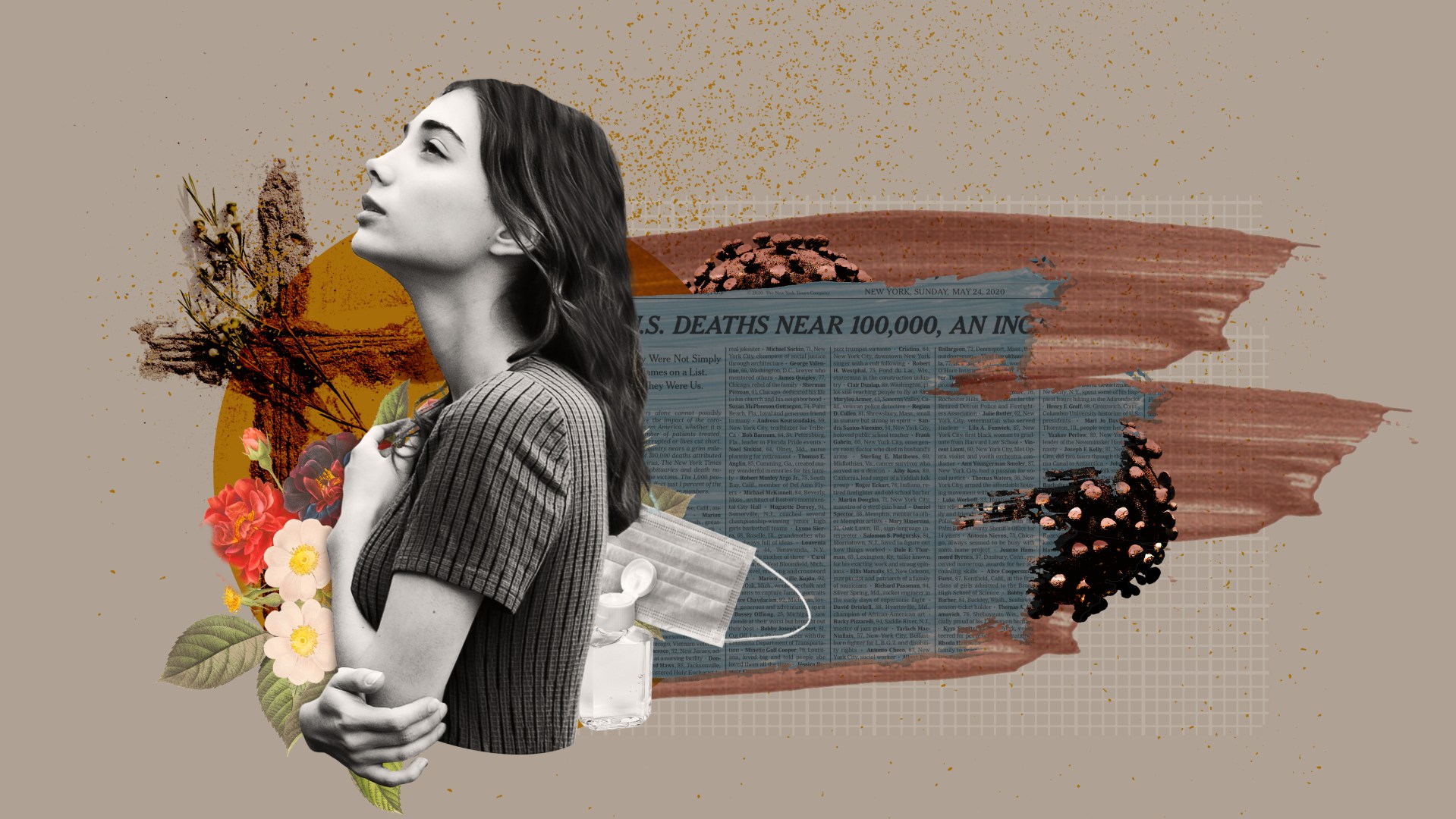
Deep down we know we will die, but it isn’t the kind of thing we say out loud at dinner parties. So most years, the priest’s task on Ash Wednesday feels slightly transgressive and hardcore. We offer our yearly reminder: Do not avoid uncomfortable truths. We are mortal. No amount of wealth, busyness, or positive thinking can change that. We are dust and to dust we shall return. But 2021 is not like most years. During this global pandemic, death counts headline every newspaper as we tally those who have died of COVID-19—now nearly half a million people. We wear masks, stay home, and avoid crowds in order to prevent even more deaths. Our daily lives and routines have been shaped by the power of death in more obvious ways than many of us have ever experienced. This year, instead of proclaiming death to churchgoers preoccupied by other subjects, death seems to be continually thrust into our view. Many of us—despite our attempts—cannot deny the towering and terrible truth that death is all around us and coming for each of us. We’ve been living a long Ash Wednesday, so reminding people that they are going to die feels unusually redundant. But the truly countercultural message of Ash Wednesday is not that we will die. It’s that though death awaits us, despair is not inevitable. By naming the stark, intractable horror of death, we as a church—without triteness or saccharine denial—can proclaim true hope in the midst of it.
In our country, there is widespread (and warranted) outrage at the political mishandling of the COVID-19 crisis. Still, Ash Wednesday reminds us that no politician or party will be able to solve death altogether. Death, to paraphrase Flannery O’Connor, is in the end not a problem to be solved but a mystery to be endured. In his monastic rule, Benedict of Nursia outlines what he calls “Tools for Good Works” and instructs his monks to “day by day remind yourself that you are going to die.” The point of remembering death here isn’t to revel in it, much less to be chipper about it. The point is that by accepting our mortality and not denying it, sentimentalizing it, or running from it, we cease the mad task of living merely to keep ourselves alive.
For all of us, recalling the inevitability of death reminds us that the day to seek God, the day to repair relationships, the day to help others and bless the world around us is today—because it may be our last. Facing mortality leads us to ask necessary questions: Who are we, and what is life for?
On Ash Wednesday, the church answers these questions through our story. We remind ourselves that humans are made to know and enjoy God and that because of Jesus, this is possible, even beyond death.
What is most transgressive and shocking about Ash Wednesday this year—and perhaps every year—is not that we tell our parishioners they will die. It isn’t that we mark their heads with ashes—a practice many will have to alter this year due to COVID-19. It’s that, after the imposition of ashes (at least in ordinary years), we take the Eucharist together.
This Ash Wednesday, then, we will remember death as a Christian community, but we will also hold fast to the knowledge that death doesn’t have the final word. Jesus is the resurrection and the life. The pandemic has made us particularly hungry for that hope. In one of his diary entries, Henri Nouwen tells a beautiful story of watching Irishmen bury a farmer in Donegal. They laid a handmade coffin in the ground, covered it with sand and grass, and then one man took two pieces of wood and bound them together—a simple cross to mark his friend’s grave. The men made a sign of the cross and left silently. No words. No flowers. No funeral.
Nouwen says that it was never so clear to him that someone was dead—not just asleep or “passed away” or “laid to rest,” but dead. A picture of death, unadorned, towering, real. He writes, “Their realism became a transcendent realism by the simple unadorned wooden cross saying that where death is affirmed, hope finds its roots.”
Ash Wednesday is a practice in transcendent realism. In a year where the reality of death sounds very loud in our ears, it whispers to us that hope’s roots grow all the deeper.
Tish Harrison Warren is a priest in the Anglican Church in North America and the author of Liturgy of the Ordinary and Prayer in the Night (IVP, 2021).