





It started with a post on X (formerly Twitter)—an expression of Christianity with the brevity the site’s format demands: “There’s no hope for any of us outside of having faith in Jesus Christ alone.” The poster in question was Lizzie Marbach, whose X bio describes her as a Republican political activist who lives in Ohio.
Marbach’s post easily could have gone unnoticed outside her own following. But then a member of Congress decided to share it—and not just to share it but to dunk on it, hard, to an audience nearly ten times the size of Marbach’s own.
“This is one of the most bigoted tweets I have ever seen,” the congressman wrote. “Delete it, Lizzie. Religious freedom in the United States applies to every religion. You have gone too far.”
As angry replies accumulated under both posts, another, better-known member of Congress came to Marbach’s defense.
“No! Stating the core beliefs or principles of your faith isn’t bigoted,” the congresswoman tweeted, rebuking her colleague. It’s “religious freedom and no one should be scolded for that. It’s also wrong to speak about religious freedom while simultaneously harassing people who freely express their beliefs.”
If you’re already imagining these latter two characters, my guess is you’re imagining incorrectly—just as I probably would if I didn’t know the details here. The representative who dunked on Marbach is a fellow Ohio Republican, Rep. Max Miller. He’s a Marine veteran who served as a special assistant to former President Donald Trump—and he told 50,000 people that Marbach was a bigot for believing Jesus is the only hope of the world.
And the lawmaker who rebuked him and defended Marbach? That was Rep. Ilhan Omar, the Minnesota Democrat widely known for her membership in the House’s progressive “Squad.”

The unexpected casting of this little internet drama caught my eye and got me thinking (again, as this is a topic I find endlessly fascinating) about the strange place religion takes in American public life today. Recent decades’ rapid decline of Christian religiosity in the US—by which I mean not only sincere faith and practice but also basic cultural familiarity with the stories and habits of the church—is the context that made this episode possible.
It’s a context I always keep in mind, as both a Christian and a journalist, whenever I write for mainstream audiences. I can’t assume the public understands what I’m talking about when I speak of Jesus, church life, or the core tenets and demands of Christianity. (A few years ago, my mother met someone who’d lived her whole life in the United States, surrounded by churches, and yet was under the impression that Jesus was burned at the stake.)
But it’s also a context I think every American Christian would do well to mull over from time to time. Without a foundational understanding of religion’s changing place in our country, we’ll be ill-equipped to talk about faith with our neighbors of other religions or none at all—and we’ll be unprepared for responses like Miller’s dunk.
The dunk itself was revealing, as was the subsequent apology in which Miller said he’d “conveyed a message [he] did not intend” without specifying which part of his first tweet was misleading and what message he’d actually like to convey.
I don’t think Miller, who describes himself on X as a “proud Jew,” has any animus toward Christians or people of faith more generally. His reaction, I suspect, was to the exclusivity of Marbach’s claim and the exacting demand it implies for all who read it. If there’s “no hope” apart from faith in Christ, the clear suggestion is that each of us should have faith in Christ—and that’s no small proposal.
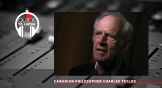
Or, at least, it shouldn’t be. And that expectation is precisely the aspect of faith which is ever more incomprehensible in much of American society. Rapid, large-scale dechurching is but a visible symptom of our nation’s deeper shift toward the secularism philosopher Charles Taylor famously described in his landmark work, A Secular Age. This isn’t secularism in the sense of opposition to religion but in the sense that faith is a real choice we must make, just one option of many, and not a universal norm or obligation.
That shift in our thinking—which I find in my own mind, even though I’ve made my choice—has pushed religion out of a special category concerned with ultimate questions of who we are, how we should live together, and what God wants of us. Instead, religion is often bumped down to a lower level among hobbies and sports: nice and engrossing but nonessential, something to do in your leisure time when you’re not at work or dealing with basic necessities like food and sleep and childcare.
This reframe was perfectly encapsulated by a 2020 comment to The Washington Post from a Harvard epidemiologist, Ranu S. Dhillon, which I’ve shared at CT before.
“Protesting against systemic injustice that is contributing directly to this pandemic is essential,” Dhillon said. “The right to live, the right to breathe, the right to walk down the street without police coming at you for no reason … that’s different than me wanting to go to my place of worship on the weekend, me wanting to take my kid on a roller coaster, me wanting to go to brunch with my friends.”

I understand the distinction Dhillon was drawing between fundamental rights to life and liberty and more frivolous activities. It’s a good distinction to make, especially in an emergency. Dhillon simply drew the line in the wrong place: Worship isn’t like brunch. It’s more like breathing.
Or, at least, that’s the Christian perspective and, I expect, the perspective of anyone serious about the practice of any faith. But this is an increasingly uncommon perspective. The demands, assumptions, and language of religion are growing stranger by the year through sheer loss of familiarity—to the point, it seems, that a Republican member of Congress briefly thought a single-sentence expression of Christian belief in public amounted to a bigoted violation of others’ religious rights.
And maybe the fact that Omar was the one to push back on Miller’s dunk shouldn’t surprise us after all. She habitually wears a hijab as a sign of her Muslim faith. It’s a decision which probably has her regularly thinking about the uncertain new place of religion in American public life, too.







