Let There Be Dark

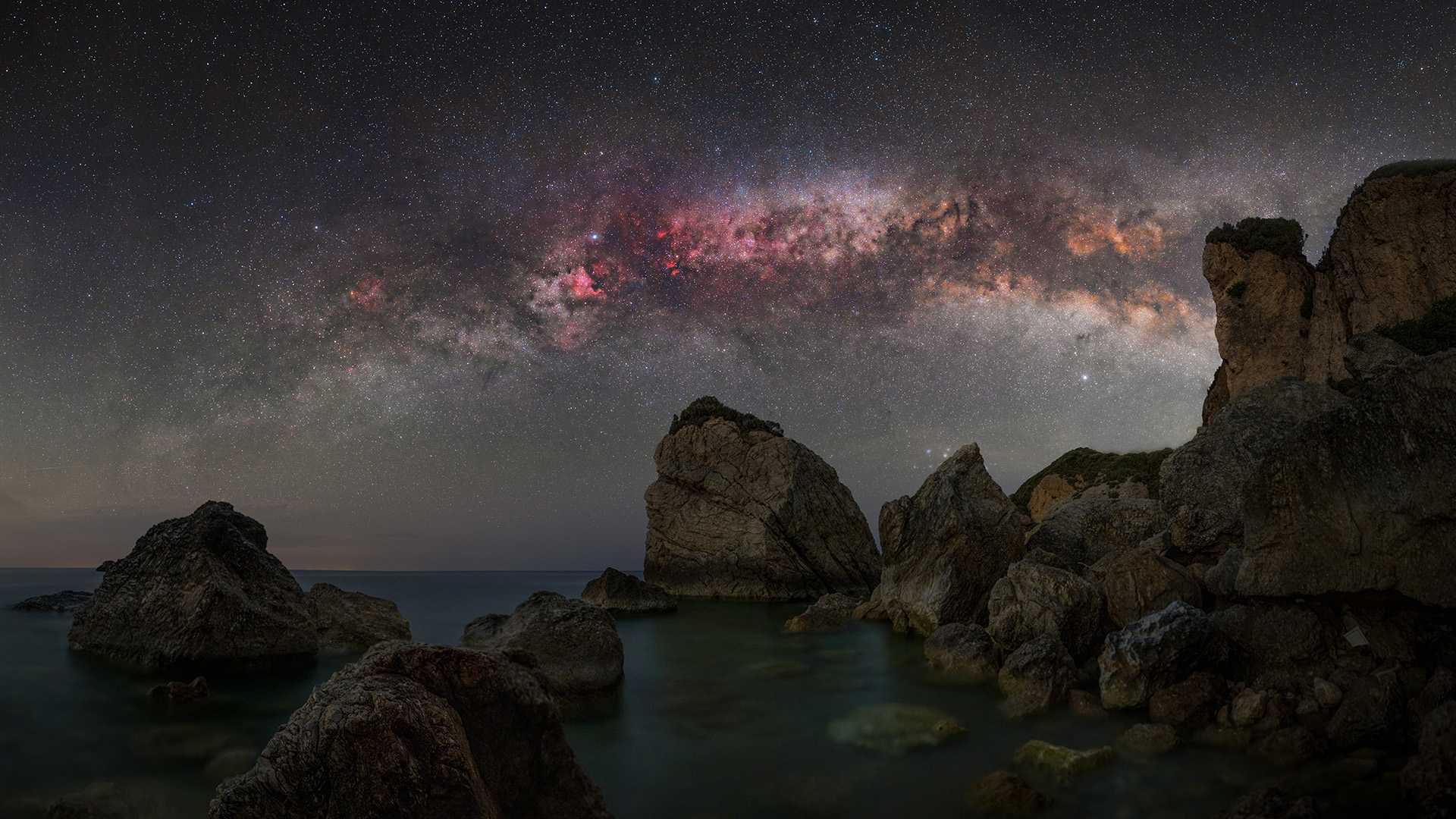
Deep darkness only magnifies what it is to gaze upon the Light of the World.

Photography by Constantine Themelis

Not only are the images from the James Webb Space Telescope brilliant and beautiful, but they are also baffling. In recent months, approximately 40 pairs of a new classification of orb have been identified within pictures of the Orion Nebula. Dubbed JuMBOs—Jupiter Mass Binary Objects—these objects defy our current, conventional understanding of how planets, stars, and gravitational orbits work. Unlike normal planets, the Jupiter-sized pairs don’t orbit a star. Astronomers don’t know why—or how—they function in this way. As The New York Times put it, they are “a complete mystery.”

These images and discoveries coming back from the far reaches of space put us in our place—bringing to the forefront how expansive the universe is, how small we are, how much we don’t know, and how much there is yet to discover. When we consider the heavens—the star clusters, nebulae, black holes, and now JuMBOs—who are we? What is humankind that God is mindful of us and cares for us, as Psalm 8:3–4 says?

In “God’s Promises Are Clearest When We Turn Out the Lights,” Cort Gatliff reflects on this psalm of “doxological stargazing,” writing that “the stars provide perspective. They humble us by highlighting our finitude. Yet they also lift up our heads by reminding us of our infinite worth in the eyes of the Creator.” And while stunning images from space let us glimpse celestial realities we’d never be able to see with the naked eye, simple nighttime starscapes also invite us into awe and wonder.

Gatliff discusses the harms of pervasive light pollution—not only on creatures who are reliant on darkness or moonlight for navigation (like sea turtles and migratory birds) but also on us, as so many of us no longer have unobscured visual access to the worship-inspiring night sky. The darker the night, the more stars we can actually see.

During Advent, we often read this prophecy from Isaiah: “The people walking in darkness have seen a great light; on those living in the land of deep darkness a light has dawned” (9:2). In a spiritual and emotional sense, the recent heaviness of war, natural disasters, and other global tragedies helps us understand even more deeply what it means to be people walking in darkness. And this deep darkness only magnifies what it is to gaze upon the Light of the World. Amid it all, God is mindful of us. God does care for us. The Light of the World shines in the darkness.

Kelli B. Trujillo is CT’s print managing editor.

Also in this issue

The Magi followed a “star when it rose” in order to find and worship the king of the Jews (Matt. 2:1–2). This month’s cover story explores the worship-inspiring wonder of the night sky—and the impact on humanity when our view of the cosmos is obscured by light pollution. Also in this issue: the ethics of embryo adoption, a Christian college goes nuclear, truth and mercy in Jude’s epistle, and an ancient scrap of parchment with Jesus’ words.

Cover Story

God’s Promises Are Clearest When We Turn Out the Lights

Cort Gatliff

Frozen Embryos Are the New Orphan Crisis

For South Korean Christians, Christmas Is a Ministry Quandary

Salvation Army Kettles Collect Fewer Coins

How Abilene Christian Saw the Nuclear Light

What Evangelical Scholars Found Looking at a Tiny Piece of Papyrus

Wedding Fire Devastates Christian Community in Iraq

Pharaoh, Did You Know?

Glimpses of the Kingdom

Put Away Childish Narcissism

Excerpt

Keep Complaining to God. Just Don’t Ignore Him.

Drew Dyck

The Unusual Epistle that Helps Me Counsel on Sexuality

Rodolfo Galvan Estrada III

How AI Short-Circuits Art

Jared Boggess

Why Do We Want AI to Interpret Scripture?

Joseph Was Jesus’ ‘Real Dad’

Derek King

Testimony

I Studied Christianity with the Hope of Debunking It

Julie Hannah

Intelligent Responses to AI Concerns

Kate Lucky

Mary Was More Than a Mother

Interview by Taylor Turkington

Review

The Faith and Work Movement Is Leaving Blue-Collar Workers Behind

Jeff Haanen

New & Noteworthy Fiction

Karen Barnett

5 Books to Read Before Becoming a Missionary

Emily Bennett

View issue

Our Latest

The Bulletin

Birthright Citizenship, War’s Moral Hazards, and Can Literature Save Men?

Mike Cosper, Clarissa Moll, and Russell Moore

Supreme Court considers citizenship at birth, war in Iran compels us to number our days, and the importance of reading.

The Russell Moore Show

Jennie Allen on ‘The Lie You Don’t Know You Believe’

A bonus episode with bestselling author and friend, Jennie Allen.

The Math Behind Christ’s Care for Our Flourishing

Bruce Wydick

I was curious about how Jesus allotted his time on earth—and what Christians could learn from it.

Considering Both Sides of Church Divisions

CT hosted debates about the charismatic movement and women’s ordination.

Review

The Forgotten Founding Father

Thomas S. Kidd

Three history books to read this month.

Communion, Sex, and God’s Created Order

Kyle Wells

Our bundled partisanship misses Scripture’s focus on the body.

The Just Life with Benjamin Watson

Dr. Eric Mason: Why Biblical Justice is Spiritual Maturity

How knowing our history aids in achieving true restoration.

Analysis

Q&A: Some Israelis See Esther’s Story in the Attacks on Iran

The Bulletin with Yossi Klein Halevi

Journalist Yossi Klein Halevi speaks to CT about Jewish reflections on the US and Israel-led war.

Apple PodcastsDown ArrowDown ArrowDown Arrowarrow_left_altLeft ArrowLeft ArrowRight ArrowRight ArrowRight Arrowarrow_up_altUp ArrowUp ArrowAvailable at Amazoncaret-downCloseCloseEmailEmailExpandExpandExternalExternalFacebookfacebook-squareGiftGiftGooglegoogleGoogle KeephamburgerInstagraminstagram-squareLinkLinklinkedin-squareListenListenListenChristianity TodayCT Creative Studio Logologo_orgMegaphoneMenuMenupausePinterestPlayPlayPocketPodcastprintRSSRSSSaveSaveSaveSearchSearchsearchSpotifyStitcherTelegramTable of ContentsTable of Contentstwitter-squareWhatsAppXYouTubeYouTube