Luke 22:14–20
At long last, Jesus came to the climactic hour for which he had been born. We rightly remember his birth with happy celebration. And we rightly remember his death with hushed reverence. We are on holy ground.
We call this day of Holy Week Maundy Thursday because of our Lord’s words that evening: “A new commandment [Latin: mandatum] I give to you” (John 13:34, ESV).
Luke’s account of the occasion points us toward two heart-melting gospel realities.
One, Jesus did not save us at a safe distance, as if by remote control. He threw himself into our salvation with wholehearted abandon. His body was shattered. His blood gushed out.
As Jesus and his disciples observed the Passover, he explained the extreme length and the profound depth of his dying love for us:
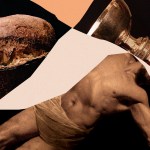
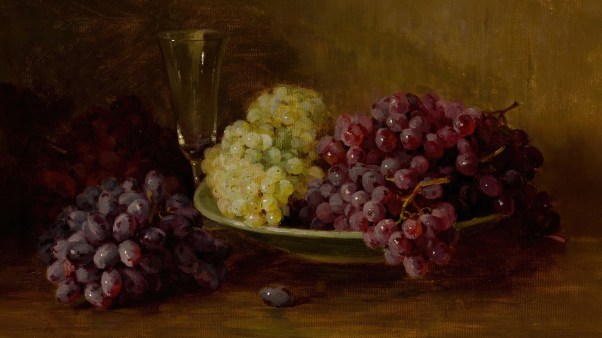
“And he took bread, and when he had given thanks, he broke it and gave it to them, saying, ‘This is my body, which is given for you. Do this in remembrance of me.’ And likewise the cup after they had eaten, saying, ‘This cup that is poured out for you is the new covenant in my blood’” ( Luke 22:19–20, ESV).
The old covenant depended, in part, on our obedience. That is why the last two words of the Old Testament are “total destruction” (Mal. 4:6). We disobeyed extremely. But our covenant betrayal did not defeat our covenant Lord. Far from backing out, he pressed in more devotedly. He sent his only Son as our all-sufficient Savior. That’s why the New Testament concludes with “the grace of the Lord Jesus” (Rev. 22:21)—the final word of endless hope.
Let’s be clear about God’s covenantal arrangement with us now. We are not bringing our strengths to the table while God brings His strengths to the table so we can cobble together a team win. No, the new covenant is all of God’s grace alone. And he does not lower his standards. His grace goes so far as to internalize his holy law down at the deepest substratum of our inmost beings (Heb. 8:8–13). That profound renewal is good news for everyone fed up with being “prone to wander,” as the old hymn says. And Jesus sealed our new covenant hope by his very blood. He did not hold back at all.
Two, Jesus did not limit his outpouring of love to his passion and cross long ago. Yes, his atoning death was “once for all” (Heb. 7:27, ESV). To quote the Book of Common Prayer, he made upon the cross “by his one oblation of himself once offered, a full, perfect and sufficient sacrifice, oblation, and satisfaction for the sins of the whole world.”
The finality of the Cross is the gospel message that I, as a minister, love to declare. It is the gospel we all love to hear.
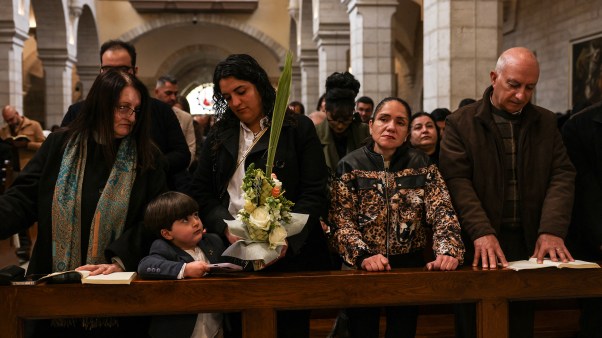
But in addition, our risen Savior, through his Spirit, visits us in Holy Communion with real-time experiences of his endless grace. By calling us to eat and drink, he is saying, “My dying love for you is so real you can taste it! Come. Take it in. Be renewed.”
Holy Communion is a feast. Jesus fills our hearts again and again, reassuring us that our repeated sins in this life cannot deplete his finished work on the cross.
This evening, as we receive Holy Communion in our churches, it might be like that moment in Tolkien’s Return of the King, just after the siege of Gondor. The sound of those distant horns had declared that Rohan was coming to the rescue. Then after the battle was won, Tolkien tells us that, for Pippin, “never in after years could he hear a horn blown in the distance without tears starting in his eyes.”
Our rescuing Savior is both a solid historical reality to be remembered and a vivid present experience to be savored. Tonight we will come to him as we are, with all the ruins and regrets of our sins. We will remember, with awestruck reverence, his total commitment to saving us from it all. And our eyes may well flood with tears.
“Do this in remembrance of me” invites us there. Why hold back at all? He didn’t. And he doesn’t.
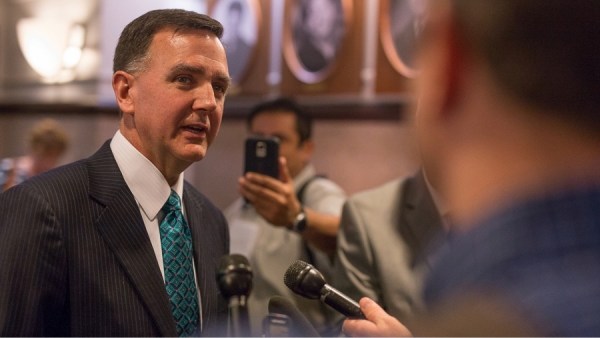
Pastor Ray Ortlund is the president of Renewal Ministries and a canon theologian in the Anglican Church in North America. Ortlund gradutated from University of Aberdeen (PhD) and was ordained into Christian ministry by Lake Avenue Church, Pasadena, in 1975.