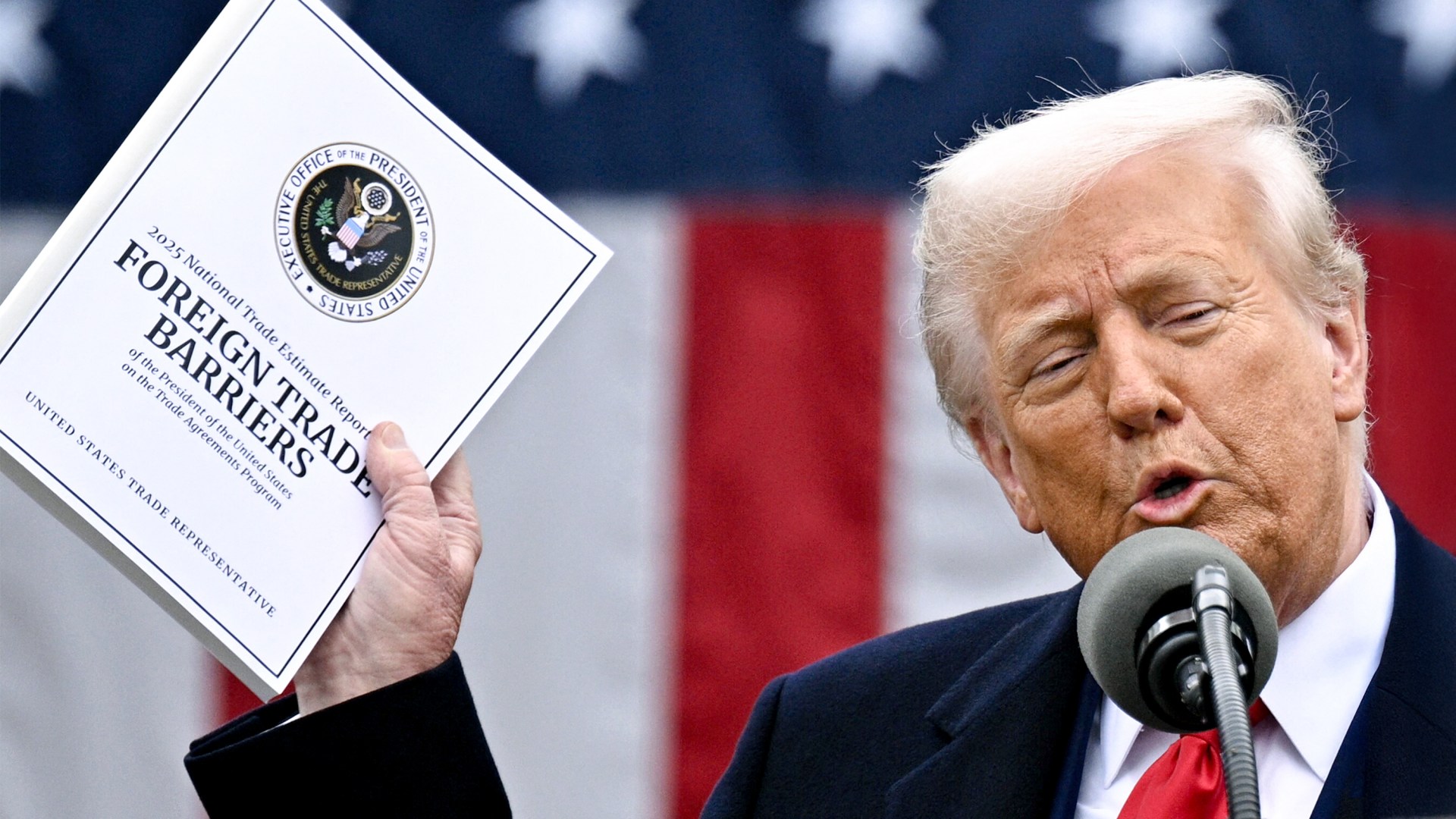
Has Donald Trump gone too far? With the stock market down 5 percent in one day yesterday and other economic losses cascading today, will his most loyal supporters thus far, evangelicals, turn on him? Depends on what evangelical means.
After surviving the Access Hollywood tape in 2016, four indictments and a felony conviction, and criticism for treatment of immigrants, it would be ironic if tariffs, of all things, brought Trump down. A Gallup poll last September found “trade with other nations” only the 20th out of 22 issues important to voters.
But The Washington Post’s banner headline this morning proclaimed disaster: “Onslaught of tariffs ripples across globe.” Columnists like Thomas Friedman of The New York Times said, “Trump, with his grievance-filled gut,” doesn’t understand “the U.S.-engineered global free trade system.” If so, Trump has “sown the wind, and we as a nation will reap the whirlwind.”
Friedman did not cite the Bible, but that expression comes from Hosea 8:7—“They sow the wind and reap the whirlwind. The stalk has no head; it will produce no flour. Were it to yield grain, foreigners would swallow it up.” The whirlwind is a biblical metaphor for God’s power and might: Nahum 1:3 says God’s “way is in the whirlwind.” But how do we discern, amid turbulent times, what is blowing the wind?
The Bible doesn’t give us answers about tariffs. The Bible does give us answers about how character (Prov. 10:8–10) and thoughtful judgment carry over into decision making. It’s on those questions that evangelicals should apply discernment.
related


Will we? It depends on the definition of evangelical. Pollsters ask voters to self-define whether they are evangelicals, but even back in 2016, American church historian Thomas Kidd complained that (as the headline over one of his articles put it) “the term ‘evangelical’ has become meaningless.” Kidd wrote that many call themselves evangelicals because they think, “I watch Fox News, so I must be an evangelical” or “I respect religion, and I vote Republican, so I must be an evangelical.”
Some headlines have complained about “hijacking the word, ‘Evangelical.’” I’d argue, though, that Trump’s evangelical voters represent a far older meaning of the term, even though only half attend church weekly, according to a Pew survey, and nearly a quarter, “more than 17 million … don’t go to church.”
Evangel, the root of evangelicalism, long ago meant “glad tidings,” particularly in relation to political news regarding a leader. Cicero in ancient Rome six decades before the birth of Jesus used the Greek word euangelion that way: “Does Brutus really say Caesar is going over to the right party? That is good news [euangelion].” In 9 BC, an appointee of Roman emperor Augustus used the term to show his fealty: “Augustus was the beginning of the good tidings [euangelion] for the world that came by reason of him.”
The idea was that the emperor was a savior, and all who heard that should celebrate such good news. The four Gospels in the Greek are four euangelions. Luke in chapter two of his euangelion probably played off the political meaning when he wrote concerning the birth of Jesus, “In those days Caesar Augustus issued a decree that a census should be taken.” Luke wanted us to put our trust in Christ, not Caesar.


Donald Trump won election by saying, “I am your retribution” (now on T-shirts) and “I’m being indicted for you.” The word evangelical used theologically today refers to a specific core of Christian beliefs and implies frequent church attendance, but both in loose polling usage and the word’s early history, defining Trump’s core supporters as evangelical makes sense. Many put their faith in Trump sacrificing himself for us (and taking revenge on our enemies).
But the president’s actions, particularly since his second inauguration on January 20, have created a quandary for his supporters who actually are evangelical, defined theologically. What happens when the two euangelions come into sharp contrast?
Has Trump gone too far? I’ve thought that harsh treatment of sojourners would change many hearts, but that hasn’t happened. Some remain true believers in him. Now that he is reaching into wallets, we’ll see whether attitudes toward the new euangelion change. If tariff decisions do reap a whirlwind, what then?
Marvin Olasky is executive editor of news and global at Christianity Today.