American evangelicals, driven by a biblical vision to protect Israel, have long been integral to US. diplomacy in the Holy Land. And now they have another player on the team.
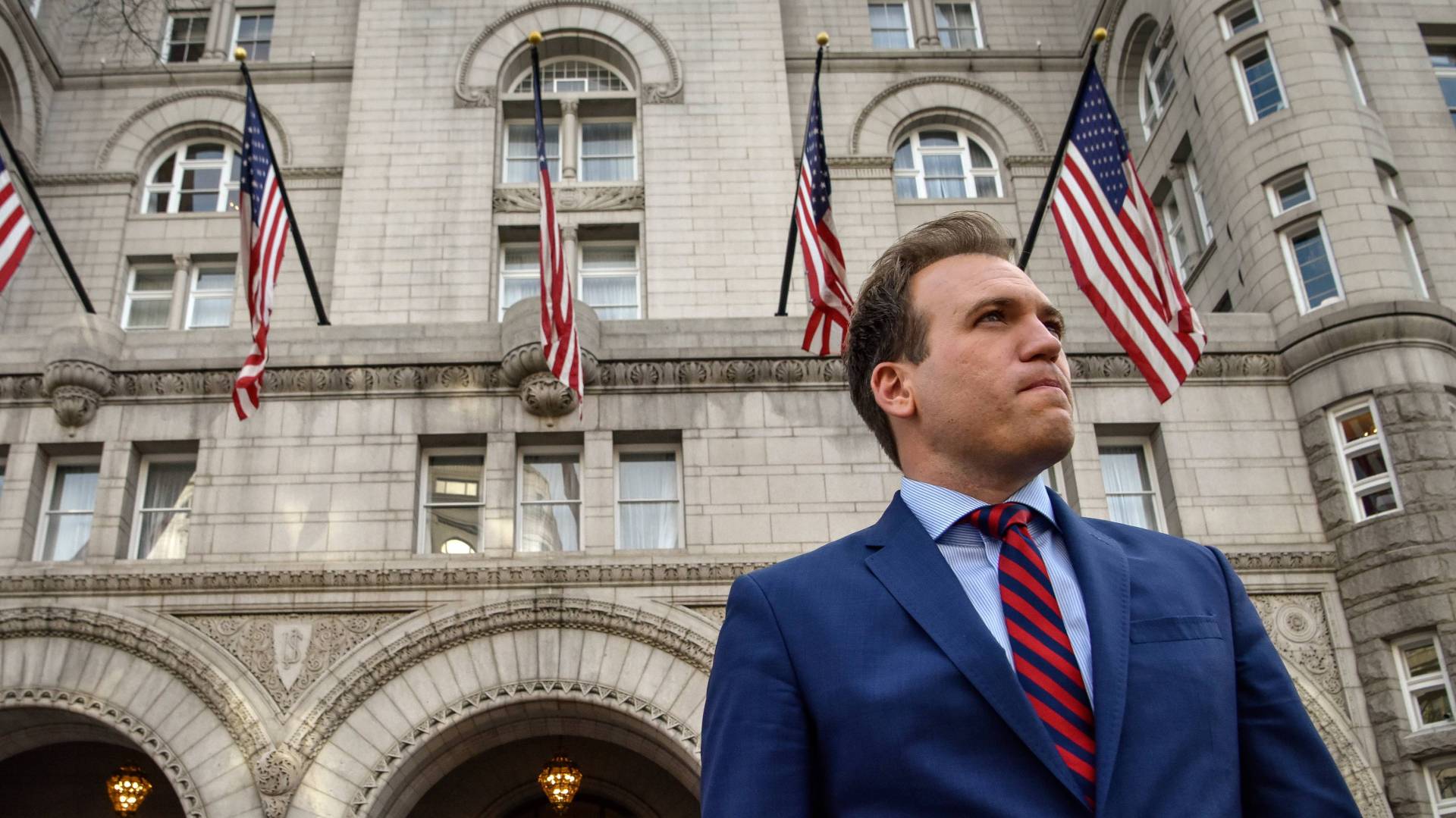
Johnnie Moore, the evangelical public relations executive with deep ties in the Middle East, was appointed chairman of the embattled Gaza Humanitarian Foundation on Tuesday.
The Trump administration appointed Mike Huckabee, another prominent evangelical, and a former Southern Baptist pastor who has described himself as a Christian Zionist, as the ambassador to Israel earlier this year.
The Gaza Humanitarian Foundation, created within the past year, is a private group, formed with Israel’s blessing after it sought to circumvent the aid relief previously provided by the United Nations. Israel has long accused the UN of anti-Israeli bias and has alleged that aid from the UN ultimately falls into the hands of Hamas, the militant group.
From March to May, Israel had blocked all food and aid from entering Gaza, a move it said was aimed at pressuring Hamas. When Israel lifted the food blockade in mid-May, chaos ensued at the distribution points, with Israelis opening fire on dozens of Palestinians as they approached the GHF hubs.


Moore, like Huckabee, denied the shootings took place and blamed the media for false reporting.
In a Fox News op-ed published Tuesday, Moore wrote, “Over 7 million meals were delivered free to Gazans—no trucks seized, no aid diverted, no violence at distribution sites.”
The Red Cross and the UN human rights office said 27 people were killed on Tuesday. The Israeli army later acknowledged that it opened fire, though it has not said how many were killed.
Moore, 41, stepped into the role of chairman of the GHF after its previous head, Jake Wood, resigned hours before the initiative was set to begin late last month.

Wood cited concerns over the GHF’s ability to adhere to the “humanitarian principles of humanity, neutrality, impartiality, and independence.”
Moore was co-chairman of Donald Trump’s evangelical advisory board during Trump’s first campaign for president in 2016. The following year, Moore and other evangelicals pressed Trump to move the US Embassy to Jerusalem from Tel Aviv. Trump later appointed Moore to serve as a commissioner on the United States Commission for International Religious Freedom.
Moore is part of a much larger group of white evangelicals that forms the backbone of US support for Israel. These evangelicals believe there is an eternal bond between God and the Jewish people and that Christians should support the biblical covenant God made with Abraham and his descendants. Their vision for the state is rooted in the belief that God promised the land of Israel to the Jews in eternity.
Moore’s pro-Israel views have landed him roles on several boards or task forces of Jewish-led organizations. Those include the Anti-Defamation League and the International Fellowship of Christians and Jews, one of Israel’s largest philanthropic organizations. He is the 2017 recipient of the Medal of Valor from the Simon Wiesenthal Center.
Moore started out as a spokesman for Liberty University, the school where he also earned a PhD in public policy. He later founded a public relations group, Kairos, which was acquired in 2022 by JDA Worldwide.
During the National Religious Broadcasters convention two years ago, Moore talked on a podcast about his “zealous advocacy” for Israel, saying, “I started going to Israel and going to Israel again and again and again. I found so much of my faith come alive through that experience. … Israel has impacted me far, far more than almost anything else. I almost can’t think of my life as inseparable from Israel in some ways.”