South Korea is becoming a cultural powerhouse. K-pop and K-drama have gained international acclaim. The New York Times just named Parasite the best film of the 21st century so far, and animated children’s movie The King of Kings just surpassed that title to become the top-grossing Korean film ever in the United States.
The gripping survival thriller Squid Game, whose third season premiered on Netflix last weekend amid Emmy talk, is another example of South Korea’s global reach. But my country should not uncritically celebrate the success of a series that starkly reflects the fractured state of our society and the church. The rules of this not-so-fantastical world—demanding that even the vulnerable compete and exclude—stand in stark contrast to the gospel’s call to mutual care and community.
Squid Game opens with debt-ridden workers receiving invitations to a secret competition for a massive cash prize. The contest turns out to be a deadly game in which only one of 456 participants can survive, with each round modeled after a traditional Korean children’s game—seemingly innocent, then a brutal twist.
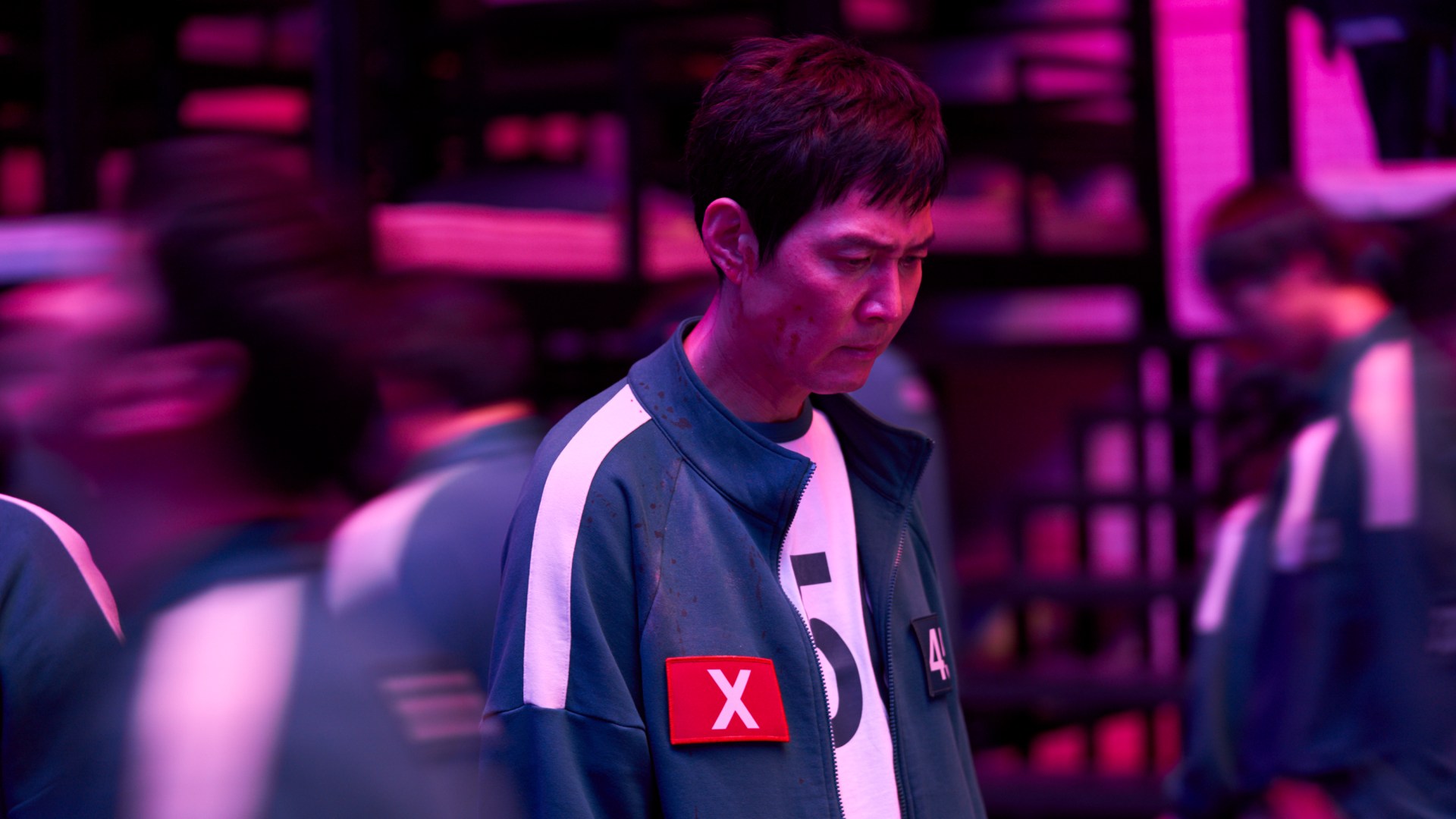
Season 1 follows Gi-hun (Lee Jung-jae), a man pushed to the edge of despair. As participants create alliances and face moral dilemmas, the show exposes how an unequal society can corrode human conscience. In season 2, Gi-hun—having won the first game—chooses to reenter a new version of it. Under the guise of “majority rule,” what seems to be a democratic process quickly devolves into deeper betrayal and isolation.
Now, in season 3, the game grows more brutal, requiring players to make life-or-death decisions about one another. Still, the show continues to ask, “Can people rely on one another?” Players form factions amid escalating psychological exploitation. As the series progresses, it highlights just how fragile—and costly—trust in someone else can be. (Warning: spoilers ahead.)


Ironically, the exaggerated dystopia portrayed in Squid Game ends up feeling like an honest portrayal of the real world we inhabit here in South Korea, where society is divided by political ideology and generation, region and economic status. Algorithm-driven information silos filter out opposing views, turning dissenting voices into targets of ridicule or hostility. Despite rapid economic growth and the aforementioned cultural achievements, we remain materialistic and anxious.
Statistics bear this out. South Korea has the highest suicide rate among Organization for Economic Cooperation and Development (OECD) nations, with youth suicide continuing to rise. Each year, more people are treated for depression and anxiety disorders, while the country’s birthrate remains the lowest in the world. Many young Koreans are giving up on dating, marriage, and starting families altogether. They describe their homeland with a grim portmanteau: Hell Joseon—a blend of hell and Joseon, Korea’s former dynastic name—capturing their deep disillusionment.
Intergenerational conflict is also intensifying. A previous generation may have built the so-called “Miracle on the Han River,” but younger Koreans often feel disconnected from, even resentful of, that economic legacy. In everyday speech and online discourse, dehumanizing slang—such as mom-chung (a derogatory term for entitled mothers) and gupshik-chung (a mocking term for younger students)—has become normalized. These insults, where the suffix -chung (meaning “bug” or “insect” in Korean) is added to a group’s name, reflect how disgust has entered our cultural vernacular.
related


Rather than offering an alternative, Christianity often mirrors these divisions. Young people are leaving the church in growing numbers, and many Sunday school programs have effectively ceased to function. In a society still influenced by Confucian values—in which harmony is maintained through clearly defined roles and a respect for hierarchy—women in the church often continue to face limited leadership opportunities. A large-scale Christian rally held in Seoul’s City Hall Plaza last year had Christians in the streets protesting proposed antidiscrimination legislation. Some church members left their congregations because fellow parishioners had joined the rally, while others considered leaving if their church didn’t get behind the cause.
So, how much of Squid Game is fiction, and how much reflects our reality?
By season 3, the logic of the game is no longer questioned—it’s absorbed. Participants don’t just survive; they manipulate, deceive, and dominate. Acts of mercy are viewed with suspicion. The show’s focus shifts from physical danger to psychological decay.
Whereas earlier seasons offered moments of hope or solidarity, season 3 underscores a harsher truth: In a world shaped by self-interest, even sacrificial acts can be tainted. It doubts whether human beings—flawed and fragile—can ever truly love one another.
In the end, the world of Squid Game isn’t just broken—it is spiritually bankrupt. In season 1, the inclusion of a fanatical Christian competitor reflected a broader social perception of faith as rigid, extreme, or irrelevant. Season 3 lacks Christian characters, though we do see players gathering around a shaman-like figure reminiscent of a mudang, a traditional Korean spiritual medium who performs rituals to seek divine favor or ward off misfortune. Her presence suggests a desperate search for meaning, the players’ belief driven more by fear than genuine faith.


In the final arc of Squid Game season 3, Gi-hun chooses death so that another player might live. At first glance, this seems noble, a kind of Christlike sacrifice. But as director Hwang Dong-hyuk explained in Squid Game in Conversation, a Netflix featurette released after the season, Gi-hun’s past was already stained by too much blood. The director noted that he “couldn’t let him live,” suggesting that Gi-hun’s death was inevitable—not as redemption but as the only path left in a broken world. His final act resists the system but does not transcend it.
Scripture points us to a different kind of salvation: “There is neither Jew nor Gentile, neither slave nor free, nor is there male and female, for you are all one in Christ Jesus” (Gal. 3:28). The gospel doesn’t rely on human virtue or sacrifice. It offers a grace that binds us together, even when the world pulls us apart and even when our pasts, too, are bloodstained.
In the end, Gi-hun’s act may not redeem the world. But it points to a longing that runs deeper than just getting ahead—a longing for restoration, dignity, and shared humanity. Mere survival isn’t the end of our story.
Michelle Park is a writer and translator with degrees in communication and media education from the US and South Korea, and eight years of experience teaching media and biblical worldview at an alternative Christian school.