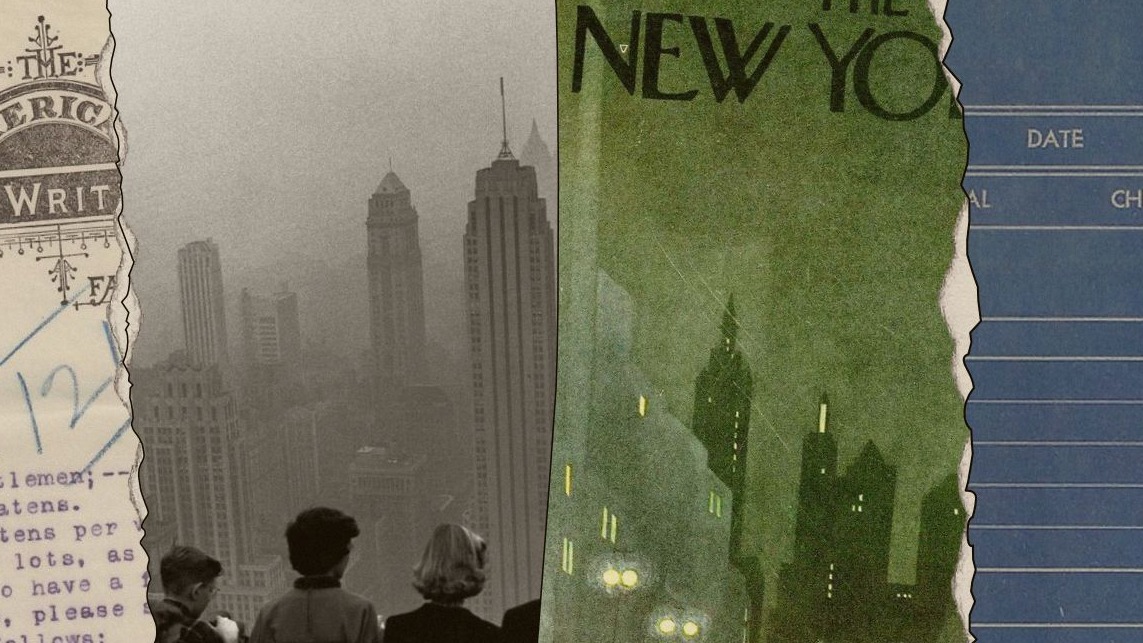
In college, many people decorate their dorm rooms with posters of their favorite musicians or sports stars. I put up a grid of 12 New Yorker magazine covers, sliced from the weekly print editions I received in the mail.
I was a budding writer, a student of the craft, and The New Yorker had quickly become one of my favorite publications. I was drawn in by the breadth of its subject matter and the ability of its writers to impart any topic with intrigue and narrative. Perhaps staring at the arrangement of magazine covers on my wall would grant me some ability to do the same.
As I devoured these magazines over the years, there was one writer who often stood out. Like me, he was Chinese American and a Christian who seemed to enjoy writing about religion and the state of the American evangelical church.
That writer was Michael Luo, the executive editor of The New Yorker and a former reporter and editor for The New York Times. I remember coming across Luo’s work when I read his 2021 story titled “The Wasting of the Evangelical Mind,” about the anti-intellectualism and conspiratorial thinking that had begun to creep into some corners of evangelical Christianity. Since then, Luo has written numerous stories about Christianity, including a history of Christian fundamentalism and a reflection on the legacy of Tim Keller (Luo attended Keller’s church in Manhattan).
In a 2013 interview with Christianity Today, Luo described the animating spirit behind his journalism: “For me, an influential verse has been, ‘What does the Lord require of you? To act justly and to love mercy and to walk humbly with your God.’ Journalism was a career in which I could pursue justice and mercy. Some people are drawn to journalism because of the words. I was more attracted to what the words could do.”
Buoyed by my surprising success in landing an interview with Elizabeth Bruenig, I decided I’d try something similar with Luo. A while ago, someone told me that New Yorker email addresses typically follow a set pattern. So I typed Luo’s first and last name into the template and fired off an email. To my delight, he responded.
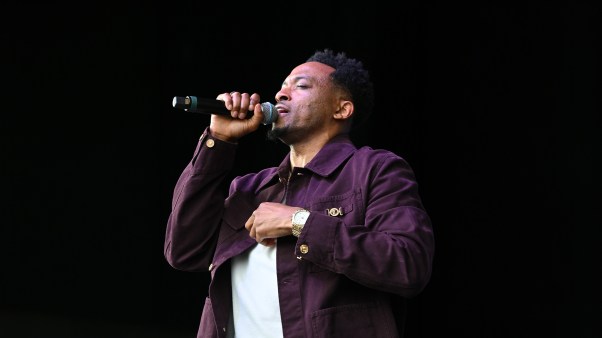
In a Zoom call with Inkwell, Luo explained what it takes to reach The New Yorker, his advice for young journalists, and his typical media diet. The interview has been edited for length and clarity.
What does your craft look like in your day-to-day?
The big thing for writing for The New Yorker is that it’s a completely different thing than writing for newspapers. The way you write is just very different. And maybe the worst thing you could say to an editor or writer at The New Yorker is “too newspapery.”
The thing that’s interesting about The New Yorker is that if you study the way our stories are put together and constructed, it’s basically just fact after fact. It’s the accretion of facts and how you titrate those facts and arrange them and build momentum through them that leads to a New Yorker story. That’s actually one of the things that’s hardest for people to grasp.
I think my ability to move from The Times to The New Yorker relates to a love for the craft, a love for a kind of literary sensibility. The New Yorker exists at the intersection of journalism and art, so a lot of times when I’m interviewing people, I ask what they read. You have to have a literary sensibility to be successful at The New Yorker. You’re looking for people who demonstrate that confluence.
So if I want to work for The New Yorker one day, do you think the best route is to go through newspapers? Or is it better to freelance for magazines?
The best way to become a better writer is to write a lot. I think it’s a mistake for young writers to graduate from college and set out to write 10,000-word feature stories. You’re just not going to know what you’re doing.
Actually, the best way is to write whatever form it takes, to write a lot and write frequently and to learn the fundamentals of the craft. That includes reporting.
I think a lot about my own evolution as a writer and how all these different steps I’ve taken along the way have been really important to the position I’m in now. Maybe that’s not just about writing, that’s also about editing.
Right now, I oversee our news and politics coverage. A big advantage is the fact that I’ve done all kinds of reporting. I’ve done presidential campaigns, I’ve covered beats on a metro desk, I’ve been overseas, and I’ve covered Congress. When you’re deploying writers and editors for coverage, it’s helpful that you’ve had those experiences. It makes you a better editor.
What’s your sense of the culture of mainstream newsrooms when it comes to faith and Christianity?
It can be a big asset. Newsrooms are serious about covering the breadth of the country and the world through a diverse newsroom. When I first got to The Times, it was soon after the scandal involving a reporter named Jayson Blair, who had been making up stories. There was a credibility committee that was formed afterward to look at ways to improve The New York Times.
One of the things they talked about in this report was the need to have people in the newsroom from all different walks of life, and not just focused on race and ethnicity—people from the military, people from different religious backgrounds. You bring every part of yourself to the job, and that could be your own ethnic background, it could be your geographic background, it could be your faith background.
I’ve covered religion at The Times, but even when I wasn’t covering religion explicitly, I brought it to bear. I wrote a piece when I was in Iraq in 2006 about Iraqi Christians after visiting these churches under threat and talking to people of the Christian faith there. I was drawn to that story because of my background, and that was one of the reasons I was able to report well—because of my ability to speak that same language.
Now at The New Yorker, I’m an editor but I write occasionally. I’ve wound up writing a fair bit about the American church and what’s happened to it. I can say that David Remnick, my boss, loves that, appreciates that, and values that. When I was at The Times, my faith was also something that was valued by the newsroom leadership.
What do you read, both in your news diet and more generally?
It’s really important for young writers and journalists to read a lot. I subscribe to too much. I still get the print New York Times. I find that when reading the print newspaper, sometimes there’s a level of discovery that’s missing from online—you read more and understand more. Every day, I’m reading The New York Times, The Wall Street Journal, The Washington Post, Politico.
I subscribe to too many magazines: The New Yorker, The Atlantic, The New York Review of Books, The Paris Review, The London Review of Books, Harper’s, New York Magazine, Wired, Vanity Fair, Foreign Policy. Recently, I felt like there was a dearth of coverage of China, so I started reading The Wire China. I read a lot of Substacks. I listen to Ezra Klein a lot, but I also listen to history podcasts like The Rest Is History. The most recent book I read is Demon Copperhead, and I also finished reading the new Ocean Vuong novel, The Emperor of Gladness.
You recently published Strangers in the Land: Exclusion, Belonging, and the Epic Story of the Chinese in America. What was the process like for writing your book?
I didn’t take any leave. So I worked on it for four years—from 5:30 to 7:30 in the morning, and then got my kids ready to go to school. And then I worked on it on weekends.
Sometimes they talk about writing a thousand words a day when you’re writing a book. I couldn’t write a thousand words a day, but I could write 200 words a day. That’s like a paragraph. Or you could be preparing for the thousand words that you would write that weekend. So that’s like 4,000–5,000 words a month, or 60,000 words a year. That’s how you write a book.
When you read the book, each of the chapters is its own kind of self-contained magazine story. So basically, each chapter is a 5,000- to 10,000-word magazine story, and there are 25 chapters.
There are a lot of people in your audience who are thinking about writing books when they’re young. I think there are some arguments for writing a book when you’re younger, since you don’t have the obligations, you can go off on some book-writing project, and you don’t have a mortgage or kids.
On the other hand, I don’t think I could have written this book if I had written it earlier in my career. I have thought about the next book I will write maybe being about the American church and what has become of it.
Christopher Kuo is a writer based in New York City. His work has been published in The New York Times, The Los Angeles Times, Duke Magazine, and elsewhere.
Related