After more than a decade of working for Christian media and student ministries, CC Lau decided to enroll in one of Hong Kong’s top seminaries to fulfill her calling to become a pastor and evangelist. Currently, she is studying online part-time at Alliance Bible Seminary while also balancing work and caring for her mother. She hopes to study full-time next year at the seminary’s campus, which is perched on a hill on the remote Hong Kong island of Cheung Chau.
Lau wants to experience living on campus, engaging directly with educators and classmates while pursuing her master of divinity degree. “Face-to-face, you can see hidden dynamics and you can see the teacher’s … example and be more focused in study,” Lau said. “It’s easier to exchange ideas with everyone and understand more comprehensively.”
Lau’s desired pathway to ministry is becoming less common in Hong Kong. Between 2019 and 2024, the number of local full-time students enrolled in Hong Kong seminaries dropped 23 percent, from 929 to 716, according to the Hong Kong Church Census released in March. Enrollment in church-run training institutes, like the college courses held by iSee Church in Wan Chai, plummeted from 54 to 12.
This continues a trend that began more than a decade ago, according to the church census, which the Hong Kong Church Renewal Movement has conducted every five years since 1993. Church attendance is also down by more than 30 percent from 2014. Congregations are aging, and tens of thousands of Christians have emigrated in recent years, largely due to Beijing’s imposition of a national security law in 2020 following Hong Kong pro-democracy protests.
The decline in student numbers is compounded by the fact that Hong Kong has a large number of theology programs: 20 seminaries and church-run institutes are competing for students in the city of 7 million, where less than 20 percent are Christian. Many of the most established seminaries in mainland China—such as Alliance Bible Seminary, which was formed in Wuzhou in 1899—moved to Hong Kong after the Communist takeover of China.
As a result, “the best theological books in Chinese and the best Chinese theologians are still in Hong Kong,” said Jonathan Ro, the accreditation secretary of the Asia Theological Association.
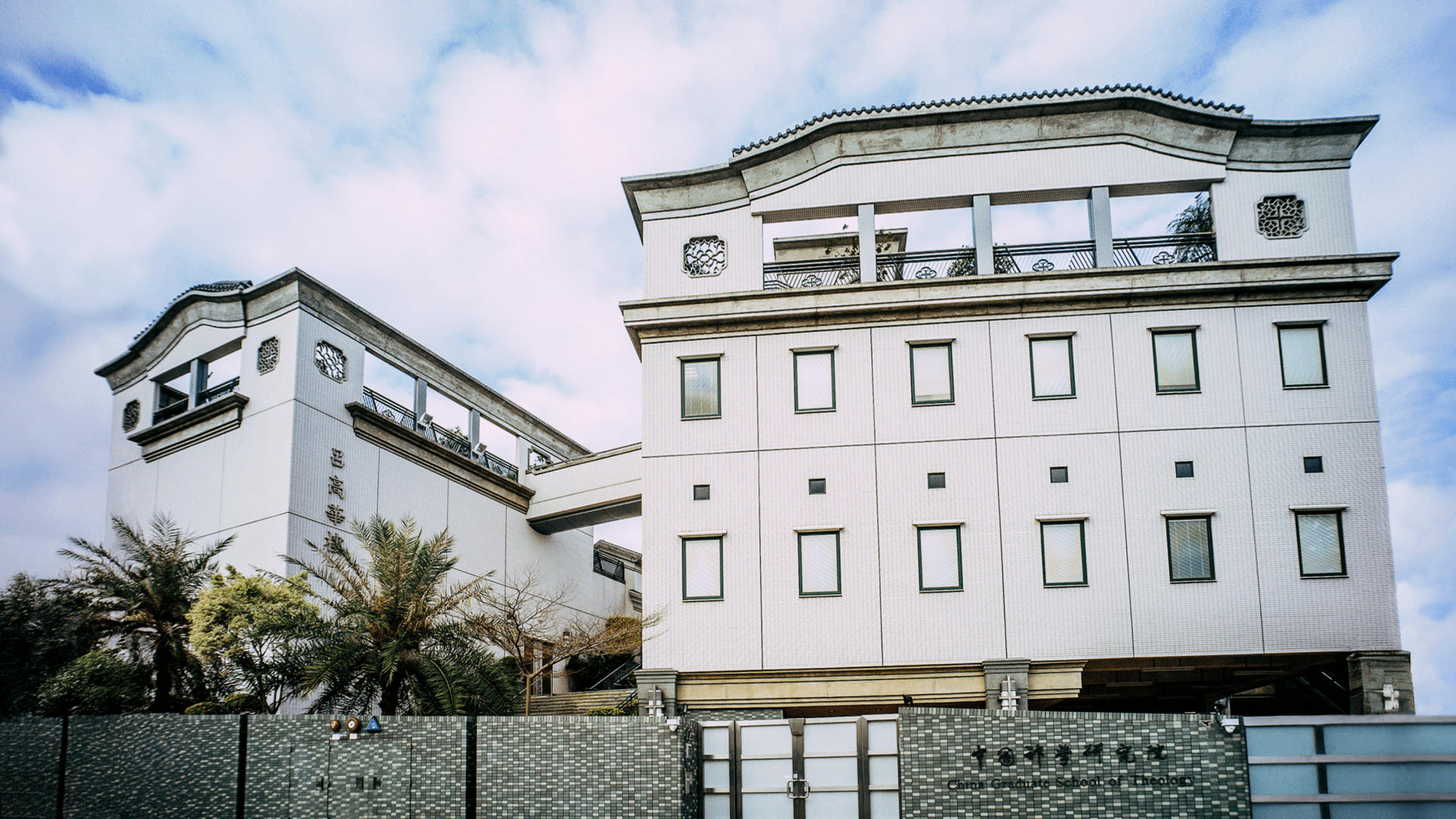
The China Graduate School of Theology (CGST) is one of the most prestigious seminaries in Hong Kong. But even this 50-year-old institution is not immune to the current challenges facing Christian educators in the former British colony.
“Every year, we have financial challenges,” said Bernard Wong, CGST’s president. Compared to a decade ago, the number of full-time students at his seminary has dropped by more than 30 percent.
Wong noted that many young people in Hong Kong have become disillusioned, as they feel the church has not provided answers to the societal turmoil that has roiled Hong Kong in the past six years—widespread protests followed by mass arrests, the imposition of a stringent new national security law, limitations on free speech, and a new “patriots only” legislature.
Although young people love the church, “they are seeing that the church needs to change,” Wong said.
But it isn’t just the lack of concrete responses to current events that have led young, devout Christians to turn away from traditional paths and seek other ways to live out their faith. Many don’t see the need for a seminary degree anymore.
“A lot of people come to me and ask whether they need to go to Bible college or not,” said Sammi Wong (no relation to Bernard Wong), who runs a martial arts ministry. “They think seminary or bible college is only for those who want to do full-time paid ministry. They are good Christians. They have the passion to serve.”
Sammi started out on the traditional path to ministry. He graduated from a Bible college in Australia before moving back to Hong Kong to accept a position as an associate pastor in a local church. After a few years, he began to feel that many people in Hong Kong weren’t being served by the church, including the poor and ethnic minorities. So he resigned from his church to devote himself full-time to working for local Christian nonprofits.
Today, Sammi runs the Hong Kong Gospel Martial Arts Ministry, which uses kung fu to share the gospel in one of Hong Kong’s most disadvantaged districts, Sham Shui Po. He often meets young people who don’t want to work in the local church because “they think there are a lot of boundaries or systems or rules … [that] are a barrier to [doing] ministry.” They want more freedom to meet the needs of the community instead of “doing a lot of admin or meeting with the elders,” Sammi said. Many of these young people end up working in poverty-fighting organizations or social work.
For Hong Kong young people who do want to pursue theological education, many turn online, where resources are plentiful and often free. This sometimes leads them to decide that they don’t need to follow the traditional seminary path, Ro said.
Hong Kong seminaries and Bible colleges have recently begun providing their own online courses, at times reluctantly.
“In the past, online theological training was looked down upon as inferior and not at all something that was accepted,” Ro said. “But now after COVID, everyone knows how to use Zoom. From then, schools have adopted an online model to offer as an alternative to the residential model.”
Hong Kong seminaries have also begun offering weekend and part-time classes to fit busy schedules. But online courses and flexible schedules don’t address the underlying issues that have led a large number of young people to question the value of a seminary education.
“The young people … question the church, question society,” said Nelson Leung, general secretary of Hong Kong Church Renewal Movement. “So they feel that the church cannot respond to social justice changes.”
Leung believes that seminaries need to “reform” to deal with the massive upheaval that Hong Kong and the local church have experienced. That includes outreach to “de-churched” young people, many of whom left the church when they didn’t hear their pastors talking about the pro-democracy protests and the government crackdown happening right outside the church doors. Pastors need to engage with young people in person and through social media, Leung said.
Ro stressed that young people are wondering if seminaries will address their questions about politics and religion “in a holistic and deep theological way.” To survive, seminaries need to be prepared to have answers.
“If you can’t take any position … you are teaching theology in a vacuum that doesn’t deal with a certain reality that you can’t address,” Ro said. “Young people who do come to seminary feel like they are walking on eggshells and they are not sure if they [can] ask a question.”
Related