


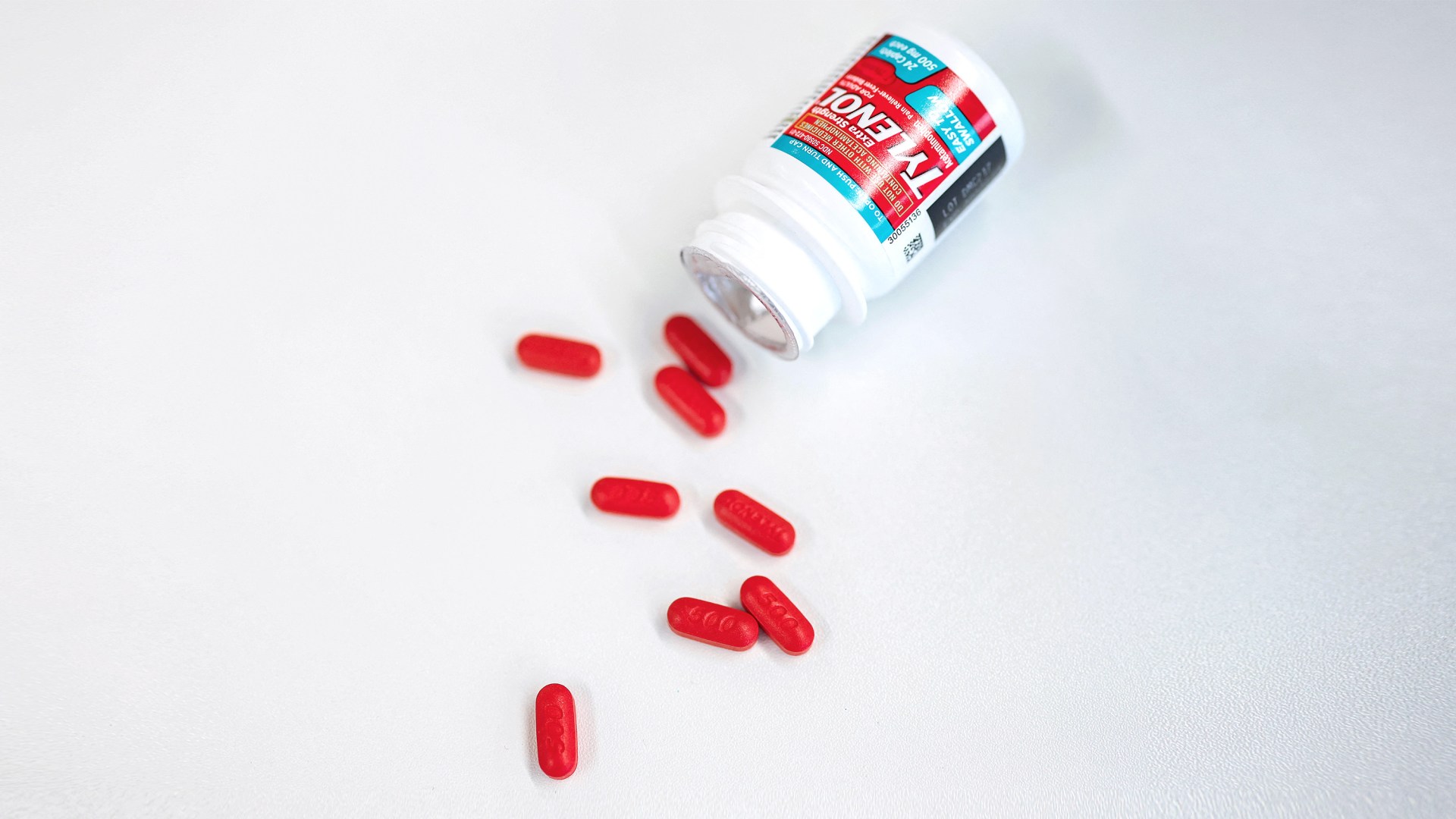
Last month, the White House announced new research aimed at treating and reducing autism. One headline claim linked acetaminophen (Tylenol) use during pregnancy with increased autism diagnoses. Administration plans include a push for label changes, notices to physicians, and a public awareness campaign.
We want CT readers to be informed about the risks and benefits, so The Bulletin sat down with Dr. Lydia Dugdale, practicing clinician and director of the Center for Clinical Medical Ethics at Columbia University, to learn more. Here is a tightened excerpt from the interview. Listen to the full conversation in episode 211.
What research did the White House press conference present?
In a study funded by the National Institutes of Health, researchers from Harvard, the University of Massachusetts, UCLA (University of California, Los Angeles), and the Mount Sinai Hospital explored the relationship between Tylenol and various neurodegenerative disorders, including autism and ADHD. This study prompted the conversation about Tylenol and pregnant women.
This team found 46 studies in the scientific and medical literature: 27 of 46 showed a positive association between Tylenol taken during pregnancy and neurodegenerative disease in the child. Nine studies showed nothing. Four showed a protective effect: You were less likely to have a child with these diseases.
Some of these studies were done very well, and some were less accurate. The higher the quality of the study, the stronger the association between prenatal Tylenol use and a diagnosis of ADHD, autism, or other neurodegenerative disorders. In all, 8 of the 46 studies looked specifically at prenatal Tylenol use and autism. Five of those eight showed a positive association.
These studies show correlation, not causation?
To do a causation study, you’d need to take a group of women who are pregnant, have them take 2,000 milligrams of Tylenol a day, and see if it eventually hurts their children. That would be completely unethical. You cannot do that sort of study, especially when we have this data that’s concerning.
The data suggest correlation, not causation. The trimester of Tylenol ingestion mattered, and the amount of Tylenol ingested mattered. In this study, women who took more Tylenol were more likely to have a child with autism. We cannot say one causes the other, but this gives us pause.
The rhetoric we’ve heard forever is Tylenol is completely safe. But I can tell you from 25 years in medicine that our understanding of science changes. This is where physicians need a lot of humility in giving out this advice.
What is the current recommendation on Tylenol in pregnancy?
The researchers on this study said the safest thing still in pregnancy is Tylenol. Tylenol brings down fever and treats pain. If a woman is pregnant and has a high fever, the fever itself can damage the child. We do need to treat fever. If pain is insurmountable, we do need to treat pain. But everything in medicine is a balance between risks and benefits.
The first and most important action is to talk with your doctor. I’m not giving out medical advice. Having said that, the study showed that the more you take, the higher the risk. So the recommendation is to take Tylenol when needed under the guidance of a physician so your doctor keeps track of how much you’re taking. Don’t take it if you don’t need it.
Having had kids myself, I know lots of aches, pains, and strange feelings come with pregnancy. You might be inclined to reach for a Tylenol just to take the edge off. If you are someone who is used to popping a pill when you’re feeling any kind of discomfort, pause. If you don’t need to take it, please don’t take it. But certainly if you’re having a fever or severe pain, talk to your doctor and then take it judiciously.
How do Christians keep scientific developments like this in perspective in a broken world?
All of us have to make decisions and live in the world with what we know. And what we know is changing constantly. A certain amount of “let go and let God” attitude is helpful here.
You think about the children who had thalidomide exposure in the 1950s and ’60s. These children were born with no arms because their mothers were given an anti-nausea medicine that everybody swore was safe. That’s nobody’s fault. No one was out to cause these birth defects. We all live in a world where we are scarred and where we try to make the best decisions with the information we have.
Part of every human story is that sometimes we just make the wrong decision. Sometimes, we know what’s good and true and beautiful, and we refuse to do it because of our own fallen natures.
We need to have a certain amount of grace on ourselves and on one another, recognizing that ultimately all of this will be redeemed. That’s the hope that we hold on to.
The information provided in this article is for general knowledge and informational purposes only and does not constitute medical advice.