A map hangs in the office of the Jamaica Baptist Union, with colored thumbtacks marking each of its 340 member churches: white for those that remained intact, yellow for those that suffered damage, and red for buildings hit hard or destroyed by Hurricane Melissa.
The red and yellow dots follow the path of the Category 5 storm that barreled across the island last week, ripping off corrugated steel roofs, uprooting palm trees, soaking homes, and forcing the church network into action.
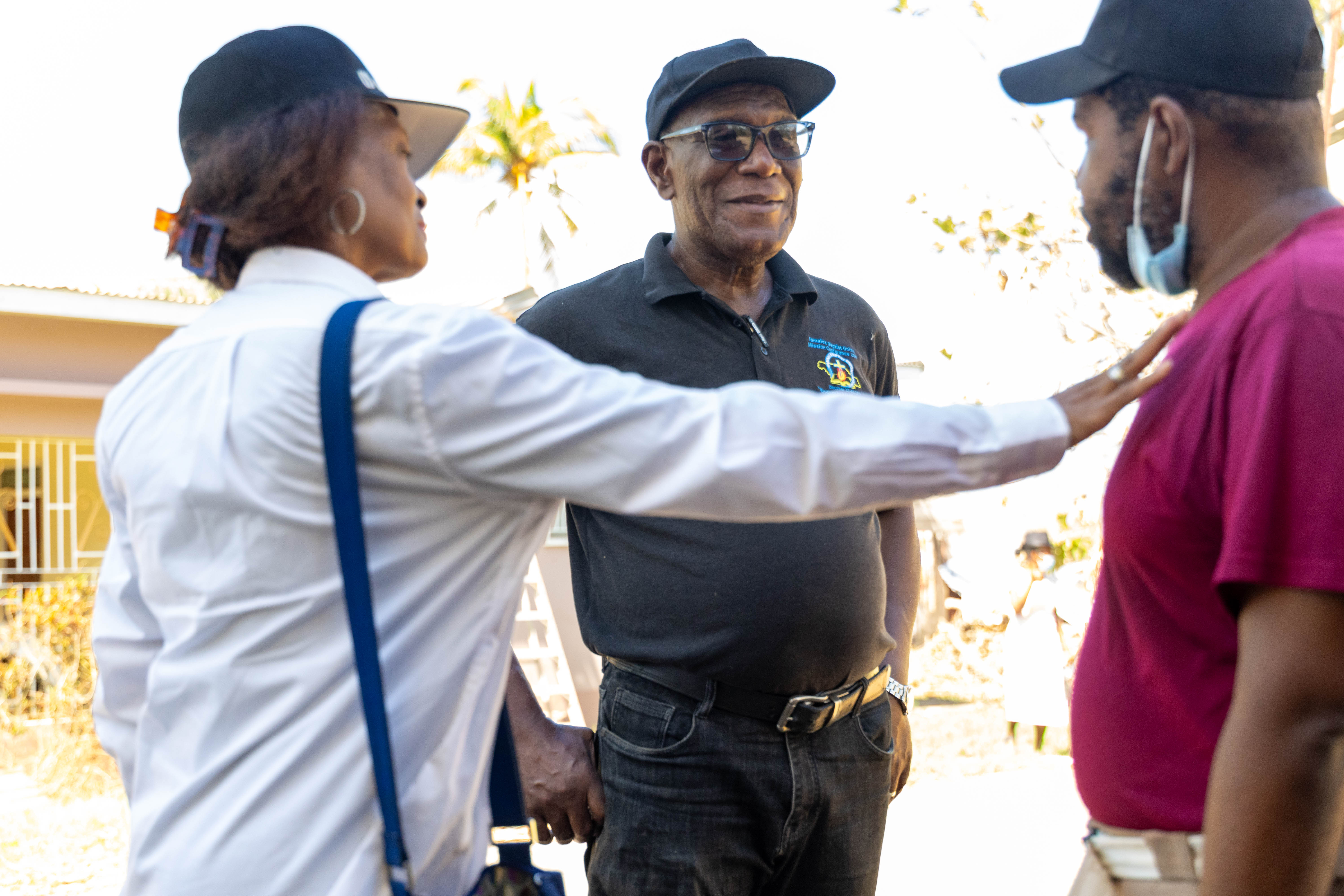
Pauline Dawkins-Cole cried driving through her home parish of Saint Elizabeth, Jamaica, once a place “thriving with life.” The hurricane left homes and buildings crushed, including churches where her father used to preach. “We don’t even understand how to process this,” the 66-year-old said.
In the early days of recovery, Baptist union leaders sent WhatsApp messages and made phone calls to check in on pastors as they readjust their bearings to communities they barely recognize after the strongest hurricane in their country’s history.
Baptists set up donation accounts and drop-off sites at their Kingston headquarters—spared from the full brunt of the storm—and at three other churches around the island. General secretary Merlyn Hyde Riley fields calls from ministries eager to help, coordinating incoming supplies and volunteers.
“You see all these organizations … but there is no better humanitarian relief organization than the global church,” said Jason Cox, vice president of the Southern Baptist Convention’s Send Relief, who traveled to Jamaica the weekend after the hurricane.
 Rob Witzel / Courtesy of Send Relief
Across the island nation of 1.9 million Christians, pastors assess building damage, local needs, and their capacity to rally help. In hard-hit areas to the south and west, the devastation was relentless, with up to 90 percent of the population displaced and some completely unreachable.
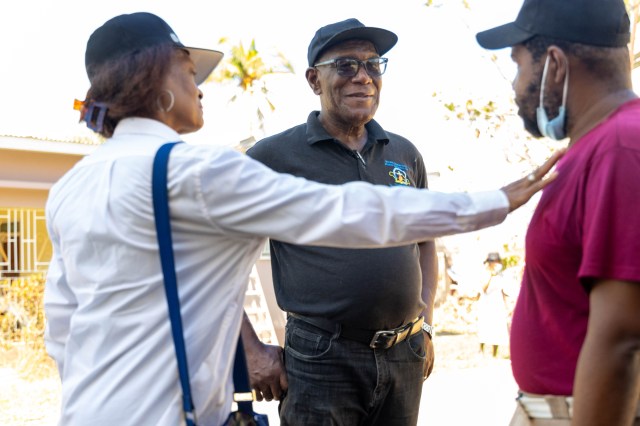
On Saturday, Riley couldn’t get in touch with the pastor of Sharon Baptist Church in Santa Cruz, a town located on the route between Kingston in the southeast to Black River on the southwest coast. When Cox pulled up to the cream-colored brick church, a patch of its red metal roof peeled back, pastor Jacob Powell was there, sitting in shock and sorrow as he charged his phone in his car.
“The devastation in this area was more than we imagined would have taken place,” he said. “Our churches have been destroyed. … Several of our members who live around here, their homes have been destroyed. … Just so many are suffering at this time.”
In rural areas, communication is a commodity people long for in the wake of a disaster, just like the tarps, food, and water his church plans to distribute from its fellowship hall.
That day, the news hadn’t been good for Powell. Rescuers discovered the body of a woman missing from his congregation who had drowned in the storm. The official death toll climbed to 75 people across the Caribbean.
As Cox and his team traveled with their Starlink unit—which uses the SpaceX satellite to deliver broadband to rural areas—he saw how crucial internet access could be for ministry outreach and aid amid disaster. Partners in Cuba sent a picture of one of 50 new generators Send Relief had shipped ahead of the hurricane: It sat in a sanctuary wrapped in a tangle of phone chargers, each belonging to a church member eager to hear back from loved ones.
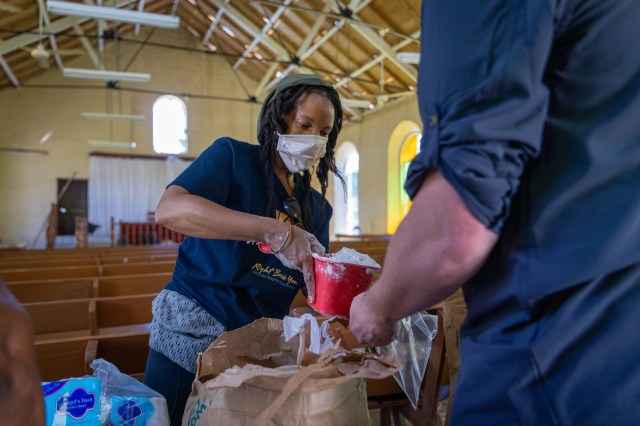
Dawkins-Cole met a man who survived the storm and caught a ride to safety in Kingston but still hadn’t heard from anyone in his family back on the other side of the island eight days later. She was in the capital stocking up on supplies for food packages distributed through churches—mostly dry goods like rice, flour, milk powder, ramen—and took his number to help track down his relatives when she returned to Saint Elizabeth Parish this weekend.
Like many Christians on the island, Dawkins-Cole saw God’s providence and mercy in the storm. As she and her relatives deliver supplies to communities in need, she has prayed for revival and renewal, particularly among younger Jamaicans.
 Rob Witzel / Courtesy of Send Relief
In the cities, lines snake outside the banks and Western Unions, which ran out of cash at one point, Cox said. Farther out, water, debris, and downed power lines still cover the roads. In some smaller towns, traffic backs up as bulldozers clear the dirt. Rural areas still face the threat of mudslides.
“You always hear people in disaster relief say, ‘I’ve never seen anything like this,’ but I’ve never seen anything like this,” said World Vision’s Mike Bassett, who watched flooded rivers overtake streets and flow through homes in Cambridge, Jamaica, south of Montego Bay.
The hurricane ruined crops and drowned livestock, meaning many farmers lost access to food and income. The storm did its worst in the town of Black River, where Melissa wiped out church after church and home after home and displaced nearly all its residents.
Bassett, national director of domestic humanitarian and emergency affairs at World Vision, worries about all the water. The organization is rushing to provide bottled water and mobile purification units to ensure desperate people don’t drink the unsanitary floodwaters.
At the end of each of day of traveling to deliver supplies and find churches to open as shelters or distribute aid, Bassett lies in bed and decompresses, thinking about the “loss of life, infrastructure, livelihood, and homes” he’s seen. But then God brings to mind the people.
“I’ve been seeing Jesus show up in the kindness of strangers,” he said. “They’re out there helping. They’re still smiling even though their home is damaged or destroyed.”
The Jamaica Baptist Union quickly adopted the tagline “from ruin to renewal” and keeps pointing the 40,000 members of its churches to look beyond the current brokenness to the hope of rebuilding.
Pastor Michael Shim-Hue preached on Sunday at Calvary Baptist Church in downtown Montego Bay, his pulpit lit by the hole the hurricane ripped in the roof of the sanctuary. He thanked God and called on the church to come together, assuring them that God will carry his people along as they recover.
Looking around at destruction everywhere, stores closed, and generators running, people don’t know what their next few days could look like, much less the long path to rebuild.
“The pain is real. It is great. I don’t know when the people will come back to normalcy, don’t know when their lives will be straightened out,” said Powell, standing in the midst of his damaged church compound and wearing a hat that read “Jesus Saves.” “If they don’t get assistance from somewhere, it’s going to take a long time.”