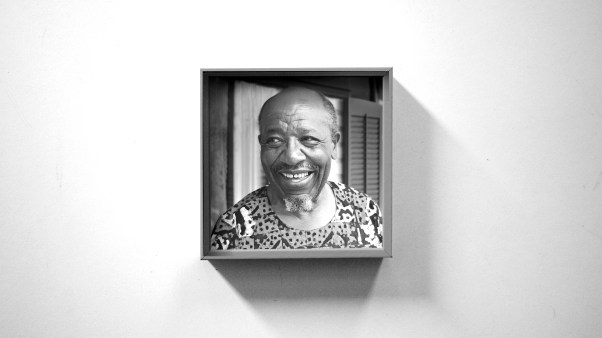
Every Wednesday, David Mulanda rushes from his job as a high school teacher to Friends Church Tande two miles away in Kakamega County, western Kenya.
When he arrives, 25 boys and girls ages 14–20 are already in the church garden practicing the choreographed dances he assigned them. Teens synchronize their movements to the beat of the gospel music playing on a portable Bluetooth speaker. Mulanda gives feedback as neighbors watch from a distance.
Mulanda hopes that beyond a fun diversion, dancing will keep these teens away from extremists.
“We are seeing an increase in young people being taken away by dangerous groups like al-Shabaab,” Mulanda said. He noted that many youth absorb extremist content online, and he believes idle hands and minds put youth at greater risk of falling for the propaganda.
Mulanda and other youth pastors try to counter terrorist groups’ recruitment of unemployed young Kenyans through providing healthy community. As al-Shabaab and other terrorist groups ramp up online and in-person recruiting, churches are providing more group activities to keep students in sanctuaries instead of terror camps.
Unemployment and poor education leave youth vulnerable to radicalization, according to Kibiego Kigen, director of Kenya’s National Counter Terrorism Centre. While youth unemployment has decreased slightly since 2019, the World Bank reported current joblessness among 15-to-25-year-olds at 12 percent—double the rate in 1990. Another report placed those numbers much higher, as high as 67 percent. Young women have higher unemployment rates than men. (Only 53 percent of Kenyan teens go to secondary school.) A new generation of Kenyan jihadists includes more women and converts from Christianity to Islam.
Terrorists or their sympathizers may lure young Kenyans with promises of work, marriage, or a better life. Then they nudge them toward Islam and jihad. One Kenyan woman, whom a friend recruited at age 18 under the guise of finding work in Somalia, told The Conversation she converted after intense religious indoctrination while living in an al-Shabaab camp: “After a few days, I was worn out. … I kind of started to accept it. I felt it was right to fight for our [Muslim] freedom. It was like a moral obligation.”
In 2018, Violet Kemunto, a Christian woman in her late 20s, converted to Islam and married terrorist Ali Salim Gichunge. She and her husband allegedly helped plan the January 2019 bombing of DusitD2 complex, an upscale hotel and office complex in Nairobi Kenya’s capital. The mass shooting killed 21 people, including Gichunge. According to intelligence reports, her husband promised Kemunto a better life in Somalia after the bombing. Instead, she now lives in squalor.
Other young Kenyans find alternatives in church communities. Harry Wafula, an attendee of Bethel Prayer Center in Likuyani, Kakamega County, said he couldn’t get a job for two years after graduating from college, forcing him to look for odd jobs around Nairobi to buy food. Some friends introduced him to smoking bhang (cannabis), but he resisted.
When his church hired him as a technician for their sound system and music recording studio, it helped him find stability. “I don’t know what I would have become if I stayed in Nairobi without a job,” he said.
Many church outreaches use Kenyans’ love for music—choirs, dance troupes, and bands—to engage youth. Newlife Church in Trans-Nzoia County lets youth use its music and video recording studios. Lenox Barasa, 32, a high school teacher and church member, has used part of his savings to support the church’s choir, Neema Singers. He said the group has produced more than 12 songs. By selling CDs and holding fundraiser concerts at church, they are able to buy more video cameras and instruments.
During school breaks, Mulanda holds dance practices or other activities nearly every evening of the week. He also teaches the teens how to apply their faith to the challenges that arise in everyday life. During three-day seminars Mulanda hosts, his students gather in small groups to discuss issues like terrorism or sex outside of marriage.
“When I see their points aligning, then I realize this is what is eating my youths,” Mulanda said. He listens to their concerns, then teaches from the Bible.
Mulanda also helps young people leave criminal gangs. He recalled three women in their early 20s who used to steal motorcycles and cars. They would stand outside nightclubs waiting for men who had parked their vehicles outside and ask them for a lift. Then along the way, they’d ask the driver to stop because they needed to make a phone call. Their gang would be waiting to jump the drivers and steal the cars at gunpoint. The robbers would beat everyone—including the young women, to keep their involvement secret—during the robbery.
“One of the girls [in the gang] was killed. Two escaped, and I now have them in the church choir,” Mulanda said, adding that both girls became Christians.
Mulanda doesn’t always know what kind of trouble the teens in his group are involved in. But he believes if they come to church and find a community there, they’ll have less time—and hopefully less appetite—for criminal or radical groups.
“These young people are looking at youth pastors as people they can share their lives [with],” Mulanda said. He added that due to this relationship, young people listen “when we talk about being hooked into the terrorism of al-Shabaab.”